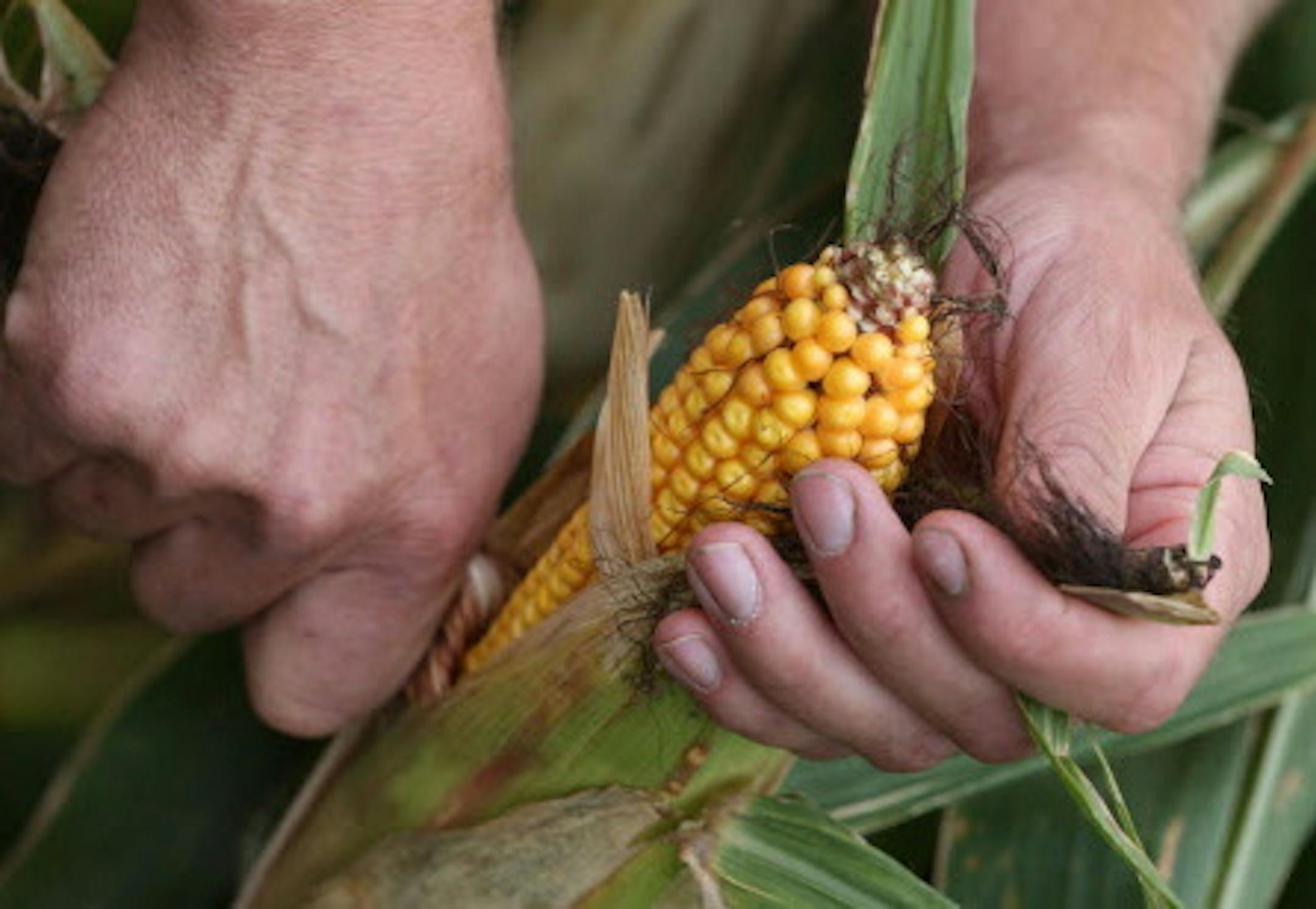
![Eden Valley farmer Tom Haag emptied corn into a holding wagon used to shuttle the grain to a nearby semi-trailer for transport back to the farmstead and a storage container. ] JIM GEHRZ•jgehrz@startribune.com (JIM GEHRZ/STAR TRIBUNE) / Oct. 3, 2012 / 1:15 PM, Eden Valley, MN**BACKGROUND INFO- The soybean and corn harvests are underway and well ahead of schedule in Minnesota. Despite severe drought in some parts of the nation and dry conditions here, Minnesota farmers are doing](https://arc.stimg.co/startribunemedia/LRZJ2C6IY4OIOPSQHRKYT5KH5E.jpg?&w=1080)
Bin-busting crops in corn and soybeans are causing furrowed brows rather than smiling faces for many Minnesota farmers this year.
Strong crop yields in the state — and record-breaking crops nationally — have produced plentiful grain in 2014. However, bountiful supplies mean lower prices per bushel, and some Minnesota growers will lose money or consider themselves lucky to break even.
"Given the challenges with late planting and some flooding and an early frost, guys have to be thankful for what we got," said Minnesota Corn Growers Association President Bruce Peterson, who farms near Northfield. "It certainly isn't anywhere near a disaster by any means, but it's a little bit disappointing in the final numbers."
With 95 percent of the state's corn harvested, the latest USDA report estimates that Minnesota corn production will be 1.29 billion bushels, 1 percent below last year's production, and yields are expected to average 165 bushels per acre, up 5 bushels from 2013.
Minnesota soybean production is forecast at 305 million bushels, a 10 percent increase from last year.
Robert Craven, a University of Minnesota Extension economist, estimated that corn growers pay a little more than $5 a bushel for seed, fertilizer, land rent and other costs, on average, and they are faced with prices well below $4 a bushel. Average costs to grow soybeans are also higher than current selling prices, he said.
Whether producers lose money depends on a host of factors, Craven said, including whether they presold some of their 2014 crop early in the year when prices were higher, how much land they rent and how much debt they hold in land and equipment loans.
The good news, he said, is that corn and soybean growers are coming off several years of healthy profits, and good managers who know the ups and downs of the market had a chance to build up their working capital: cash in the bank and other liquid assets.