

During his Monday visit to the Demilitarized Zone separating the Korean Peninsula, Vice President Mike Pence declared that the Obama-era policy of "strategic patience" on North Korea is over.
The Trump administration may reject the rhetoric, but strategy — and patience — is more essential than ever. And not just with the dangerous, destabilizing Kim Jong Un regime in North Korea, but with key allies South Korea and Japan and especially with China, which is still integral in defusing this spiraling crisis before it becomes an armed conflict that could have catastrophic consequences.
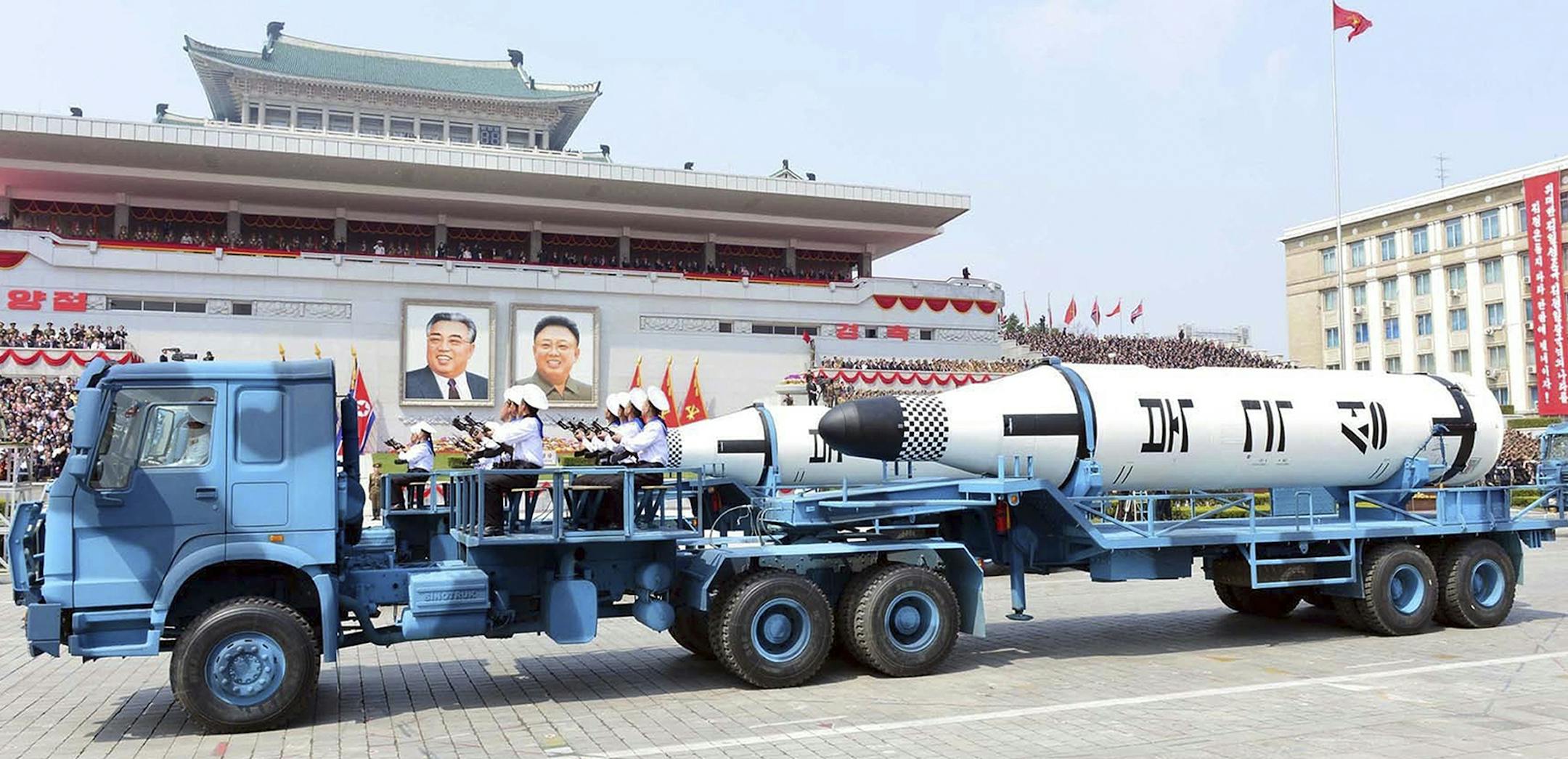
Strategy is needed in dealing with Kim's maniacal pace to develop a missile and nuclear weapons program that not only threatens neighboring nations but could someday reach America. Despite U.S. military superiority, options are limited — and last week's false reports that an aircraft carrier was going to the region to send a resolute signal to North Korea did not help.
It also can't be assumed that any pre-emptive strike could be contained. Indeed on the same day Pence warned Pyongyang "not to test his [Trump's] resolve, or the strength of the armed forces of the United States," North Korea's deputy U.N. ambassador warned that "thermonuclear war may break out at any moment."
Avoiding that outcome requires close regional cohesion — the kind previous presidents emphasized. The U.S. has hastened its deployment of a missile-defense system in South Korea that Japan may someday adopt. But patience is needed with allies, too, especially in Seoul, where on Monday prosecutors indicted the impeached former president, who could be replaced by a leader who shifts North Korean policy.
Strategy and patience with Beijing are crucial, too. So far Trump has shown flexibility in considering the broader context of the U.S.-China relationship, and that may be paying dividends. Defying campaign pledges, for instance, Trump has declined to label China a currency manipulator and, perhaps in turn, China has turned up the heat on North Korea. So far the steps are mostly rhetorical, or more economically symbolic, such as China turning back North Korean coal shipments. But those moves are more effective than China's counterproductive complaining that the missile-defense systems threatened regional stability when the overwhelming problem is Kim's bellicosity.
"Ultimately the U.S. and China will probably have to work extremely closely together — along with South Korea — on this issue to make sure that the tensions don't spiral out of control," Lisa Collins, a fellow in the Korea Chair Program at the Center for Strategic International Studies, told an editorial writer. "With North Korea's really rapid pace of missile technology and nuclear [weapons] technology, I think that it's really going to come to a head in the next few years."
That timetable is alarming, and the administration is right to try to find a solution now. But doing it diplomatically will require maximum application of strategy and patience, no matter what the policy is called.


