

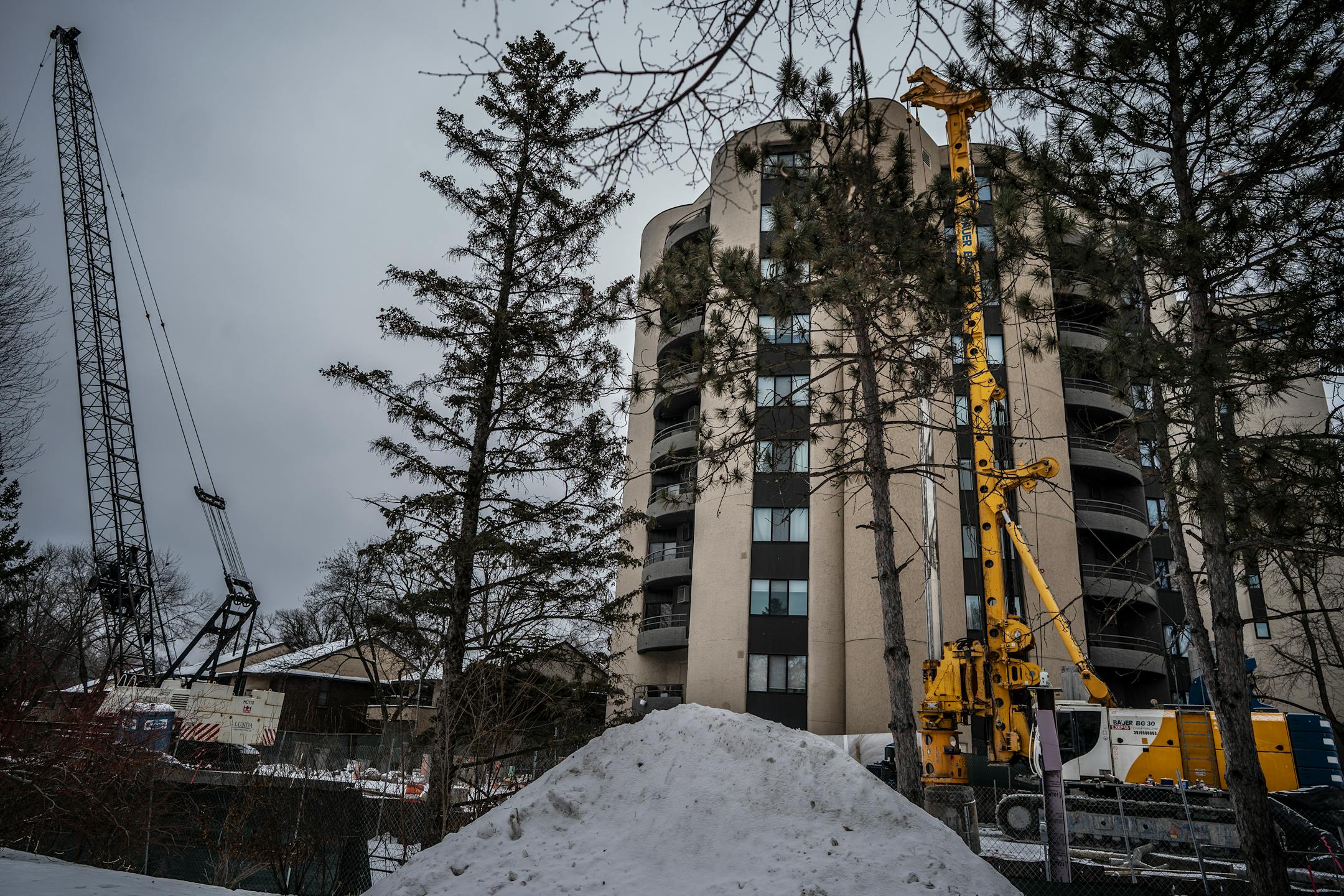
Calhoun Isles condominiums occupy the historic former grain silos where the Kenilworth corridor and Greenway bike paths meet in Minneapolis' chain of lakes. These structures were originally built circa 1915 and 1928 and converted to residential use in 1981-82. When the Southwest light rail project (SWLRT) was proposed to pass within inches of these unique buildings, homeowners were naturally concerned.
With a wide range of resident opinions, the Calhoun Isles Condominium Association (CICA) did not take a formal position supporting or opposing SWLRT, but instead emphasized that if the line were to be built, the safety and livability of our homes should not be compromised.
Before construction, questions were repeatedly raised at public forums about what Plan B would be if the press-in piling plan for constructing the shallow tunnel walls by our homes did not work. The response was always the same — that Plan A would work, so no contingency plans were needed.
Plan A did not work. Soil subsidence issues necessitated many work stoppages for safe freight rail travel in the Kenilworth corridor and development of a new secant wall technique for constructing the tunnel by Calhoun Isles. Creating Plan B required at least a year's delay and cost increases of hundreds of millions of dollars.
We now find that Plan B also didn't work.
On Jan. 27, significant cracks were discovered in our hallway and elevator lobby's concrete floors. Secant wall construction has been put on hold while the Metropolitan Council's hired engineering consultants, Socotec, investigate the cause. Fortunately, the engineers assert that the buildings at this point remain safe for habitation.
Despite the work pause, SWLRT construction damage continues to occur to our property. On Sunday, Feb. 20, many residents awoke to pounding on their front doors and frantic orders to move their cars before they were flooded in our underground parking garage. Water from a broken main within the construction corridor coursed into a low area SWLRT created by our garage, spilled down a stairwell, flowed through an air intake grate, and produced a lake some 2 feet deep.
Residents of CICA have endured ceaseless noise, shaking walls, dust and inconvenience for up to 11 hours a day for years. Now they face diminished property values, increasing insurance costs and potential loss of their homes. CICA has been forced to spend hundreds of thousands of dollars in legal and engineering consultant fees to protect ourselves. From the history of denied damage claims and disputed responsibility, we fear that the Met Council will not make us whole.


