

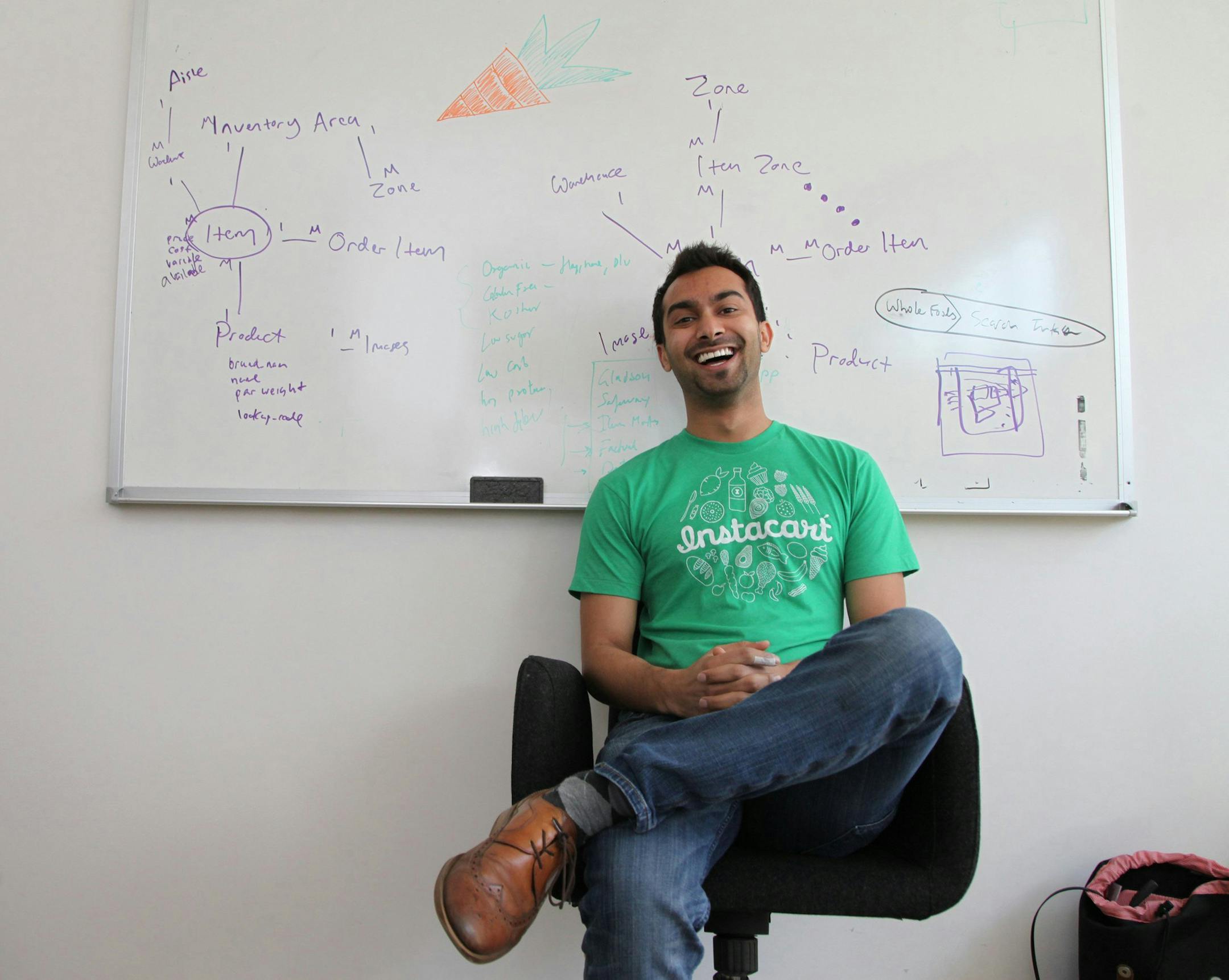
SAN FRANCISCO – On a mission to prove that consumers will pay to have bread and milk delivered to their front door, Instacart is expanding across the country as it aims to right the wrongs of years of failed grocery delivery ventures.
Powered by a twenty-something who practices extreme ocean sports, Instacart hopes to dominate Amazon.com Inc. in the grocery aisle by using computer systems that founder Apoorva Mehta built from his San Francisco apartment.
"Even though it seems we're doing groceries, we're actually just building software," Mehta said.
As ride-sharing, restaurant delivery services and online shopping have trained consumers to expect instant gratification, grocery delivery is an area yet to be fully developed. But many are trying, including titans Google Inc. and Wal-Mart Stores Inc. The fledgling Instacart has the backing of Silicon Valley venture capital powerhouse Michael Moritz, who is gambling for the second time on grocery delivery.
"We all held hands and prayed," Moritz, chairman of Sequoia Capital, said jokingly about the firm's decision to lead an $8.5 million investment into Instacart last summer.
That decision came almost two decades after Sequoia, under Moritz's leadership, partnered with Benchmark Capital to put $10.8 million into Webvan, a high-profile grocery delivery business best known for its bankruptcy in 2001. Sequoia owned 8.4 percent of the company when it went belly-up.
But in 2014, delivery companies have what Webvan could only dream of in the late 1990s: high-speed Internet in nearly every home, mobile devices in nearly every consumer's hand, and software that can plan delivery routes and predict customer orders.
"I think Instacart is taking every lesson from Webvan. They have a pretty good shot," said Peter Relan, chief technical officer at Webvan from 1998 to 2001.



