

The Golden Globe Awards will be presented on Sunday, and on Thursday, Oscar nominations are announced. So with the focus of the film industry on Hollywood's honored movies, Friday's premiere of the Afghan-war drama "Lone Survivor" likely will be overlooked — just like the war itself.
Despite an American investment of a dozen years and at least 2,285 killed, the war wasn't listed among Americans' top foreign policy priorities in a new Pew poll. Sure, some aspects of the war were, such as the top priority — "protecting U.S. from terrorist attacks." But last among the list of 11 goals was a justification heard earlier in the long conflict — "promoting democracy in other nations."
When Americans are asked specifically about Afghanistan, they're decidedly dovish. In December, an Associated Press-GfK poll reported that 57 percent now say entering the war was probably "the wrong thing to do" and that 53 percent perceive the planned withdrawal as "too slow." These themes were also reflected last month in a Washington Post-ABC News poll, which found that upon considering the war's cost-benefit ratio, 66 percent said it was "not worth it." Also last month, CNN said that the war in Afghanistan was arguably the least popular conflict in U.S. history, below even Vietnam.
Thankfully, unlike Vietnam, the eroded support for war doesn't seem to extend to the troops. They remain respected, according to polls — and popular culture. "Doonesbury," for instance, poked poignantly this week at how the war had "zero trending on Twitter" and that "the Army has a philosophy that covers public apathy — 'the Army shrug.'"
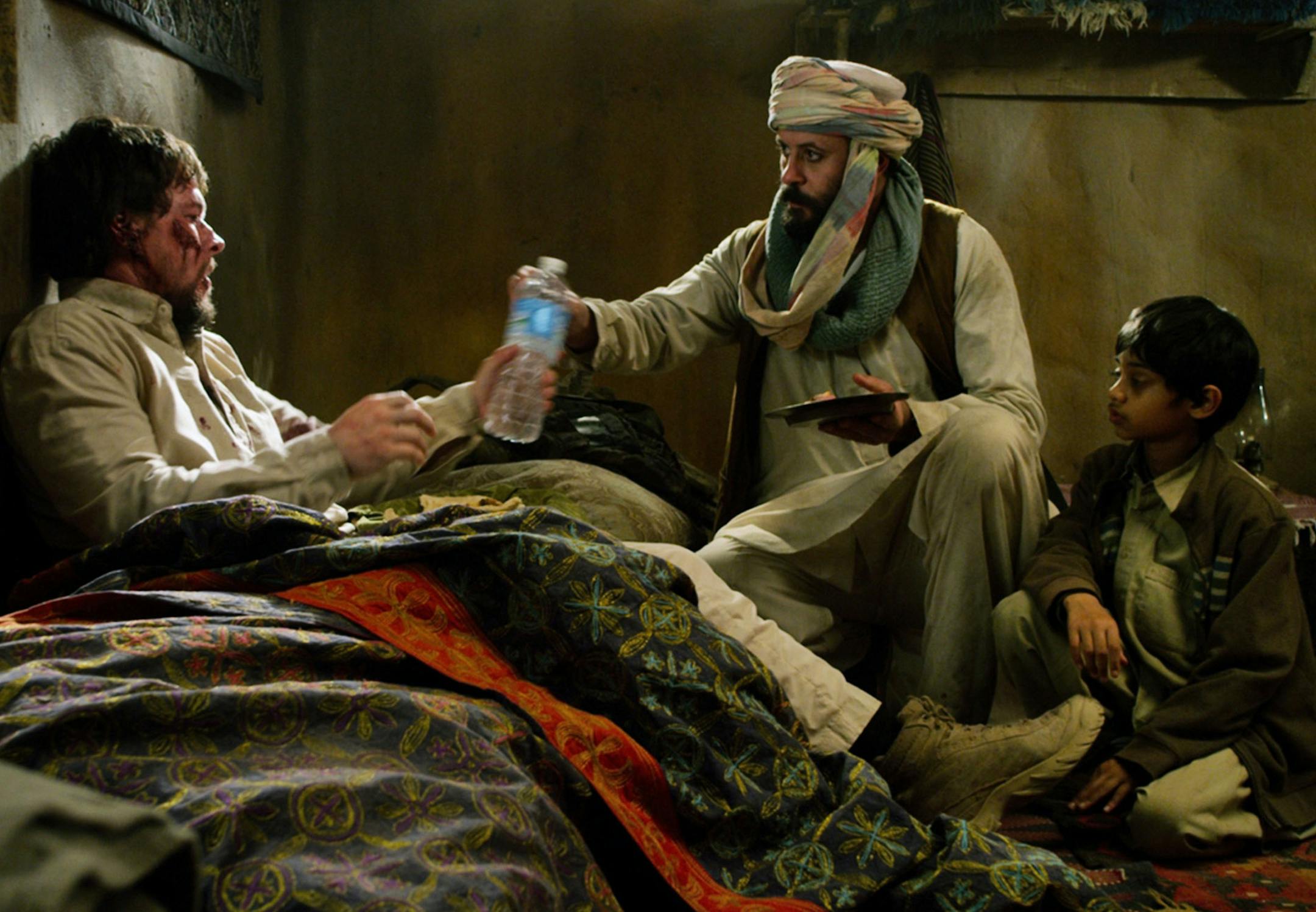
"Lone Survivor" alone won't pierce that apathy. But it may remind some about U.S. sacrifices. Based on a memoir by Marcus Luttrell (Mark Wahlberg), "Lone Survivor" is more about buddies in foxholes than geopolitics.
Reflecting the contradiction of admired forces fighting an unpopular war, "Lone Survivor" avoids the moral polarity of Vietnam-war movies like "Platoon." But it does reflect ethical issues that four Navy SEALs sent to track a Taliban commander face when Afghan goat herders literally stumble upon them. The SEALs make the right moral, and legal, rules-of-engagement choice and release the Afghans. But by doing so, the Americans quickly become Taliban targets.
As the title suggests, there is a high casualty count, and it's shown in unsparing style. But while "Lone Survivor" is about a past battle, it triggers questions about future U.S. involvement. The Obama administration is trying to finalize a bilateral security agreement that would go into effect after combat operations end next December. If inked, America could keep up to 12,000 troops to train Afghan forces and engage in counterterrorism missions.
Even leaving troops may not stabilize Afghanistan beyond three years, according to reports of an unreleased National Intelligence Estimate. Despite the bleak assessment, President Obama's objective is surely that Afghanistan avoid Iraq's rapid unraveling: Last week, Al-Qaida-affiliated forces reoccupied Ramadi and Fallujah, cities Americans bled heavily to take.


