

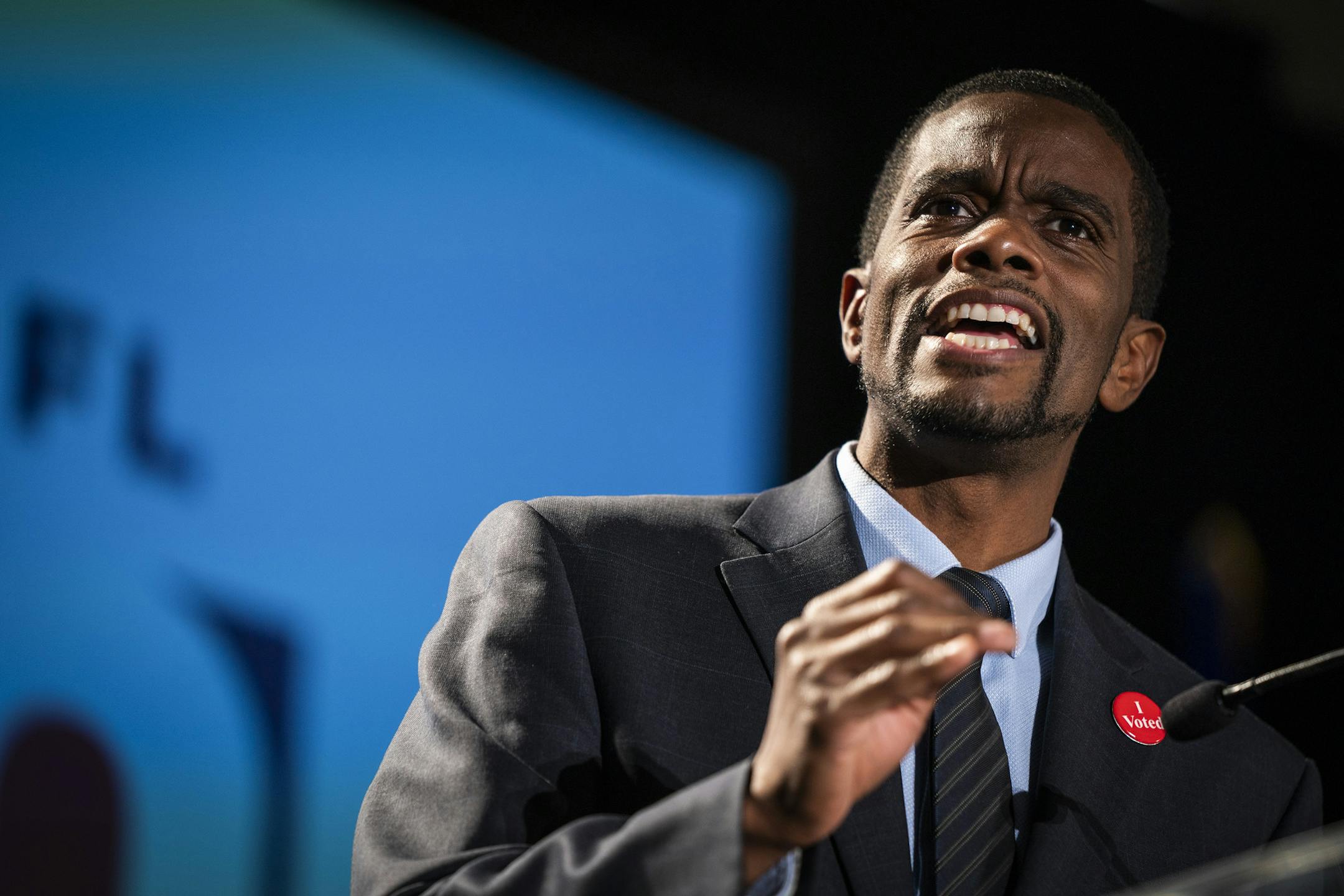
St. Paul Mayor Melvin Carter announced Tuesday he will seek a second term, with his campaign touting his "unapologetic equity agenda focused on ensuring everyone can access the prosperity our community has to offer."
Carter, 42, was first elected in 2017. He is the capital city's first Black mayor and a fourth-generation St. Paul resident.
"Serving as Mayor of the city that raised me is a great honor, and I am humbled by the broad array of support we've already received to continue this work," Carter said in a statement.
In a release announcing his re-election bid, Carter's campaign highlighted a series of accomplishments, including raising the minimum wage to $15 an hour, establishing college savings accounts for every child born in St. Paul, eliminating library late fines and launching a guaranteed-income pilot program.
While Minneapolis Mayor Jacob Frey, who is also seeking re-election, has weathered intense scrutiny for his handling of the crises of 2020 — namely, George Floyd's death under the knee of a Minneapolis police officer and the ensuing unrest — Carter has largely avoided that level of public criticism. Carter stepped into the national spotlight last year as a voice for the Twin Cities after Floyd's death, and he also played a role in President Joe Biden's campaign.
Still, Carter has faced challenges. One of his biggest political battles was inherited from Mayor Chris Coleman — the rollout of an organized trash collection system in 2018, which Carter supported. Opponents forced the issue on the ballot, but St. Paul residents sided with Carter by a 2-to-1 margin, voting to keep the new system.
In the past year, St. Paul, like many American cities reeling from pandemic shutdowns and civil unrest, has confronted a spike in violent crime and a surge in homelessness that has resulted in encampments across the city. The mayor's office, citing cold and fire risk, is now closing camps and relocating residents to temporary shelters.
Early last year, Carter launched a fund to provide emergency cash assistance to low-income families and small businesses most vulnerable to the economic impact of the pandemic. A meal program has served more than 1 million meals to families.


