

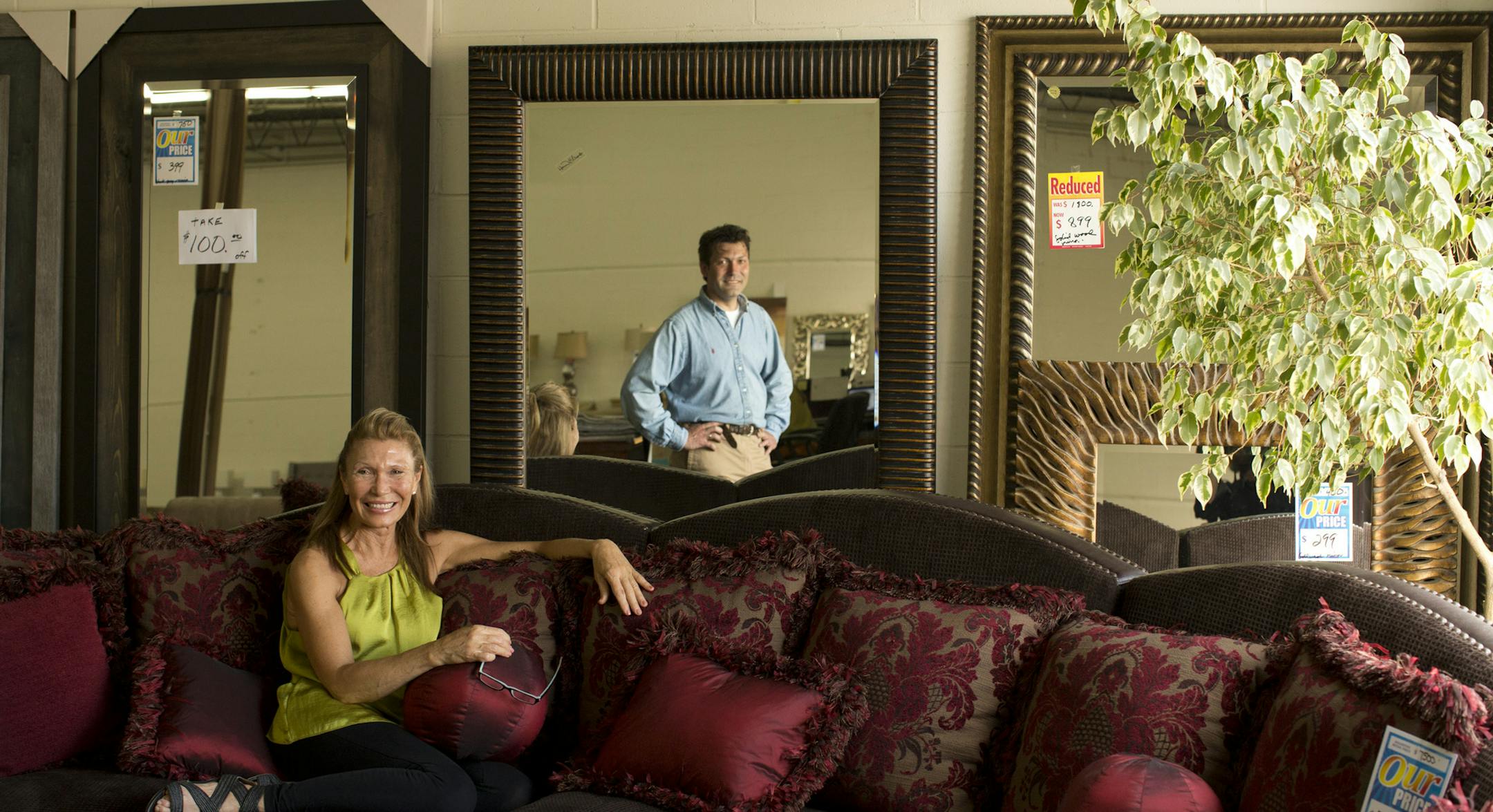
Nancy Newcomb, owner of Odds & Ends Furniture, says fast turnover of manufacturer's closeouts, regular merchandise and showroom samples help drive sales at her St. Louis Park warehouse. Rapid change has been a necessity for Newcomb, too, as she has quickly adjusted to volatile market conditions.
Indeed, almost everything has changed since Newcomb launched what would become Odds & Ends Furniture in 1997: The store's name, its more upscale product offerings and its location (its third) all are different. An evolving customer base, meanwhile, has helped see the company through the housing market bust and recession. Last year, the ownership changed when her son, Guy Newcomb, became part owner after working at the store since its early days.
Back then Nancy Newcomb got into the furniture business because of an abrupt change. Previously a women's clothing buyer for department and specialty stores, she resolved to work for herself after losing her job when her employer went bankrupt.
"It's turned out to be good," Newcomb said of starting her own venture. "The fact we've been able to make it through a tough time … makes me feel very proud I didn't want to be pounding the streets of New York in my 60s."
A few things have stayed the same: Odds & Ends maintains a low markup, with prices 20 to 40 percent less than at other stores. (The low markup applies to everything in the store, from closeouts and regular manufacturers' furnishings to prime showroom samples from the industry's major High Point Furniture Market trade shows in North Carolina and special orders.)
Low overhead
As always, Newcomb insists on keeping overhead low, with the store open only Thursday to Sunday, just five employees on staff and little to no advertising because she never runs sales. Her 16,000-square-foot showroom is in a warehouse. And that fast inventory turnover allows her to work on lower margins, which also helps keep prices down.
The biggest challenge of late has been losing about a third of her sales since the housing market crashed, Newcomb said. Revenue, which had been close to $3 million a year during the boom years before the crash, has fallen to about $2 million a year.
But helping to fill the consumer void has been an increase in sales to home stagers and designers, who often need a roomful (or houseful) of furniture to stage a home or condo for sale or rental. This business now accounts for 30 percent of the store's sales, up from 10 percent during the housing boom.


