

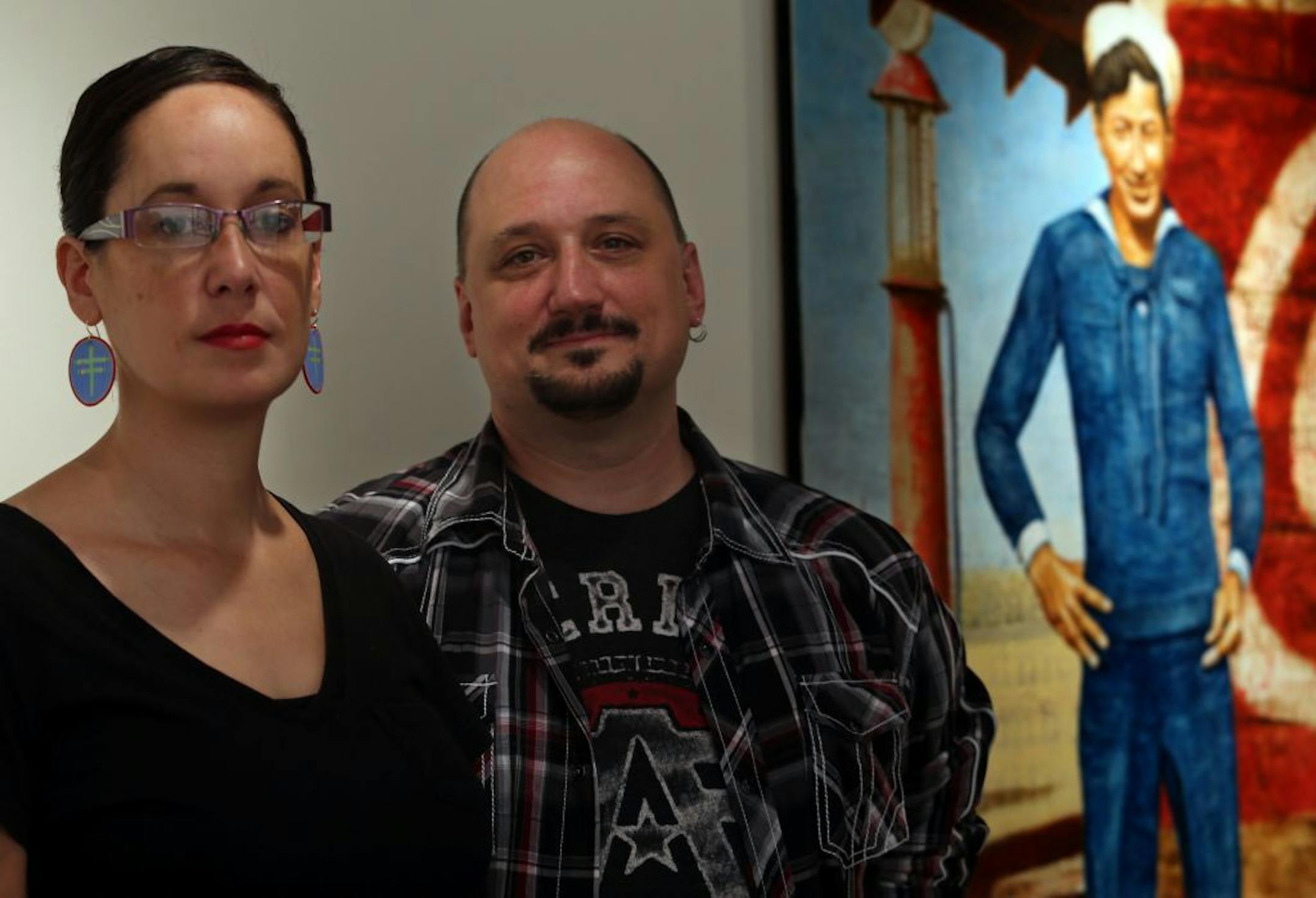
American Indian artist Greg Bellanger has been an advertising agency art director and worked for design firms.
But his passion is creating and selling woodlands and plains Indian art through Northland Visions, his family's 13-year-old south Minneapolis Indian-art retailer.
Bellanger, 45, a graduate of art schools and the University of Wisconsin-Stout in Menomonie, is an enrolled member of the White Earth Band of Chippewa. He also is part of a growing movement that stretches from hundreds of low-income artists on Midwest reservations to several Twin Cities galleries and shops that feature Indian artists. The goal: to expand the market for native art and economic opportunities for Indian artists.
Over the years, three Minnesota governors, the mayors of Minneapolis and St. Paul and a variety of business associations have shown up at Northland Visions to buy unique gifts.
"I once even made a pipe for a gift for Fidel Castro," recalled Bellanger, who seeks to expand the pipeline between Indian artists and the art-buying public. "Our primary customer has been our people. The native community is a gifting community and our culture is about gifting and sharing. But there is a broader market for our art."
A 2011 study by First Peoples Fund of South Dakota, a community development organization that supports Indian artists; Art Space; the Northwest Area Foundation of St. Paul, and Colorado State University found that a third of Indian people make art on several impoverished Western reservations. But they report household incomes of less than $10,000.
The Northwest Area Foundation, recognizing the power of art as an economic driver, recently committed $1 million over the next three years to help build the business-making capacity of several dozen Indian artists on several reservations, including Pine Ridge in South Dakota. The strategy is outlined in a recent report, "Establishing a Creative Economy: Art as an Economic Engine in Native Communities."
The Twin Cities is a seen as a growing gateway for Indian art and plans are afoot for more public showings, with public and corporate partners, at locations around the Twin Cities. And metro residents with backgrounds in Indian art and business will train artists in town and on reservations in small-business management, access to markets, supplies, credit, networks and working spaces.



