

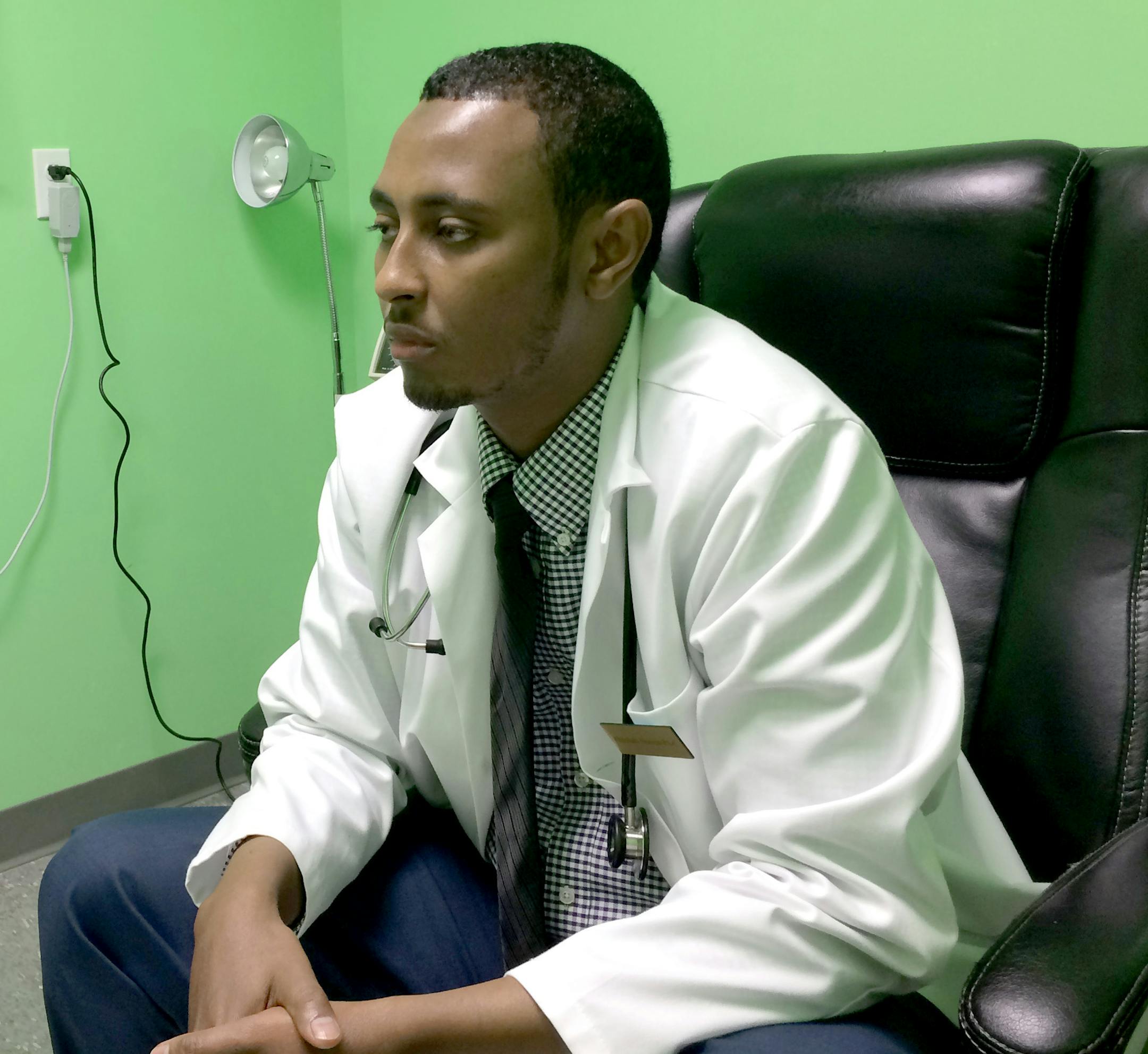
Physician assistant Abdullahi Hussein, a veteran medical professional who has worked at the Mayo Clinic and in the Cedar-Riverside area, opened his own walk-in clinic last month at 47th and Hiawatha avenues.
Hussein, 32, hails from a family of traders and shopkeepers and is one of only two licensed Somali-American physician assistants in the Twin Cities area. He's the first to go out on his own.
"I am confident that I will be successful," said Hussein, who's been working seven-day weeks so far. "The biggest risk is not taking any risk.
"My goal is to help the patients, Somalis or anyone. We just don't want them going to expensive emergency rooms, where they often have to wait … for primary care. I do an exam … treat them and tell them what they need to do to stay healthy."
Hussein, who lives with his family in south Minneapolis, put down about $30,000 in savings and financed about $40,000 to build out space and start-up costs in a strip mall near Minnehaha Park. His financier is the Metropolitan Community Consortium of Developers (MCCD), the business-backed nonprofit that works with fledgling businesses that are not yet bankable.
Iric Nathanson, a veteran MCCD finance specialist, said Hussein's education and work experience bode well for a primary-care clinic in the neighborhood and LRT line. The business plan anticipates a $70 per visit average charge, up to 20 visits daily and $250,000 in revenue in 2016. The two-employee clinic, which is open until 9 p.m. to accommodate working parents, is certified for reimbursement by insurers.
Hussein's walk-in clinic fits an emerging model, starting with retailers such as CVS, that offers low-cost primary care clinics staffed by nurses or physician assistants who are equipped to provide exams and deal with common illnesses in a patient-convenient setting. Most people with strep throat or an earache don't need a full-blown clinic or hospital.
Hussein, who graduated from high school in a Somali town near the Kenyan border, immigrated in 2006. He remembers American aid workers tending to sick kids in a nearby refugee camp. And when his father's business started to fail amid strife in the area, Hussein got in line to immigrate to the United States for higher education and a medical career.



