
St. Anthony: 75F, on a roll, sees big growth ahead

November 28, 2014 at 11:13PM
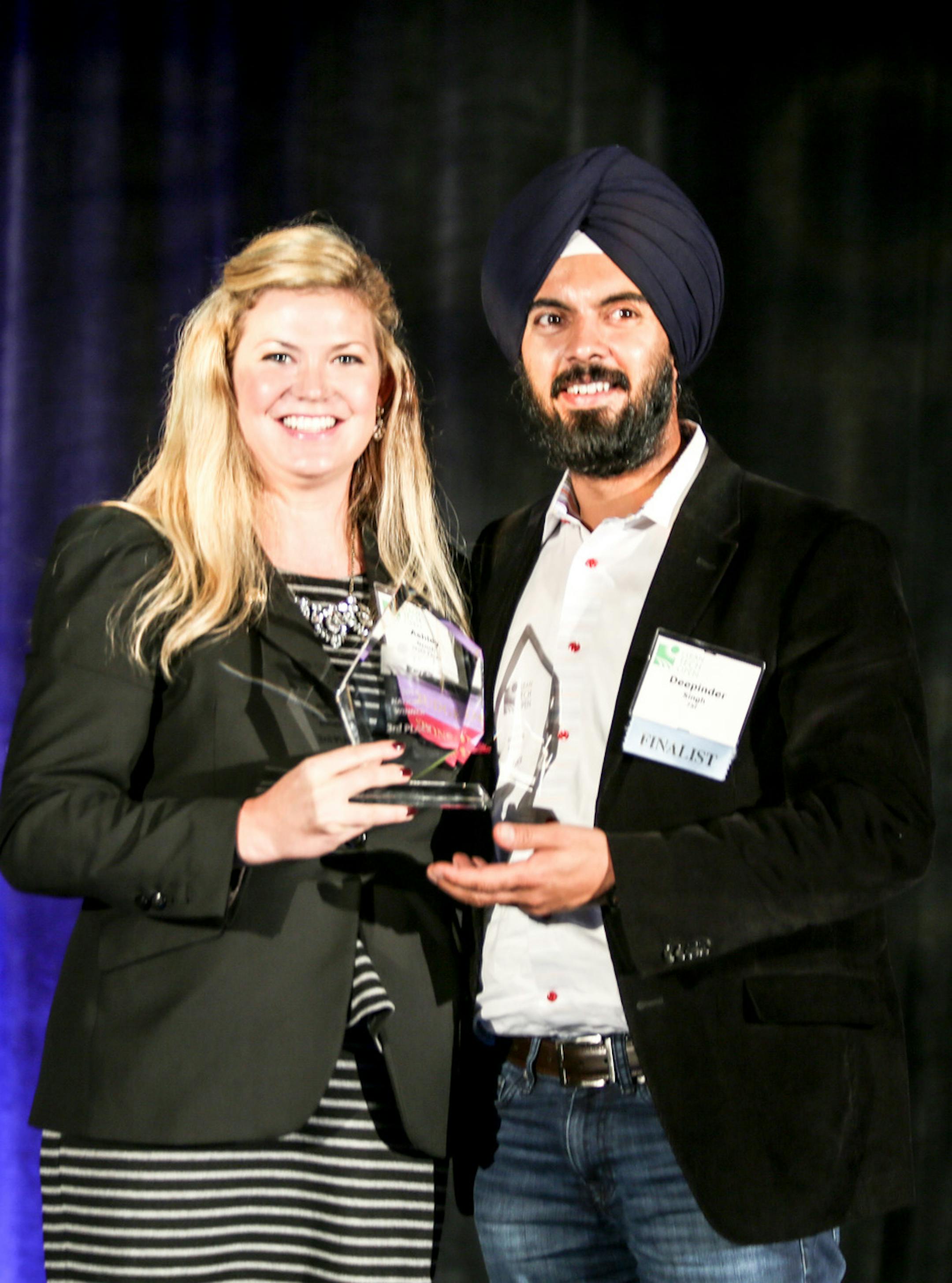
Ashley Grosh, Wells Fargo environmental affairs project manager with CEO Deepinder Singh of Mankato-based 75F, a national award winner at the Cleantech Global Open Forum in San Francisco earlier this month.
Ashley Grosh, Wells Fargo environmental affairs project manager, posed with Deepinder Singh, CEO of Mankato-based 75F. The company won an award at the Cleantech Open Global Forum in San Francisco earlier this month. (The Minnesota Star Tribune)

Deepinder Singh, a veteran engineer who has worked for the likes of AT&T and Verizon, is the understated entrepreneur behind 75F, the fledgling firm getting good public reviews for a system that cuts energy usage for small commercial buildings without decreasing comfort.

Mankato-based 75F has taken top entrepreneurial awards this fall at the Minnesota Cup, Midwest Cleantech Open, and Cleantech Open Global Forum in San Francisco, and won a $100,000 investment from Steve Case, the billionaire technology entrepreneur whose recent Midwest road tour sought to stimulate new business ventures outside oversold Silicon Valley.

75F puts wireless monitoring and computer-controlled dampers together in a system that allows individual room temperature control in small commercial buildings, yielding energy savings of up to 40 percent. The system analyzes weather forecasts and uses the information to set temperature and ventilation controls, and also monitors carbon dioxide levels and adjusts outside air inflows.

Singh, while traveling overseas recently, said in an e-mail exchange that the awards and media attention have elevated 75F's visibility. And $250,000 in total prize money is nice, too.

He said 75F, which started selling its product only this spring, will have revenue approaching $1 million this year. Singh also has raised about $1 million recently to add sales and support personnel and expects to finish 2014 with 30 employees. The company says building owners can pay back their investment in as little as three years.

"We have a huge list of potential customers who have contacted us," Singh said. "We are working with contractors, distributors and manufacturers' reps to work through the deal flow."

Singh's five-year prediction: "We expect to be about $60 million in sales and 100 employees by 2018."

The name "75F" was inspired by a United Nations initiative in 2008 to make its conference rooms greener by raising summer thermostats from 70 to 75 degrees Fahrenheit.
"75F demonstrated a well-thought-out business plan, superior presentation skills and an unmatched vision for the future," Scott Litman, a co-founder of the Minnesota Cup, said last fall. "We're looking forward to seeing and hearing big things from this entrepreneurial enterprise down the road."

Ativa Medical Builds Toward Commercial Launch

Ativa Medical, which plans to disrupt the centralized blood-testing lab system of today with "the world's first diagnostic micro lab to help clinicians make immediate treatment decisions," was recognized for its new technology earlier this month at the Minnesota LifeScience Alley annual conference.

The company, which is still testing the product before what it expects will be a submission for federal regulatory approval in 2015, hopes to achieve commercial sales in 2016.

Ativa seeks to provide a speedy, accurate, economical on-site analysis of a blood test that will involve as little as a finger prick instead of collecting a vial, and improve the patient experience, said Steve Floe, Ativa director of corporate strategy.

"[Today] you're missing that initial opportunity for the doctor to treat you right away," Floe said. "In many cases you'll get a call or letter from a nurse and you have to come back in."

At the conference, CEO James McNally of St. Paul-based Ativa told attendees that blood-test results drive 70 percent of physician decisions, but billions of patients worldwide, including in the United States, do not have access to timely testing results, potentially compromising treatment decisions.

"Diagnostic blood testing in the United States is a $60-plus billion market, with more than 95 percent of testing performed in central laboratories," McNally said. "But central lab test results are typically not available for one to five days."

Ativa, with 23 employees, has raised $19 million to date from individual investors. It's in the process of raising another $15 million, including institutional investors, to help fund the next stage toward regulatory approvals and commercial sales.

Ativa was one of several promising companies recognized by LifeScience Alley for its "groundbreaking advancements in healthcare technology," including market potential and the ability to improve patient outcomes while lowering per capita health care costs.

Xcel Exits Cast-iron Pipe Era

Xcel Energy has replaced the final miles of cast iron pipe from its multistate natural gas system. Cast iron was state of the art, 50 to 100 years ago.

Xcel, which serves nearly 2 million gas customers primarily in Colorado and Minnesota, began removing the first of about 880 miles of cast iron pipe in the 1970s.

The company estimates the equivalent of about 30,920 metric tons of carbon dioxide annually will not be released as a result of replacing the cast iron pipe in its system with modern piping, made of steel and plastic. That's comparable to the annual greenhouse gas emissions from about 6,500 cars.

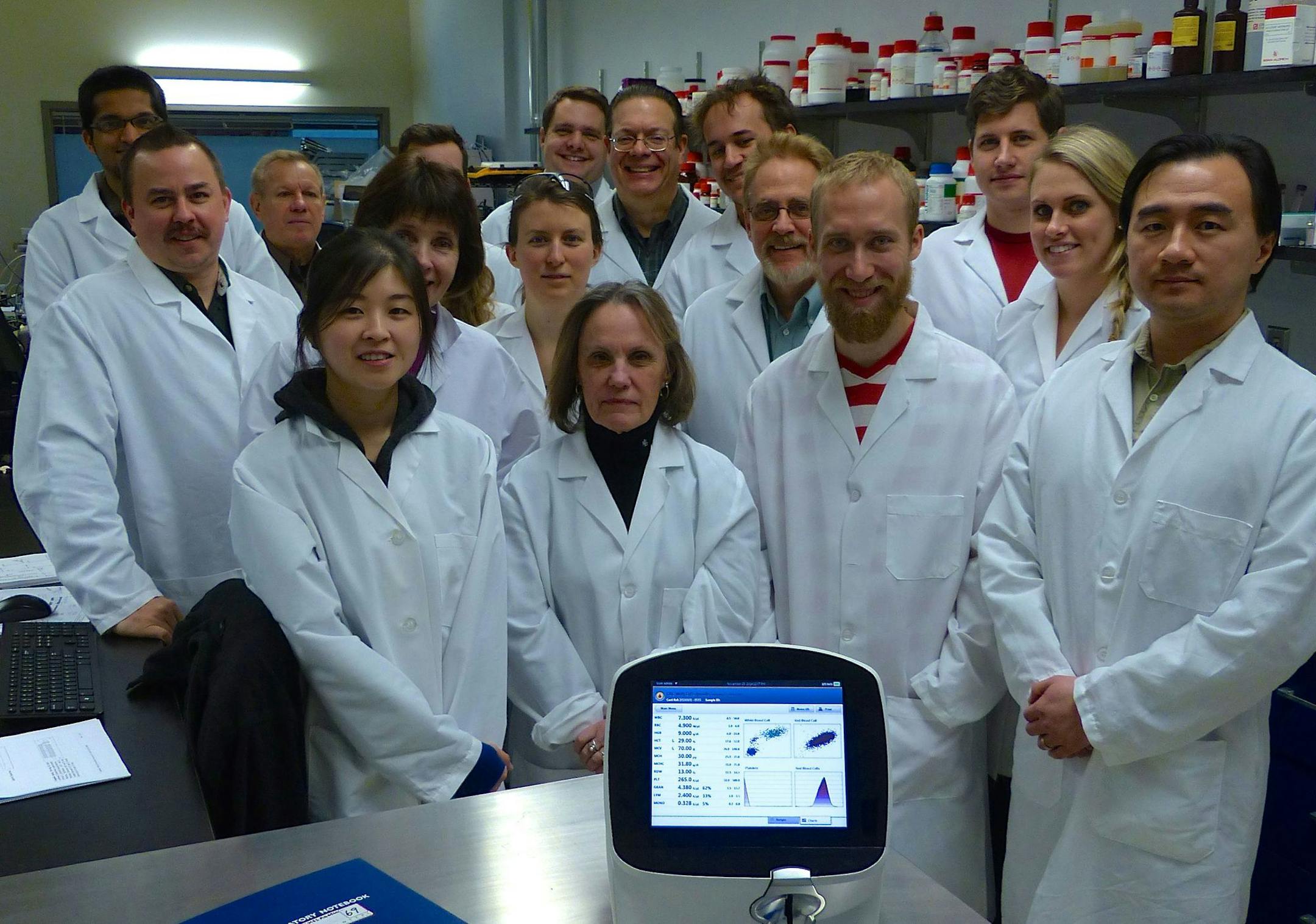
St. Paul-based Ativa Medical is developing the "MicroLab" mobile blood-test lab designed to cut cost and delays through on-site analysis instead of testing at a central laboratory.
St. Paul-based Ativa Medical is developing the “MicroLab” mobile blood-test lab, designed to cut costs and delays through on-site analysis. (The Minnesota Star Tribune)
about the writer

about the writer

Neal St. Anthony

Columnist, reporter

Neal St. Anthony has been a Star Tribune business columnist/reporter since 1984. 

See Moreicon

More from Business

See More
card image
card image
