

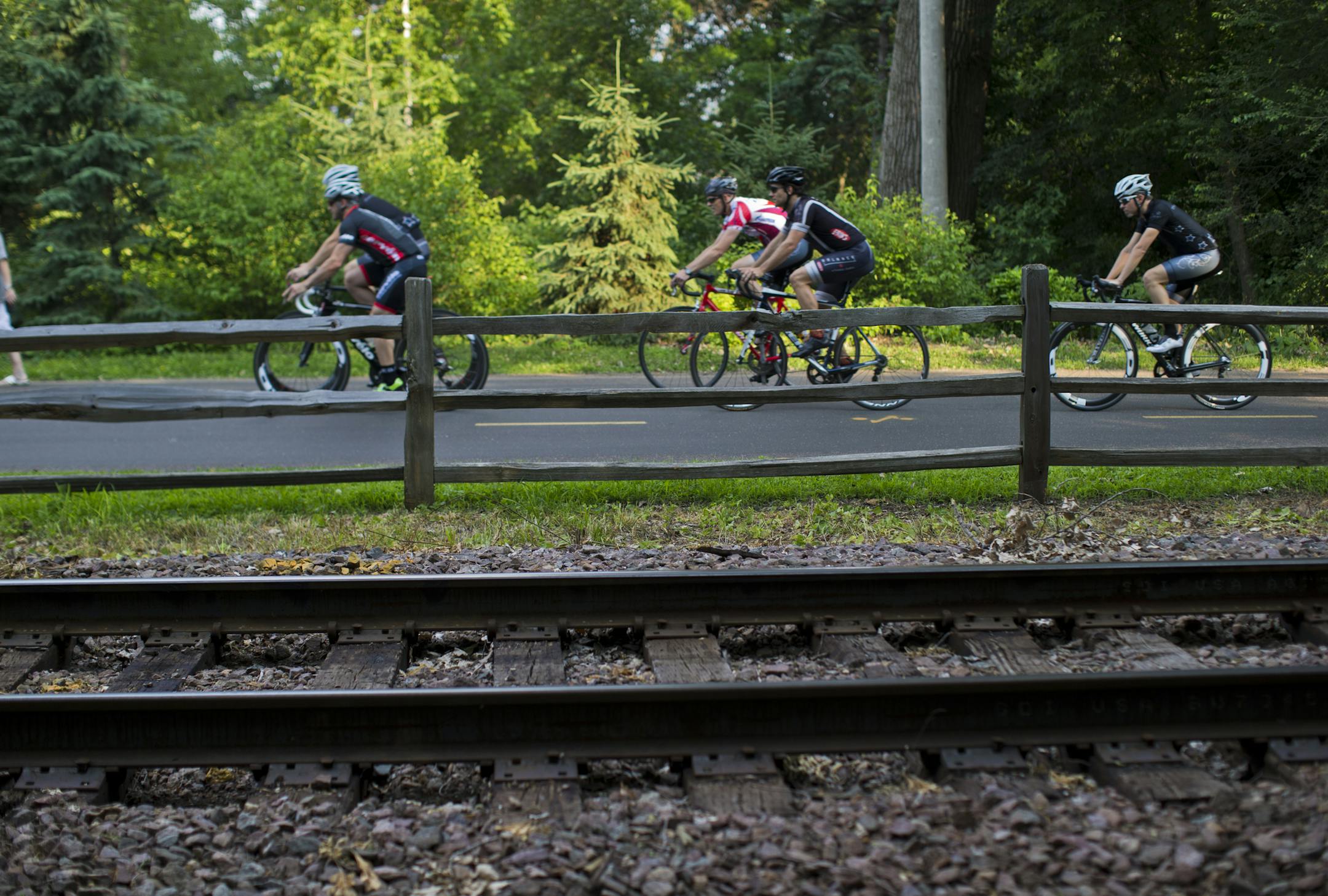
The conflict over the alignment of the Southwest light-rail corridor is a problem that already has a solution — the original agreement from 1997.
The agreement at that time was for Hennepin County to clean up one of the nation's worst Superfund sites in St. Louis Park in exchange for diverting freight-rail traffic from the Kenilworth corridor running between Cedar Lake and Lake of the Isles to St. Louis Park.
At that time, I was chair of the Hennepin County Board and was the chief architect of the original Midtown Greenway collaboration. As the county commissioner representing those communities, I also helped broker the Kenilworth bike trail as the second dedicated bikeway in Minneapolis. Both of these projects served to make huge assets out of old rail lines.
Around that time, the city faced a major rail traffic reroute problem due to the construction of Hiawatha Avenue/Hwy. 55. The Hiawatha Avenue project severed the existing east/west rail service on what is now the Midtown Greenway, forcing it into the Kenilworth corridor. Understandably, there was concern over this unwanted traffic.
At the same time, the city of St. Louis Park was burdened with one of the worst Superfund sites in the country. The Golden Auto site was severely polluted with creosote and was a major source of groundwater contamination. Health concerns in St. Louis Park were rampant, and experts predicted long-term health impacts. St. Louis Park desperately needed help. It was clearly in the public interest to remediate the polluted site.
The County Board found a way to solve both problems at once.
Through our work with key legislators, the state authorized Hennepin County to impose an additional 10-cents-per-$1,000 tax on mortgage and deed registration. The proceeds were put into a newly created Hennepin County Environmental Response Fund to clean up polluted sites in the county, with the first priority being the Golden Auto site.
Not only was the site to be cleaned up, but we also collectively agreed that a rail traffic connection was to be developed there to divert freight-rail traffic north to an existing rail line. Rail traffic through the Kenilworth corridor was to be only temporary, and a new route was to be found through the cleaned-up Golden Auto site.


