

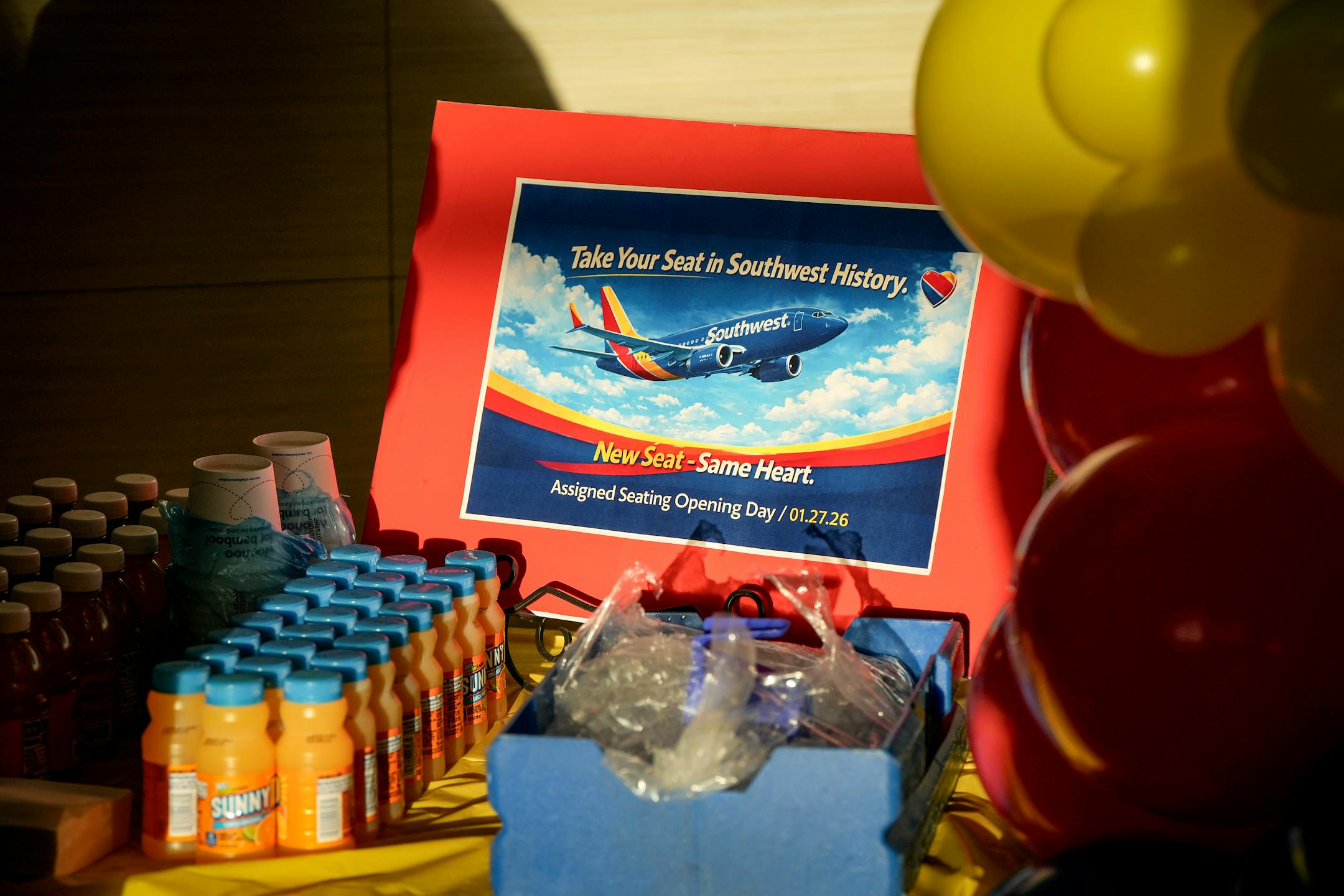
With a water-cannon salute, balloons and commemorative bag tags, Southwest Airlines late last month officially retired its decades-old practice of open seating. For the first time, passengers received assigned seats, a major shift for the carrier.
Southwest says the seating changes are intended to keep up with evolving customer expectations and to increase revenue.
Tony Roach, an executive vice president at the airline, said that Southwest had “outgrown” open seating, adding that assigned seating also reduces anxiety among travelers because they know what to expect.
“There were a lot of limitations with open seating in terms of what we want to do in the future,” he said. “You aren’t able to offer things inside the cabin which a lot of people want. Things like extra legroom would have been very difficult to do with an open-seating environment.”
For more than 50 years, Southwest used a system of open seating: Once they had checked in, passengers received a group and a number that determined the general order of when they’d get on the plane. Then once on board, they could choose any open seat. Getting a desired seat, or sitting together, often hinged on checking in early, and there were no premium seats.
The system was loved by some travelers, who viewed it as egalitarian and flexible, and bemoaned by others who complained that it was chaotic and stressful.
Now, Southwest offers three categories of seats — standard, preferred and extra legroom — and the most expensive can cost hundreds of dollars more. Boarding order now depends on the fare class, as well as whether a traveler has elite status with the airline or holds its credit card. Travelers can also pay extra to board in an earlier group.
The airline also ended its flexible policy for plus-size passengers, which allowed customers to ask for an extra seat at the gate, or pay for an extra seat and later receive a refund. Those passengers will now need to purchase two seats ahead of time, without a guaranteed refund.


