1:52
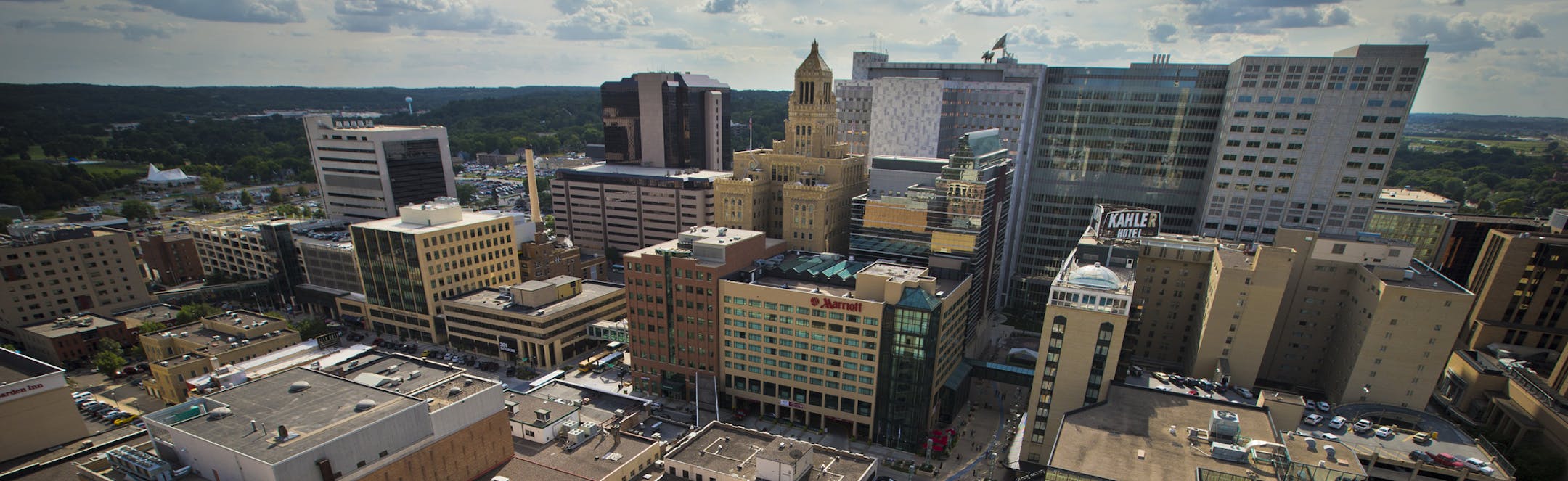
1:52Fueled by Mayo Clinic's dramatic expansion plans in Rochester, southeast Minnesota is poised to become a linchpin in the state's efforts to revitalize its medical economy.
Billions of dollars in new development in Rochester — along with the doubling of a cancer research center in Austin — has Gov. Mark Dayton's administration eyeing a dramatic transformation of the area, creating an even tighter link between Mayo, the Twin Cities' medical and research facilities and the private sector. The plan could, at some point, include high-speed rail between the Twin Cities and Rochester and a host of other amenities.
Taken together, such changes "will be a cornerstone of Minnesota's future economy," Gov. Mark Dayton said in an interview with the Star Tribune.
The Rochester project alone is massive. Mayo and the city are on the brink of a $6 billion building boom to transform the clinic and community into what they call Destination Medical Center, a world-class facility designed to be on par with Johns Hopkins in Baltimore and Ohio's Cleveland Clinic. It will be the development equivalent of dropping six new Vikings Stadiums or nine Malls of America into a city a third the size of Minneapolis, and everyone is waiting to see what effect it will have on the economy, not just of the region but of the whole state.
Down the road in Austin, the University of Minnesota's Hormel Institute is launching its own massive expansion to become a leading biomedical research facility, starting with a $23 million campaign to draw the world's best cancer researchers to southern Minnesota.
Back in the Twin Cities, Dayton and U President Eric Kaler are working on an initiative, to be unveiled this fall, that would restore the U's medical school to pre-eminence.
Ultimately, Dayton said, "The way Silicon Valley is for technology, Minnesota should become the premier site in this country and the world for medical care and medical technology."
A pioneering past
The state already has a head start. Minnesota is where Mayo doctors pioneered the heart-lung bypass machine, where engineer Earl Bakken's garage invention of the first wearable pacemaker led to medical devices giant Medtronic. It's where U doctors led the way in organ transplantation in the 1960s.
 djoles@startribune.](https://arc.stimg.co/startribunemedia/L7EYW5JDPML5DZKJ2R4YF23D2Y.jpg?&w=1080)