
Minnesota’s Oat Mafia ‘sitting on nearly all’ of its harvest, with no buyer in line

The southeastern Minnesota farm collective warns that without a consistent market, the promise of a profitable new crop and cleaner water will wilt.

The Minnesota Star Tribune
September 26, 2025 at 5:29PM
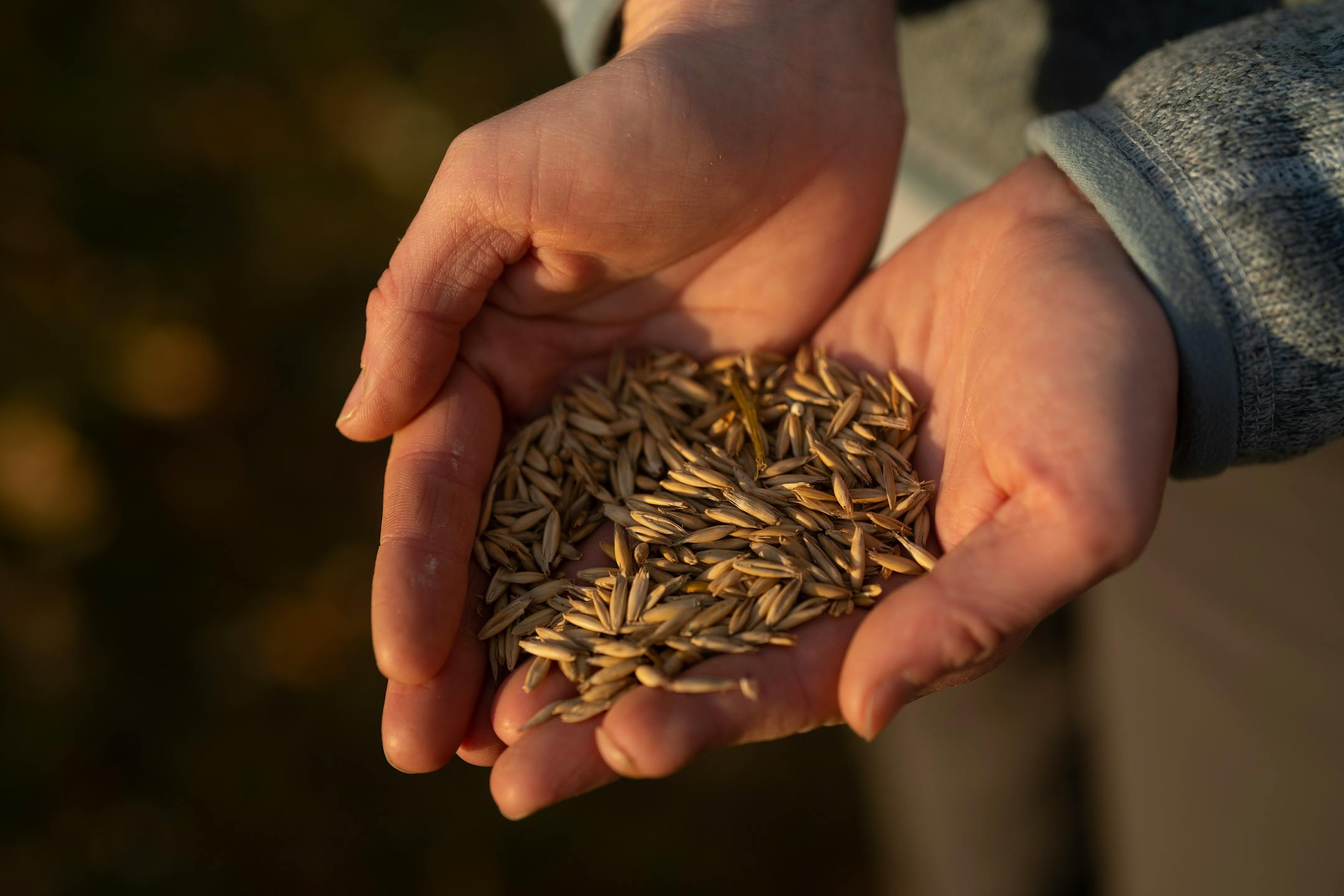
Shea-Lynn Ramthun, the sixth-generation farmer at Flying J Farm in Cannon Falls, Minn., holds a handful of oats last fall. (Alex Kormann/The Minnesota Star Tribune)

Farmers in southeastern Minnesota are staring down the prospect of storing thousands of tons of oats with no profitable place to send them.

If that doesn’t change soon, fewer farmers might grow the crop next season and beyond, dashing the hopes of water quality advocates who see oats as a proven way to reduce nitrate pollution.

“The only way to make this work is to have buyers,” said Martin Larsen, who farms oats, corn and soy outside Byron. “We’re sitting on nearly all our oats.”

The self-styled “Oat Mafia” Larsen co-founded collectively planted 6,000 acres of oats this year, but ran into trouble before harvest. La Crosse Milling Co., which planned to buy some of the group’s crop, didn’t have room for the whole harvest. The next best place to sell the oats would take them at 50 cents less per bushel.

That leaves about 600,000 bushels of oats bound for bins until a buyer emerges. And that comes as farmers also need to hold on to soybeans to wait for buyers and better prices as tariffs keep China from buying American soy.

As a result, the financial risk of planting oats is becoming too great, Larsen said, keeping otherwise eager farmers on the sidelines and threatening to reduce Minnesota’s already small acreage of oats next season.

Without a consistent market, the win-win promise of a new crop and cleaner water will “not have the broad impact” the state needs, Larsen said.

“We need to grow corn and soybeans differently or grow something different than corn and soybeans or we will not fix the nitrate problem in southeast Minnesota,” he said.

Shea-Lynn Ramthun, who grazes cattle and grows oats amid a variety of crops at her Cannon Falls farm, said she doesn’t blame farmers for wanting to exit oats.

“It’s hard to look at a farmer and say: ‘Grow X amount of acres because it’s the right thing to do, but it might sit in your bin for two years because we can’t find anyone to buy them,’“ she said. ”Meanwhile, the demand from consumers is just going up.”

Shea-Lynn Ramthun walks through a field of volunteer oats at Flying J Farm in Cannon Falls last fall. (Alex Kormann/The Minnesota Star Tribune)

Whether in oatmeal, cereal, bars or plant-based milks, market research shows a growing appetite for the small grain.

But the oats need processing first.

Green Acres Milling will open a $55 million oat mill in Albert Lea next year, though Ramthun and Larsen said the farmer-owned operation won’t fully address the market consistency problem for many farmers. And it doesn’t solve the immediate issue.

“The way I see this playing out in the long run is, we need to replicate the success of Green Acres and figure out how to open more local mills that are selling to local buyers, but this will take years,” Ramthun said. “In the meantime, we need our local, established, larger corporations to do the bare minimum of purchasing local oats.”

The Oat Mafia is trying to build a relationship with Golden Valley-based General Mills. The Cheerios maker sources many of its oats from Canada and declined to comment Friday.

There are other major oat buyers, like Eden Prairie-based Grain Millers, or other consumer packaged goods companies, that could contract for Minnesota oats. But the Oat Mafia is going against the grain: U.S. ag infrastructure centers on corn and soy, and Canadian imports dominate the oat market.

The European Union and Canada grew about half the world’s oats last year; the U.S. grows about 4% and is the world’s largest importer of oats.

Minnesota Department of Agriculture Commissioner Thom Petersen said the department has been working on persuading local companies to buy more local oats.

“We’ve been trying to work with General Mills and encouraging them to buy U.S. oats,” he said. “There are a lot of smaller buyers, too.”

Petersen said the effort is “a great story for southeastern Minnesota,” so long as the market actually arises.

“They’re skating where the puck is heading,” he said.

about the writer

about the writer

Brooks Johnson

Business Reporter

Brooks Johnson is a business reporter covering Minnesota’s food industry, agribusinesses and 3M.

See Moreicon

More from Agriculture

See More
The Abbey Church is a landmark on the St. John's University campus located in Collegeville.
The Minnesota Star Tribune

Local nonfiction: “Greater Minnesota” travelogue details a home-grown returnee’s conversion.

card image
card image