

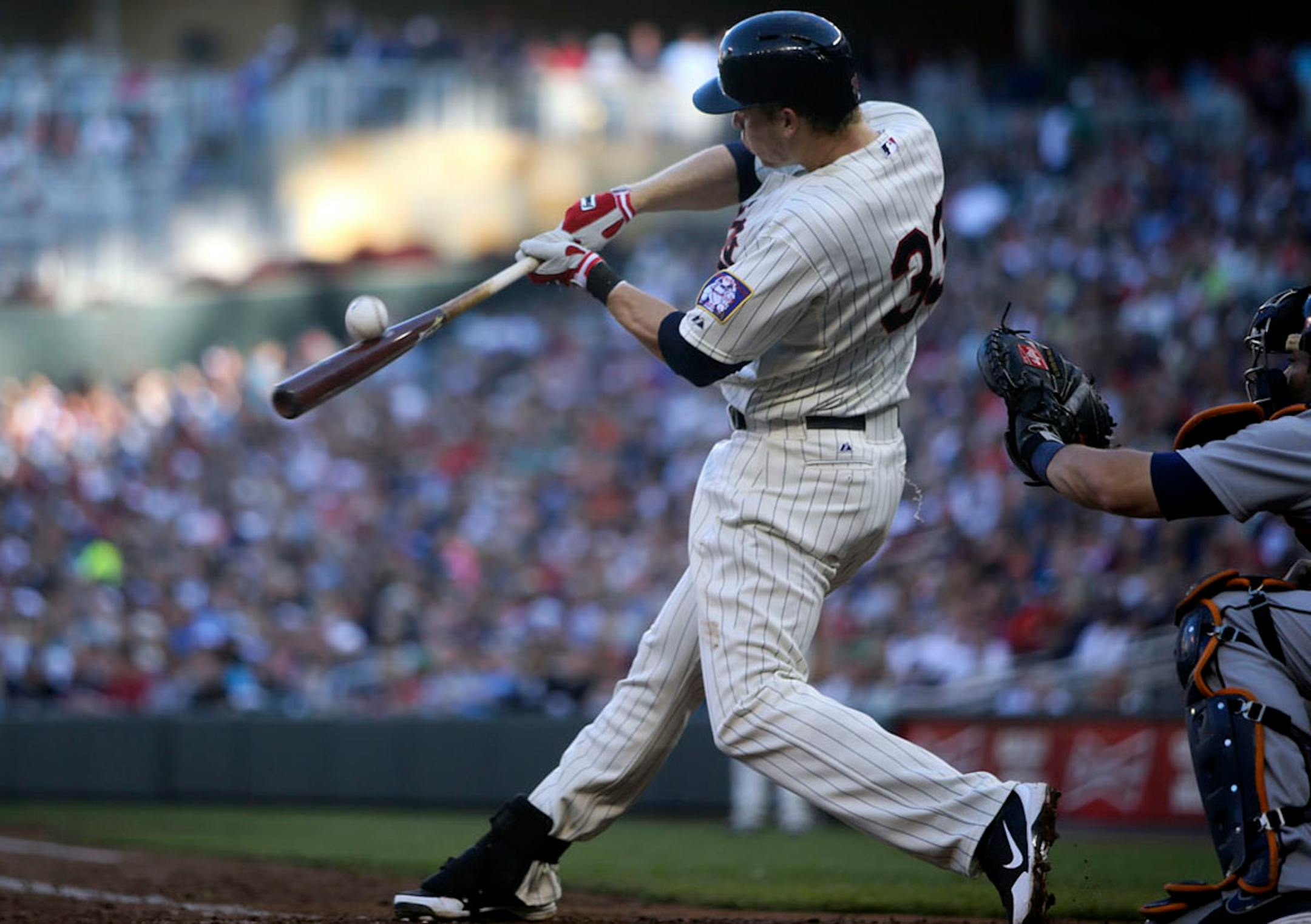
The only thing sadder than trading Justin Morneau will be getting little in return for him.
Public opinion seems to be that it was embarrassing the Twins had eight former players in the All-Star game. The embarrassment is what the Twins have gotten in return for players in recent years. Morneau is almost certain to be the latest star to leave town as a squandered asset.
The Twins aren't headed for a third consecutive 90-loss season because of the size of their payroll. You can't blame payroll size when the A's and Rays are better than the Yankees and Dodgers.
The Twins are in the midst of another lost season because they are no longer masters of the trade market.
Sentimentality, false hope and bad timing kept the Twins from trading so many of their departing players, or from trading them for equitable value. They also suffered from the curse of winning teams: Low draft choices and an unwillingness to trade away players during competitive seasons.
The Twins' drafting and player development positioned the team to succeed in the 2000s; trades put them over the top. Terry Ryan's trade of Chuck Knoblauch to the Yankees in 1998 led to a franchise revival. Trading A.J. Pierzynski for Joe Nathan and Francisco Liriano, trading Bobby Kielty for Shannon Stewart, and trading for Johan Santana in the Rule V draft were the kinds of deals that led to a decade of success.
When Ryan retired temporarily and Bill Smith took over as GM, the Twins stopped making the kinds of trades that may have prevented their three-season slump.
David Ortiz is, to many, a symbol of Twins' negligence, but the Twins made the same judgment on Ortiz as 31 other teams. The Twins waived him. No other team signed him as a starting first baseman or DH. The Red Sox signed him as a backup for $1.25 million, the price of a mediocre utility infielder.


