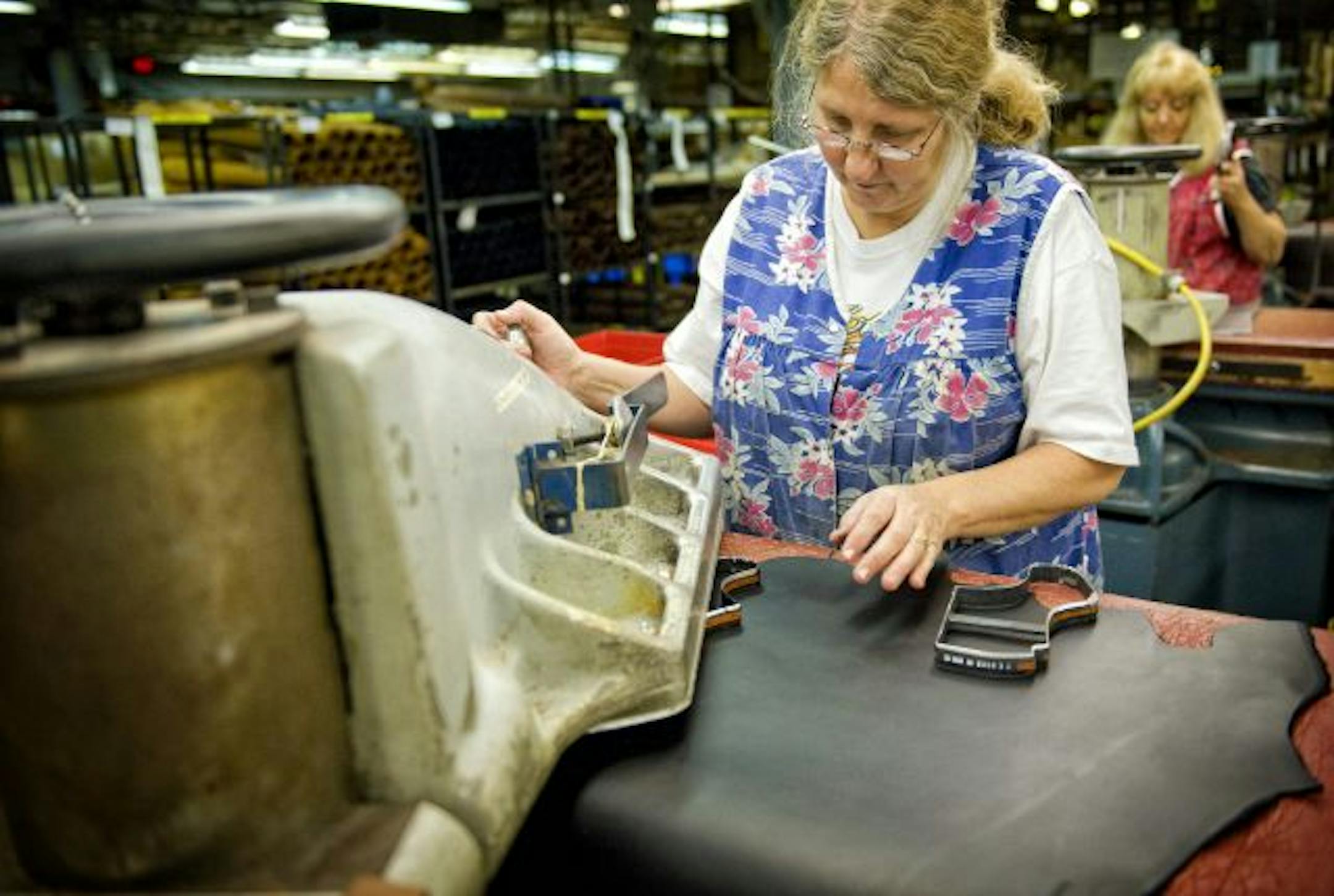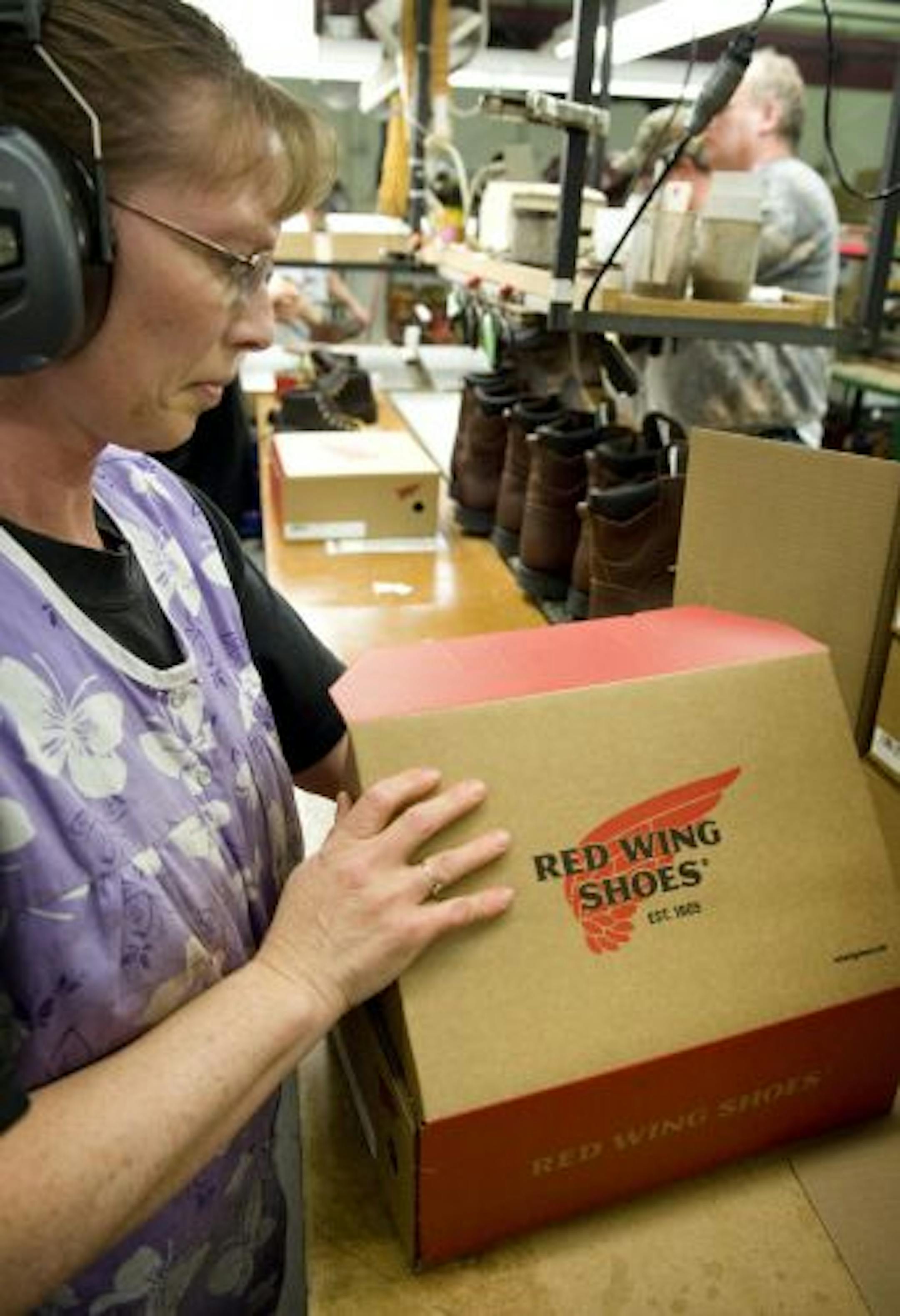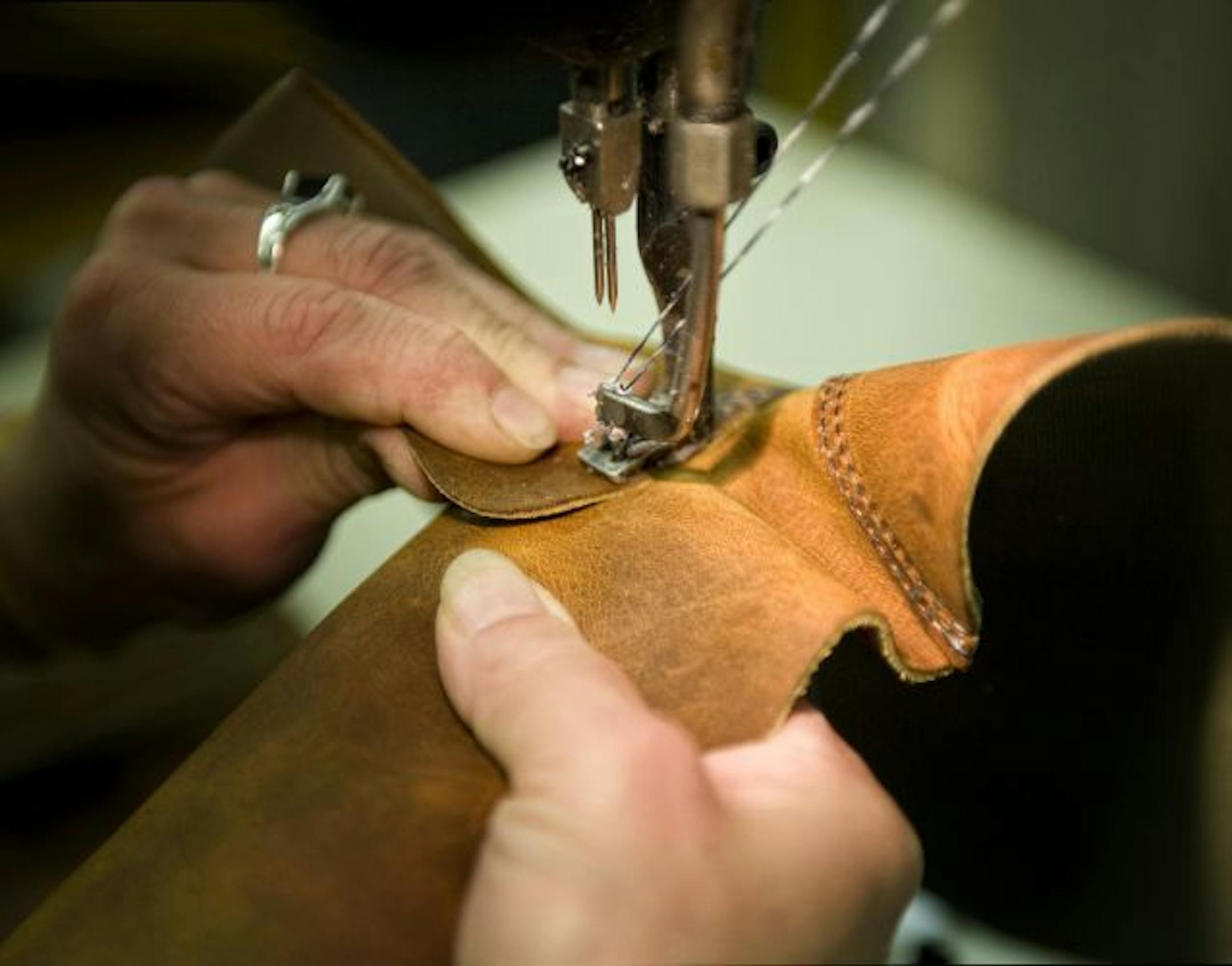
RED WING, MINN. -- One day last week, Mary Brandt, a 32-year employee at the flagship Red Wing Shoe plant, was expertly cutting leather made from Midwest cattle hides, the first of 200-plus precision steps that go into making a hand-sewn pair of iconic Red Wing boots.
"We're picking up overtime," said Brandt, her eyes never leaving her pattern cutter. "That's been going on since May. Our inventory got too low."
This is a good problem compared with the one a year ago.
Amid a drastic drop in orders, Red Wing Shoe management decided in October 2009 to gradually reduce from 775 to 550 American jobs across its 150 corporate-owned stores and plants in Red Wing, Kentucky and Missouri. In a bid to slow layoffs, Red Wing had cut production to four days a week, ensuring workers 80 percent of a check while the state of Minnesota paid unemployment compensation at a one-fifth rate, under a unique state program.
Red Wing Shoe was sustained through much of 2008, as the rest of America fell into recession, by high energy prices and booming oil and gas fields whose roughneck workers often wear Red Wing boots. Energy prices and drilling didn't decline until late 2008 and into 2009. And retailers quit ordering seasonal inventory amid millions of layoffs, catatonic consumers and a spreading recession.
A year later, Red Wing Shoe has restored the 70-worker night shift in Red Wing, home to about half of what is once again a growing, 825-employee workforce, 50 more U.S. jobs than last fall.
World 'swinging back'
Fittingly, Red Wing Shoe this year finished work on a $5 million overhaul of a once-dilapidated building for its new global headquarters on Main Street and a flagship store and outlet center in the town where it was born 105 years ago. Red Wing Shoe is growing in an industry where more than 95 percent of footwear production has moved to low-cost Asia or Latin America.