

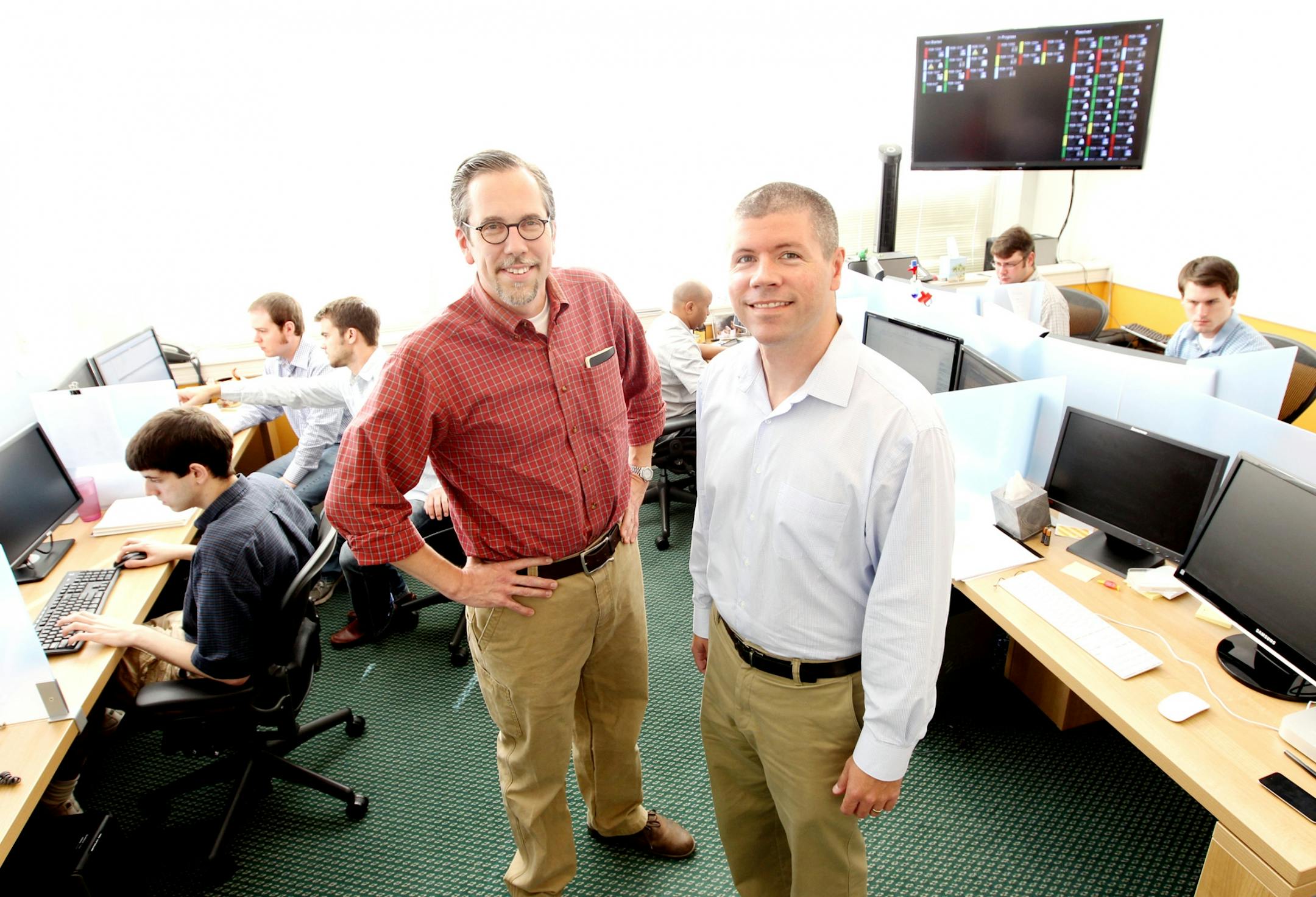
Andrew Reeher, founder of St. Paul-based software company Reeher LLC, is teaching college and university fundraisers how to boost donations in the cloud.
The company's cloud-based management system helps colleges identify previously undiscovered best prospects and equips typically staid higher education fundraisers with corporate-style, data-driven sales and management tools.
Those include customized predictive models that quickly find alumni who are most likely to give but who otherwise have gone overlooked in the school's own database. The Reeher Platform, as it is called, is subscription-based software service, installed in just a few weeks, updated nightly with new transactions. Improvements made for one school become available to all on the shared platform.
The data- and analytics-heavy approach reflects the background of president and CEO Reeher, a former vice president of marketing at Deluxe Corp.
He blended that experience with insights he gained into university fundraising while working as a consultant after leaving Deluxe in 2001. He founded Reeher LLC in 2002 intent on building tools to improve management practices in university fundraising.
"I realized how few tools these folks in fundraising had in order to be able to do a better job," said Reeher. He said he had been involved in developing products based on predictive models while at Deluxe, and "what I was seeing in the data was indicating that there were significant opportunities for them to become more efficient and more effective."
The platform has more than 30 customers, from public universities such as Cincinnati and Temple, to research institutions such as John Hopkins and Duke, to private colleges such as newcomers Amherst and Wheaton. Locally, St. John's University in Collegeville and Hamline University are customers.
Reeher has received two rounds of financing from angel investors since 2009, totaling less than $1 million, to expand its sales and marketing. The company has 20 employees and is projecting revenue of $3 million this year, up from $2 million in 2011.



