

Opinion editor's note: Star Tribune Opinion publishes a mix of national and local commentaries online and in print each day. To contribute, click here.
•••
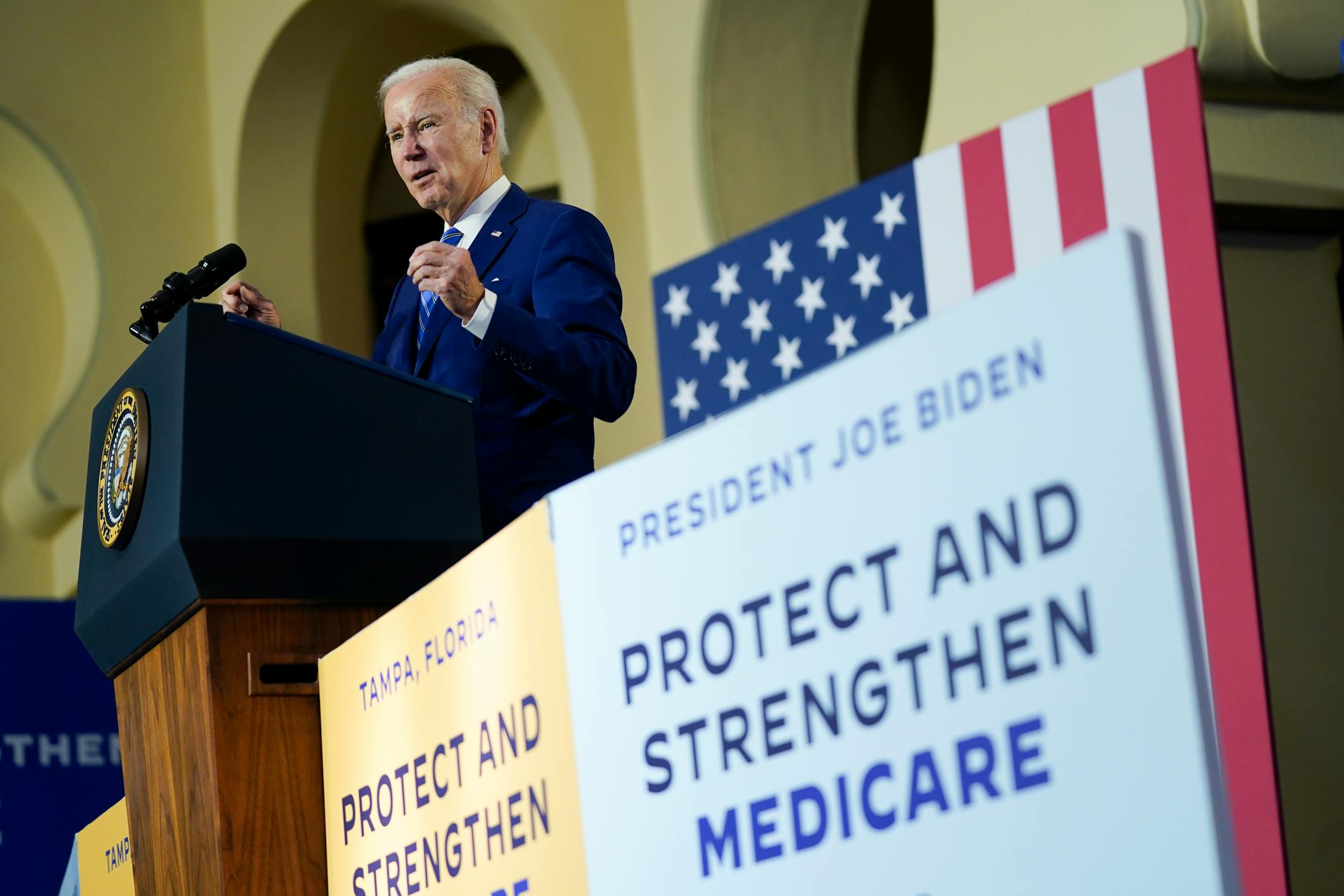
In his State of the Union speech this month, President Joe Biden pledged to block any reductions in scheduled Social Security and Medicare benefits. He also promised that any tax increases would be limited to families that earn more than $400,000 — roughly the top-earning 2% of American families.
Together, these promises are almost certainly economically impossible.
Over the next three decades, the Social Security system is scheduled to pay benefits $21 trillion greater than its trust fund will collect in payroll taxes and related revenues. The Medicare system is projected to run a $48 trillion shortfall. These deficits are projected to, in turn, produce $47 trillion in interest payments on the national debt. That is a combined shortfall of $116 trillion, according to data from the Congressional Budget Office. (To inflation-adjust these figures, trim by roughly one-third.)
These unsustainable figures result from demographics, rising health care costs and program design. The ratio of workers supporting each retiree, which was about 5:1 back in 1960, will fall to just over 2:1 by the next decade. People who live until age 90, a fast-growing group, will spend one-third of their adult life collecting Social Security and Medicare benefits.
Today's typical retiring couple will receive Medicare benefits three times as large as their lifetime contributions to the system, and also will come out ahead on Social Security (adjusted into present value), according to the Urban Institute and the Brookings Institution.
The president's implication that full benefits can be paid without raising taxes for 98% of families has no basis in mathematical reality.


