

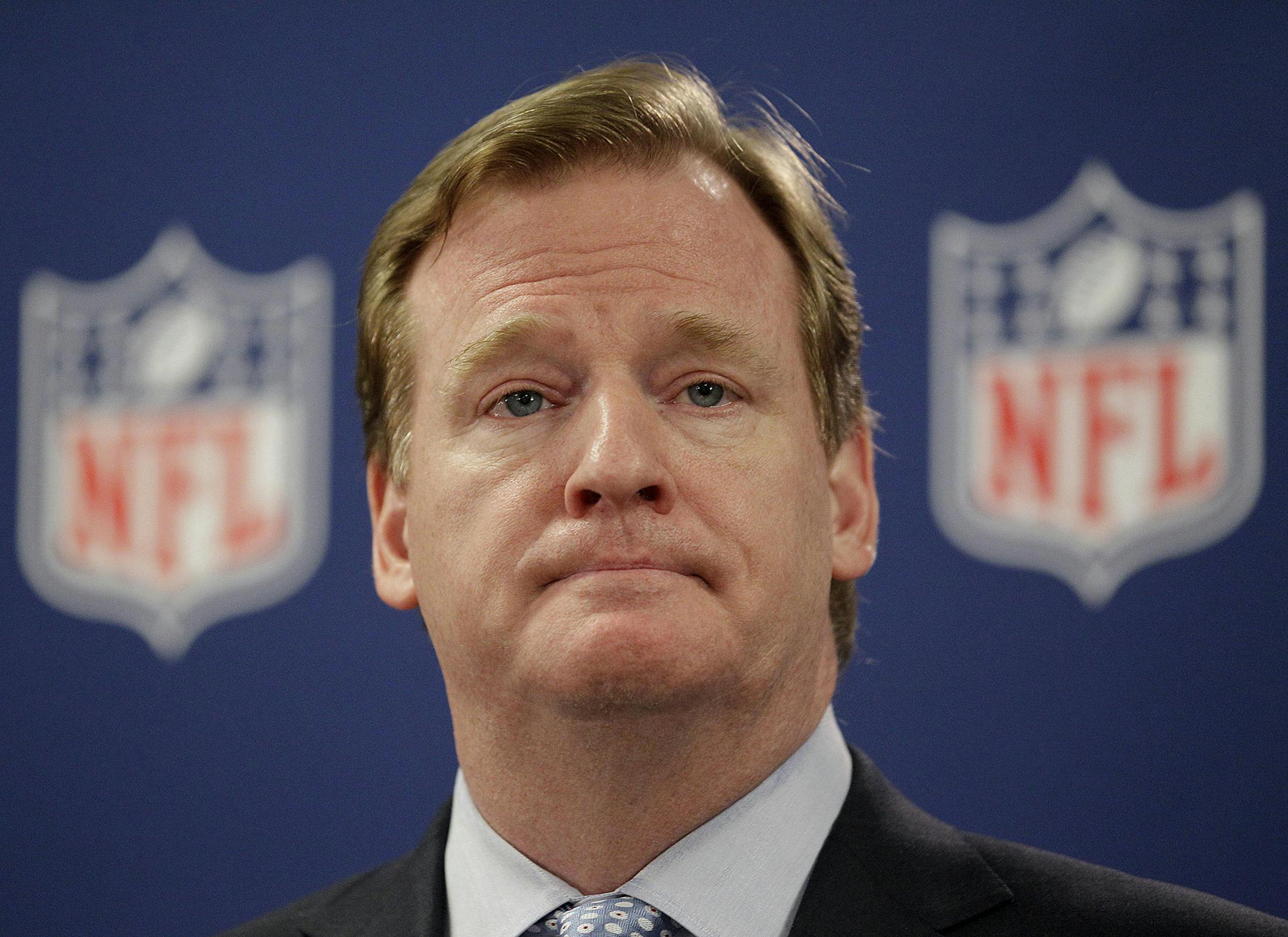
Every time the National Football League does something dumb, which is often, a lot of people call for Congress to revoke its tax exemption.
Pro football teams are for-profit companies that pay taxes, as the NFL likes to reiterate. But the league office itself is classified as a 501(c)(6) organization, along the lines of the U.S. Chamber of Commerce. You can argue about whether that exemption should apply to the NFL, but it quite specifically does.
The more interesting question is why the NFL wants to remain tax exempt.
The league office loses money in a typical year. So it wouldn't pay taxes anyway, and the exemption doesn't save any money. The exemption also requires the NFL to make a lot of disclosures - like the comically immoderate salary of Commissioner Roger Goodell - that it would probably prefer to keep private. And every time an NFL player does something terrible, the league's favorable tax treatment creates an added distraction, agitates Congress, and causes journalists to write articles like this one, only angrier.
So why not give up the exemption voluntarily, as Major League Baseball did in 2007? Especially since MLB has said that its transition was "tax neutral"?
That's a mystery, even to economists who have studied the league. But here are two possibilities, which I'll try to keep un-boring.
First, the league's primary business these days is no longer football, it's financing. In 1999, the NFL started a loan program to help teams pay for new stadiums or upgrade existing ones. About half the stadiums built in the past two decades have benefited from the program, which the league has used to offer loans on hugely advantageous terms. Loans, in fact, make up most of what the league office now does: Seventy percent of its assets are loans receivable, notes John Vrooman, a sports economist at Vanderbilt University, and 76 percent of its liabilities are loans payable to third parties.
"It is not altogether clear that the tax-exempt status gives the league an additional advantage in the credit market, but it sure looks that way," Vrooman told me. "This seems to be the only real financial reason for the NFL league office to keep its tax exempt status in the face of now-troubling P.R."


