

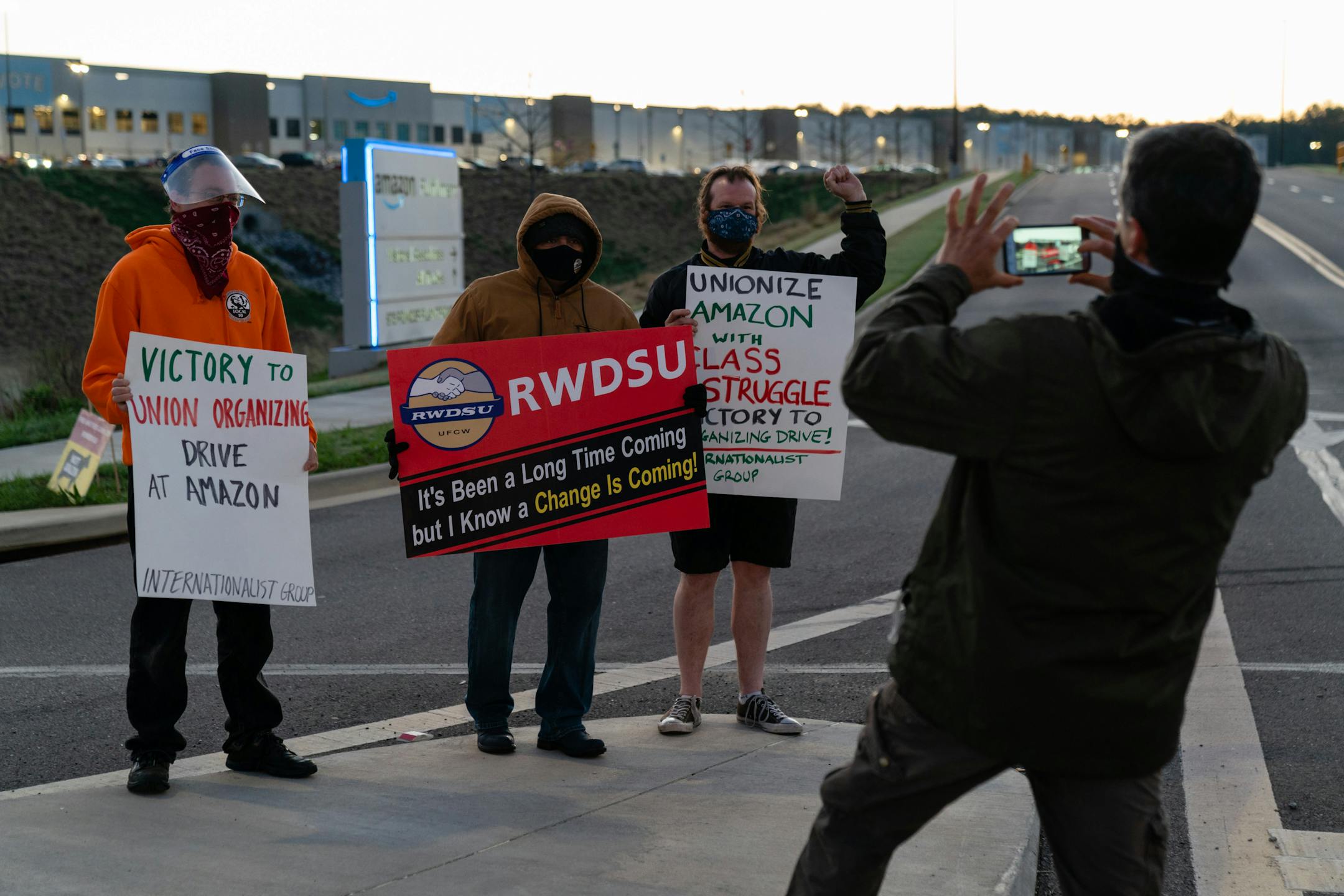
Well, it was a valiant effort, that drive to organize workers at an Amazon facility in Bessemer, Ala., which resulted in a defeat even more embarrassing than the vote count suggests.
Nearly 6,000 workers would have been covered by the Retail, Wholesale and Department Store Union, but only a little more than half of the eligible workers bothered to vote. Of those who cast ballots, only 738 workers supported the union, 1,000 votes fewer than those who opposed.
Another 500 ballots weren't counted after being challenged (mostly by management), but even if you add all of those to the "yes" side (highly unlikely), that would mean a maximum of 20% of the workers voted to unionize, and the percentage in reality is probably much lower.
Ouch.
The deck has been stacked against unions for decades through federal laws, state right-to-work standards and questionable legal decisions, among other factors.
But the biggest problem unions face is they have lost the public relations battle. Remarkably, two-thirds of Americans tell pollsters they support unions. Yet, only a sliver of American workers belong to one, and as we just saw in Alabama, the chief hurdle is unions' failure to persuade individual workers that being in a union is better for them than not being in a union.
Oddly, nearly half of non-unionized workers say they would join a union if they had a chance, but what people tell pollsters and what people actually do are often two different things.
The reasons are myriad, some of them class-based. I worked at the Detroit News in the mid-1990s when it and the Detroit Free Press went out on strike (a long and violent affair; I left Detroit and the strike after 18 months on the picket line), and I recall some of my fellow union journalists expressing unease at walking a picket line with Teamsters, even though we were fighting the same fight against the same owners.


