

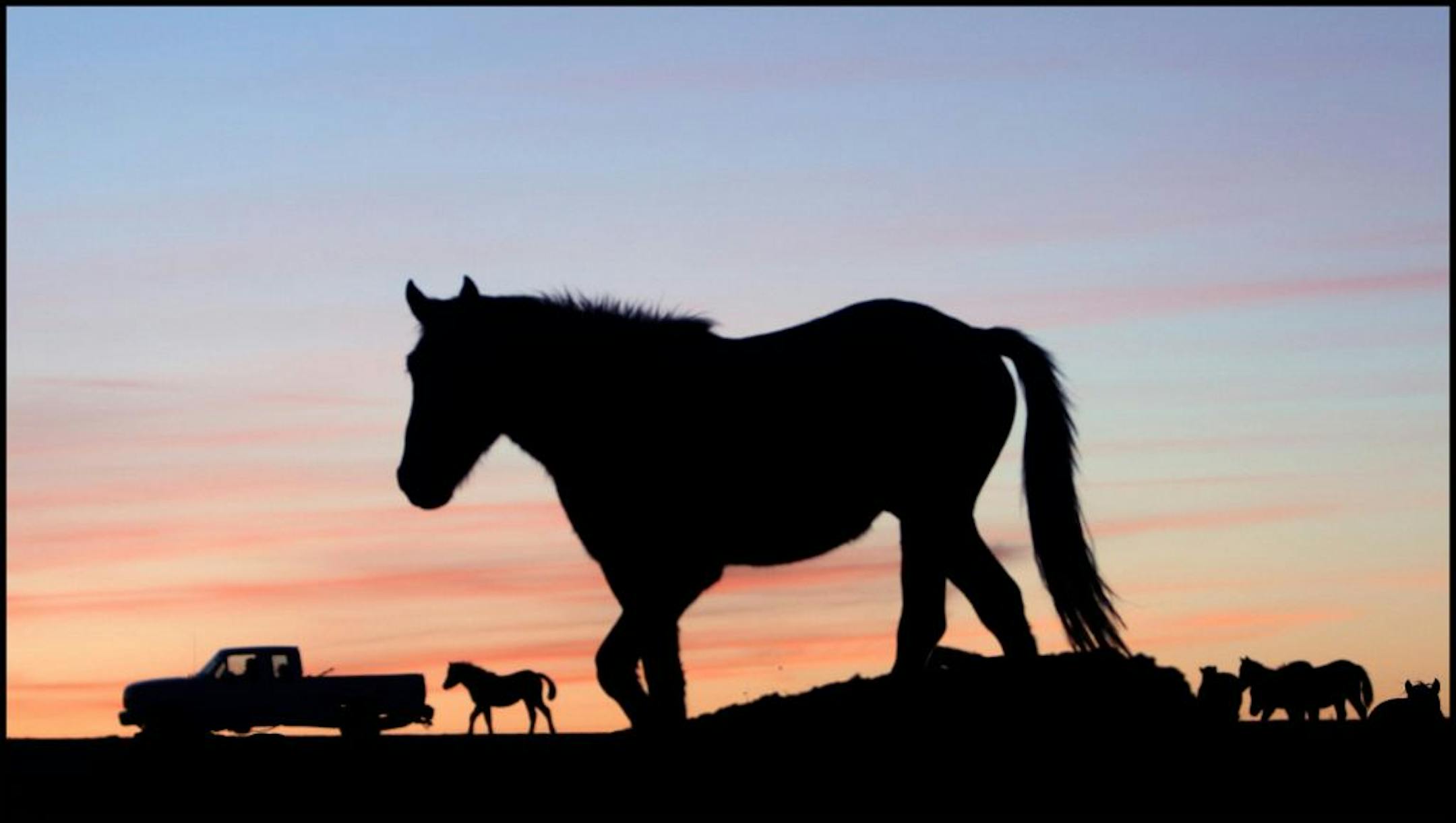
The big story out of the British Isles last week was that consumers in Ireland and the U.K. have been unwittingly eating horse meat in several products - including burgers and packaged lasagna - labeled as beef. As The New York Times notes, "Few things divide British eating habits from those of continental Europe as much as a distaste for consuming horse meat."
Horse meat is an interesting cultural case. While considered disgusting in Britain and the United States, over 200,000 horses are slaughtered for their meat every year in the European Union, according to the Humane Society International.
It's also a staple in some Central Asian countries - Kazakh Olympians brought along their own supply of horse sausages to the London Olympics. It seems to be something of an Anglo taboo, though an often hypocritical one. Australians, Canadians and New Zealanders don't generally eat horses, but they do slaughter them for export.
Economist Alvin Roth, winner of the 2012 Nobel Prize, uses horse meat as a central example in his famous paper, "Repugnance as a Constraint on Markets." The idea of the paper is that cultural biases against certain transactions serve as market constraints that economists would do well to take seriously rather than dismissing as irrational.
He discusses well-known examples such as organ-exchange markets and beliefs about the charging of interest in the Islamic world, as well as more outr practices such as dwarf-tossing.
Here's what he has to say about horse meat:
"Why can't you eat horse or dog meat in a restaurant in California, a state with a population that hails from all over the world, including some places where such meals are appreciated? The answer is that many Californians not only don't wish to eat horses or dogs themselves, but find it repugnant that anyone else should do so."
Notice that this law does not seek to protect the safety of consumers by governing the slaughter, sale, preparation and labeling of animals used for food. It is different from laws prohibiting the inhumane treatment of animals, like rules on how farm animals can be raised or slaughtered, or laws prohibiting cockfights, or the recently established (and still contested) ban on selling foie gras in Chicago restaurants.


