
How to help Minnesotans in need of food as federal funds dry up during shutdown

“This is an all-hands-on-deck emergency,” one nonprofit leader says. With Minnesota potentially entering a food security crisis for low-income families, here are ways you can help fill the gap.

The Minnesota Star Tribune
October 30, 2025 at 11:00AM
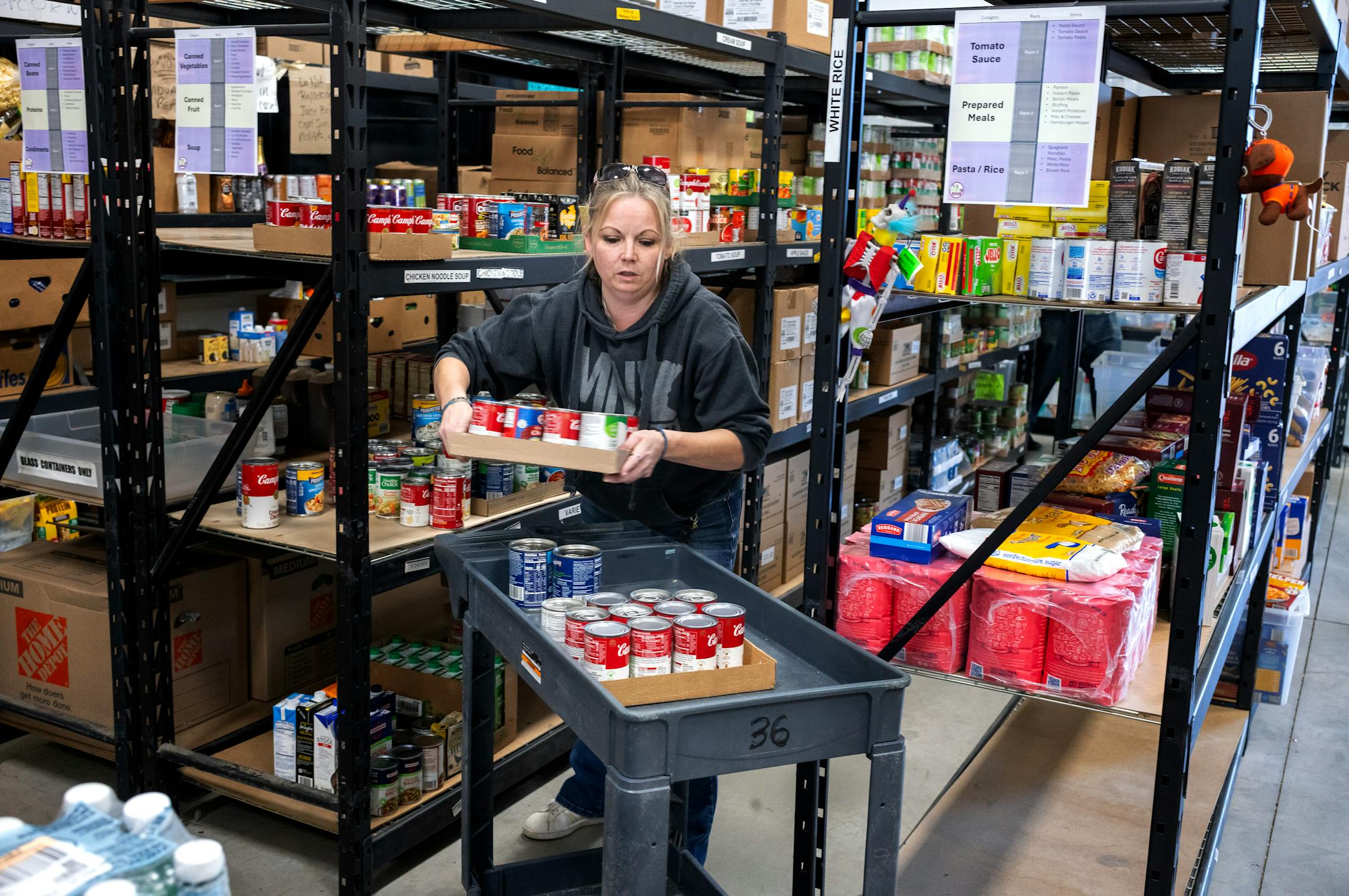
Volunteer Amanda Berendt gathers food items at the Open Door Pantry on Monday in Eagan. (Jerry Holt/The Minnesota Star Tribune)

As the federal shutdown continues and a cutoff looms for food benefits, Minnesota nonprofits are scrambling to maintain access to food for families and are asking for community members to help.

Benefits for the Supplemental Nutritional Access Program (SNAP) could potentially end Saturday if the shutdown persists, which would affect more than 440,000 low-income Minnesotans, many of whom live in greater Minnesota. Gov. Tim Walz said this week the state will contribute $4 million in food benefits, a stopgap measure that won’t make up for the $73 million in federal funds Minnesota was set to receive in November.

At the same time, federal cuts to the Emergency Food Assistance Program (TEFAP) have slashed the amount of food shipped to state food shelves. Federal workers have also gone a month without pay, forcing some, like those who work as TSA agents, to turn to food donations.

For many food assistance programs across Minnesota, the end of SNAP funding has caused great concern. Janet Gracia, the chief executive of St. Paul nonprofit Neighborhood House, said any and all community support available is needed.

“This is an all-hands-on-deck emergency,” Gracia said.

To find your local food shelf, the Minnesota Department of Children, Youth and Families recommends using this search tool.

Here’s how you can help those in need:

Give money to provide the most food

Virginia Witherspoon, the executive director of the Channel One Regional Food Bank, based in Rochester, said the best way to help is by donating money to hunger relief organizations, “so that we can purchase fresh food, the food most desired by people experiencing food insecurity.”

“We’re also able to buy food in large quantities and get the best prices when we receive monetary donations,” Witherspoon said. “And we save valuable time when we can buy food, as opposed to collecting donations and sorting through them to make sure they’re safe to give to our shoppers.”

Many organizations are taking financial donations. Even small donations are helpful. For example, the North Country Food Bank distributes more than 5 million meals every year across northwest and west central Minnesota. A $1 donation can help pay for four meals, according to its website.

At the Neighborhood House, Gracia said monetary donations stretch much further than donations of food. Because of collaborations with other nonprofits such as Second Harvest Heartland, Neighborhood House can get food items much cheaper than the listed price of an average grocer.

According to Gracia, for the regular price of one apple, Neighborhood House could buy 100 apples from nonprofit food suppliers. Because of this spending power, Gracia said monetary donations give greater relief to food banks and pantries across the state.

The Food Group, which is headquartered in New Hope, is also taking monetary donations. The Channel One Regional Food Bank serves those experiencing hunger in 14 counties in southeastern Minnesota and western Wisconsin through a network of over 100 food shelves. You can make monetary donations here.

Tools such as Charity Navigator can ensure that these monetary donations are reaching those in need.

Donate food and other useful items

While monetary donations are preferred, food donations are always appreciated, especially shelf-stable, culturally familiar or kid-friendly items, said Spenser Bickett, a spokesman for the Minnesota Department of Children, Youth and Families.

Pantries have different instructions on how to donate and what items they take and when, so individuals should contact an organization directly.

Many food pantries, like the Neighborhood House, publicize lists of some of their most wanted items. On the Neighborhood House’s food market wish list are shelf-stable items like rice and oatmeal as well as culturally specific items like canned bamboo and fish sauce.

With a network of five food shelves, 360 Communities supports residents in Burnsville, Rosemount, Lakeville, Apple Valley and Farmington. Some of the organizations’ most needed food items include shelf-stable proteins like canned beans and produce that doesn’t have to be refrigerated, including some vegetables straight from the garden.

Tony Compton, 360 Communities’ director of communications, said all types of donations are appreciated right now. Compton added that while everything helps, donors looking to give supplies should focus on non-perishable and personal care items.

“We just need help,” Compton said.

Pet food items, personal care items and household products are often needed. Clean paper bags, reusable totes and egg cartons can also be donated, Bickett said.

Individuals can host a food drive in their community. Make sure to first connect with a local food bank that would receive the goods.

Demand has been high at food distribution centers. Shopping appointments for 360 Communities are scheduled over five weeks out at all of their food shelves, though Compton added that those in need can still stop by for emergency food bags.

There were no appointments available at Neighborhood House’s Wellstone Center Food Market through November, according to the group’s website. The Neighborhood House also offers an appointment-free market at its Montreal Avenue location.

“Food shelves are on the frontlines of this crisis and need our support,” said Rachel Martin Asproth, a spokesperson for the Food Group, which distributes food across the state. “By giving to your local food shelf, you can help increase their resources and capacity to respond during this crisis.”

Volunteer your time

A good way to give back is to volunteer at a food assistance program. At the Camden Promise food shelf at Gethsemane Lutheran Church in Minneapolis, volunteers are needed to help stock shelves.

Other places, like the Chum Food Shelf in Duluth, are looking for delivery drivers.

To be a good volunteer, Gracia said, it’s all about wanting to make a difference. Whether it’s at a set nonprofit or just helping out those struggling in your neighborhood, Gracia said, any action you take to help others is important. She recommends mobilizing other community members to volunteer, as well.

“You don’t necessarily have to sign up as a volunteer at an organization,” Gracia said. “You can activate as a volunteer in your own neighborhood.”

Consider donating outside the metro

People who want to help should consider donating to organizations in rural areas. In the Twin Cities and other urban areas, it is easier to access a variety of resources, including multiple food programs and shelves within a short distance, said Sophia Lenarz-Coy, executive director of the Food Group. That’s not always the case in more rural areas.

“In a lot of rural communities, there are just fewer benefits,” she said.

Although Neighborhood House is a Twin Cities-based nonprofit, Gracia, its chief executive, said she works with organizations such as Second Harvest Heartland on advocacy work in support of nonprofits based outside of the metro.

“There’s additional barriers,” Gracia said. “There’s less resources, there’s transportation issues, things like that.

Nicole Norfleet and Trey Mewes of the Minnesota Star Tribune contributed to this story.

about the writers

about the writers

Elliot Hughes

Reporter

Elliot Hughes is a general assignment reporter for the Star Tribune.

See Moreicon

Tyler Church

Intern

Tyler Church is an intern for the Minnesota Star Tribune.

See Moreicon

More from News & Politics

See More
card image
Elizabeth Flores/The Minnesota Star Tribune

Adam Finseth was killed while assisting on a SWAT call in 2024. Two police officers were also killed in the incident.

card image