
Minnesota camps change programming amid a summer of smoky air

Summer camps have brought activities inside, cut down on strenuous play and even canceled entire days of programs.

The Minnesota Star Tribune
August 5, 2025 at 12:09AM
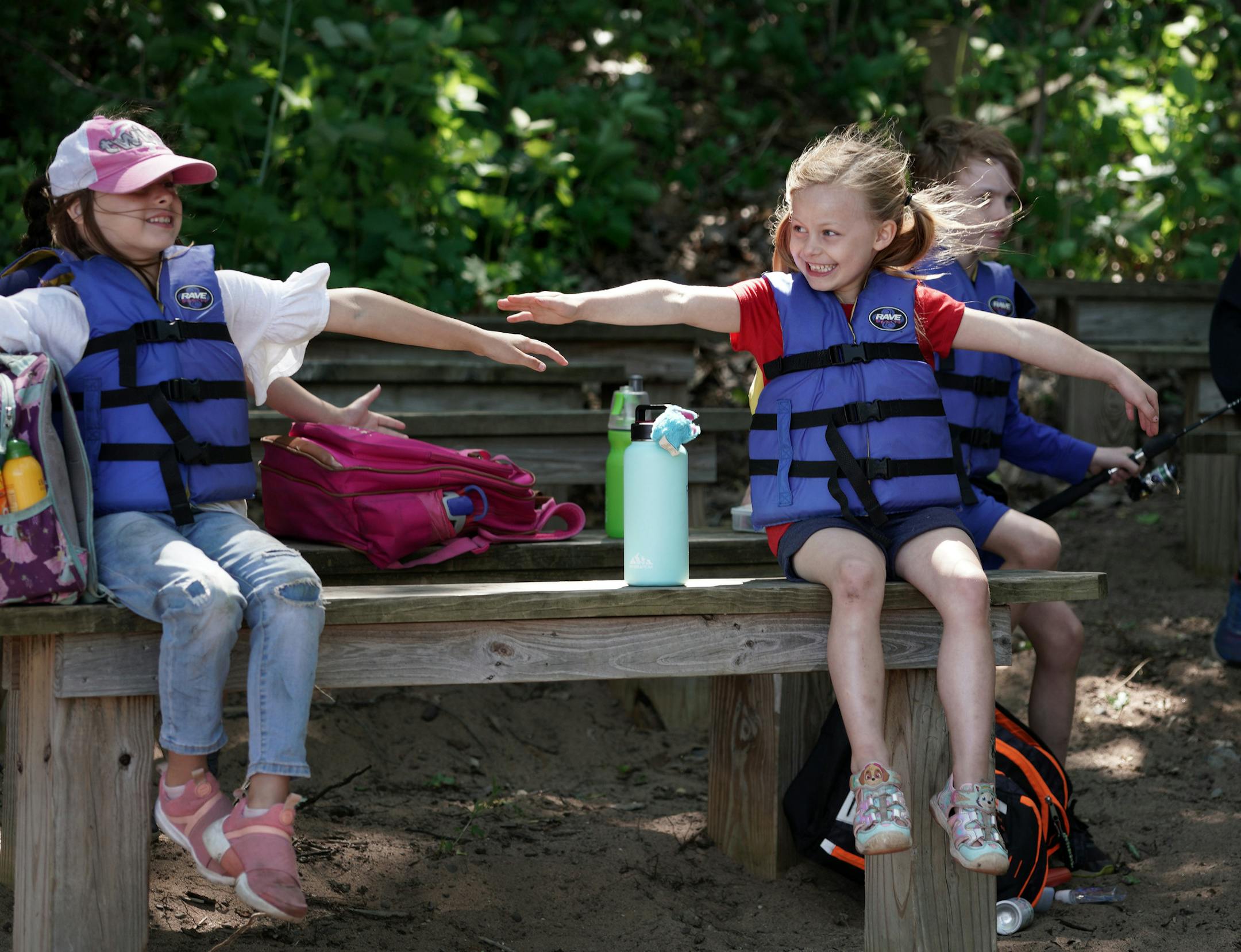
Campers and counselors at YMCA Camp Day Croix during their first week. This is one of the camps that is ON this summer, while others, including YMCA overnight camps, are canceled. Here, Josephine, 7 and Finley, 6, measure their social distancing before going out for a canoe ride. brian.peterson@startribune.com Hudson, WI Thursday, June 11, 2020
Summer camps are adjusting how they do business amid growing concerns about air quality. Campers at YMCA Camp DayCroix in Hudson, Wis., are pictured here on June 11, 2020. (Brian Peterson/The Minnesota Star Tribune)

Minnesota summer camps have had to cancel kids activities like capture the flag and horseback riding as they contend with months of poor air quality driven by Canadian wildfires.

On Sunday, state officials canceled what had been a record-long six-day air quality alert. On Monday, the air in Minneapolis and St. Paul was deemed to be unhealthy for sensitive groups such as children and the elderly.

Repeated smoky skies, which can be particularly harmful for children, have put an unwelcomed cloud over summer fun. For summer camps whose mission often entails trying to get kids outside more, poor air quality often means that activities like swimming and games are shifted indoors when the Air Quality Index, or AQI, reaches an unhealthy level.

Adventures in Cardboard, which operates outdoor camps in the Twin Cities, has scrambled to find temporary indoor sites in churches, theaters and small businesses where kids can create cardboard armor and villages on days with low air quality. Site adjustments are needed so camp isn’t canceled for the day.

“When you provide programming for kids, it’s not exactly optional,” Artistic Director and Camp Coordinator Julian McFaul said. “Parents make plans, and they have to rely on us. So if we’re closing camp more than once for a week program, that starts to become an existential fear for us.”

Now, camp leaders are considering long-term adaptations. They’ve thought about relocating outside the metro, leasing a permanent indoor space and increasing the air pollution threshold needed to move the camp inside.

Michel Tigan, senior vice president of adventure and wellbeing at YMCA of the North, said having multiple locations allowed most of the YMCA’s overnight and day camps to move programming inside when necessary by busing kids to indoor facilities.

Some activities did have to be canceled, such as horseback riding, which can put too much stress not only on campers but also on the animals’ lungs.

“We’ve had to cancel opportunities. We haven’t had to cancel holistically,” Tigan said.

The wildfire smoke releases particles into the air that irritate the lungs, which pose the biggest threat to children and adults with pre-existing conditions including asthma.

Several camp organizers said air quality became an issue for outdoor camps about three or four years ago. At that point, some camps put policies in place about what to do when air quality is low. Now, poor air quality poses issues annually, camp leaders say.

Some camps said the air quality has meant making outdoor activities less taxing as breathing becomes more challenging and keeping an eye on campers’ health.

Steve Purdum, executive director of Camp Mishawaka in Grand Rapids, Minn., said they hadn’t canceled any activities entirely, but were considering games and activities with less running.

Aside from air quality concerns, Purdum said leaders at Camp Mishawaka are focused on safety protocols for extreme weather, particularly after rapid flooding killed at least 27 people at Camp Mystic in Texas earlier this summer.

“We’ve had more concern about extreme weather than we have about the air quality,” Purdum said. “We’re just more and more attuned to safety protocols as it relates to, not just air quality, but extreme weather.”

Georgia and Samuel Del Favero, directors of the all-girls Camp Birchwood in LaPorte, Minn., said few activities have been canceled due to the smoke.

But this summer’s air quality did encourage them to purchase a personal weather station for the camp to get a more accurate picture of local conditions such as air quality — something they were already considering due to past weather events.

“I think for us to have that data will settle parents, because we are in a unique, like, microclimate here,” Georgia Del Favero said. “We don’t get the storms that nearby areas get; we don’t get the winds nearby areas get.”

Despite the complexities of monitoring air quality, camp leaders emphasized that there are still benefits to sending kids to camp and getting them outside.

Tigan of the YMCA noted that going to camp prevents another health issue: loneliness.

“I think where guardians are at right now is that we all know that our kids do better when we’re social, in community and outdoors,” she said. “I think there’s still a huge desire to get young people outside in community, playing, doing things that are not simply sitting behind a screen.”

about the writer

about the writer

Anna Sago

Intern

Anna Sago is an intern for the Minnesota Star Tribune on the Today Desk.

See Moreicon