

Small businesses look to improve benefits and job security

More count on enhanced compensation packages.

The Philadelphia Inquirer
March 27, 2016 at 7:00PM
Brett Naylor is a cook at the Sandom Street Oyster House that will now have a mathching 401-K plan. Managers, servers and oyster shuckers at the Oyster House are getting a unique benefit, a 401-K plan with a company match. Is this part of the tightening labor market? (Michael Bryant/Philadelphia Inquirer/TNS) ORG XMIT: 1181986
Brett Naylor is a cook at the Sansom Street Oyster House that will now have a mathching 401-K plan. Managers, servers and oyster shuckers at the Oyster House are getting a unique benefit, a 401-K plan with a company match. Is this part of the tightening labor market? (Michael Bryant/Philadelphia Inquirer/TNS) ORG XMIT: 1181986 (The Minnesota Star Tribune)

PHILADELPHIA – When a blizzard blankets a customer's business, making entrance impossible, when a fallen tree blocks a driveway, when leaves or ice clog a drain, flooding the parking lot, landscaper Bob Keller wants to be there for his customers.

Which is why Keller said he decided to invest more in his employees by offering 401(k) retirement plans to the full-time workers of his Philadelphia-area small business, R.P. Keller Landscaping Inc.

"It's job security for them and for me," said Keller, 38, who employs six to eight ­people full time year round and more seasonally.

Keller's decision comes as the federal government and some states, including New Jersey, where he's based, are looking to encourage small businesses to provide retirement savings programs to employees.

New Jersey's law, signed in January, will create a retirement savings marketplace enabling employers to establish such plans. Laws like it are being considered around the country as the burden of financing retirement has shifted from employers, through pensions, to their staff.

But many employees, especially those paid less, have no retirement savings, according to a U.S. Federal Reserve report released last May. Four in 10 of those surveyed have given little or no thought to retirement and fewer than a third have savings.

Nationally, 22 percent of companies like Keller's — with fewer than 10 employees — provide retirement plans, according to a Pew Charitable Trusts report released in January.

By contrast, three in four employees of companies with 500 or more workers have access to retirement plans.
"It's not hard to grasp," Keller said. "Health care, vacation pay, time-and-a-half over 40 hours. It leads to employment longevity and stability.

"What they invest in the company" and serving customers, he said, "they can get it back."

Pew's review of federal data finds that 49 percent of the nation's workers in the analysis participate in a workplace retirement savings program, with 58 percent having access.

Among those shut out are independent contractors working in the so-called gig economy and workers who cobble together part-time jobs.

"It's a concern that people have adequate ­retirement ­savings," said Richard McHugh, vice president of the Plan Sponsor Council of America, an advocacy group for organizations and companies that offer work-based retirement plans to employees.

Dan Hernandez, a certified financial planner who represents Lincoln Investment Inc., a Philadelphia-area broker-dealer, says he's seeing more interest in 401(k) plans from small business clients, who tend to have a protective ­attitude toward employees.

A 401(k) plan allows workers to save for retirement with a pretax payroll deduction that is funneled to a financial services company, which invests it. As a benefit, some employers match a portion of the deduction, amounting to more compensation, which is also not taxed.

Hernandez said some clients may be offering 401(k) plans because they're less expensive than health ­insurance. "You can put your employee in a (401(k)) plan and offer them a match of 3 percent of their salary, which is infinitely less than offering health ­insurance," he said.

Assuming someone earning $50,000 contributes 3 percent, the employer's 401(k) match would equal $1,500, compared to $5,000 — the average employer contribution for health insurance for one employee, according to the Kaiser Family Foundation's annual survey.

Even as officials work to raise participation in retirement savings plans, the youngest workers aren't that interested, concludes a December survey by the Employee Benefit Research Institute.

Millennial workers tend not to know about benefits, including retirement, or care about them, EBRI's study shows.

Many would rather have the money and buy health ­insurance or save for retirement on their own.

In Philadelphia, Sam Mink, 40, owner of the Oyster House, didn't need a government ­program to encourage him to set up a 401(k) program for his full-time employees, with 27 out of 50 eligible.

"My success is their success," said Mink, who believes that retirement savings and health benefits reduces turnover in a sector where employees change jobs as often as ­diners change orders.

His challenge, he said, is to persuade employees to ­participate, since he provides a match.

"It's like free money," Mink said. "They are leaving money on the table."

Chef Brett Naylor, 30, doesn't need convincing. "It was one of the selling points for me coming to the Oyster House," he said.

Given the competition, "smaller restaurants have to start offering perks like this to attract talent."

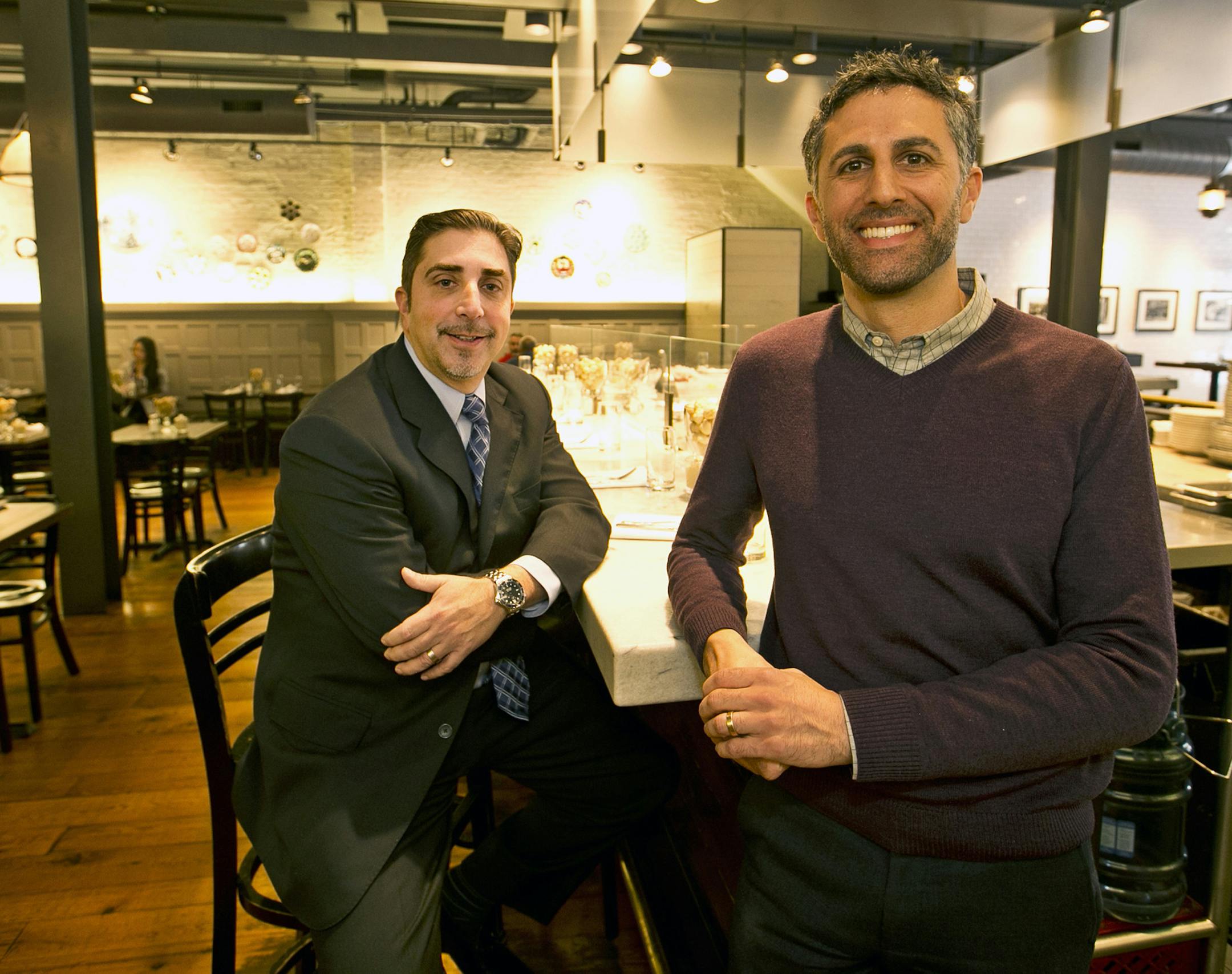
At Sanom Street Oyster House, Dan Hernandez, left, the financial guy, and owner Sam Mink, right, made sure that managers, servers and oyster shuckers at the Oyster House will be getting a unique benefit, a 401-K plan with a company match. (Michael Bryant/Philadelphia Inquirer/TNS) ORG XMIT: 1181986
At Sansom Street Oyster House, financial guy Dan Hernandez, left, and owner Sam Mink made sure that managers, servers and oyster shuckers will be getting a unique ­benefit: a 401(k) plan with a company match. Right photo, cook Brett Naylor will receive that benefit. (The Minnesota Star Tribune)
about the writer

about the writer

Jane M. Von Bergen

More from Business

See More
This transmission electron microscope image shows SARS-CoV-2, the virus that causes COVID-19, isolated from a patient in the U.S., emerging from the surface of cells cultured in the lab. (NIAID/TNS) ORG XMIT: 1659810
The Minnesota Star Tribune

Accusing the Trump administration of spreading vaccine misinformation, the U’s Vaccine Integrity Project will review the latest data and offer guidance on immunizations for the next flu season.

card image
card image