

Opinion editor’s note: Strib Voices publishes a mix of guest commentaries online and in print each day. To contribute, click here.
•••
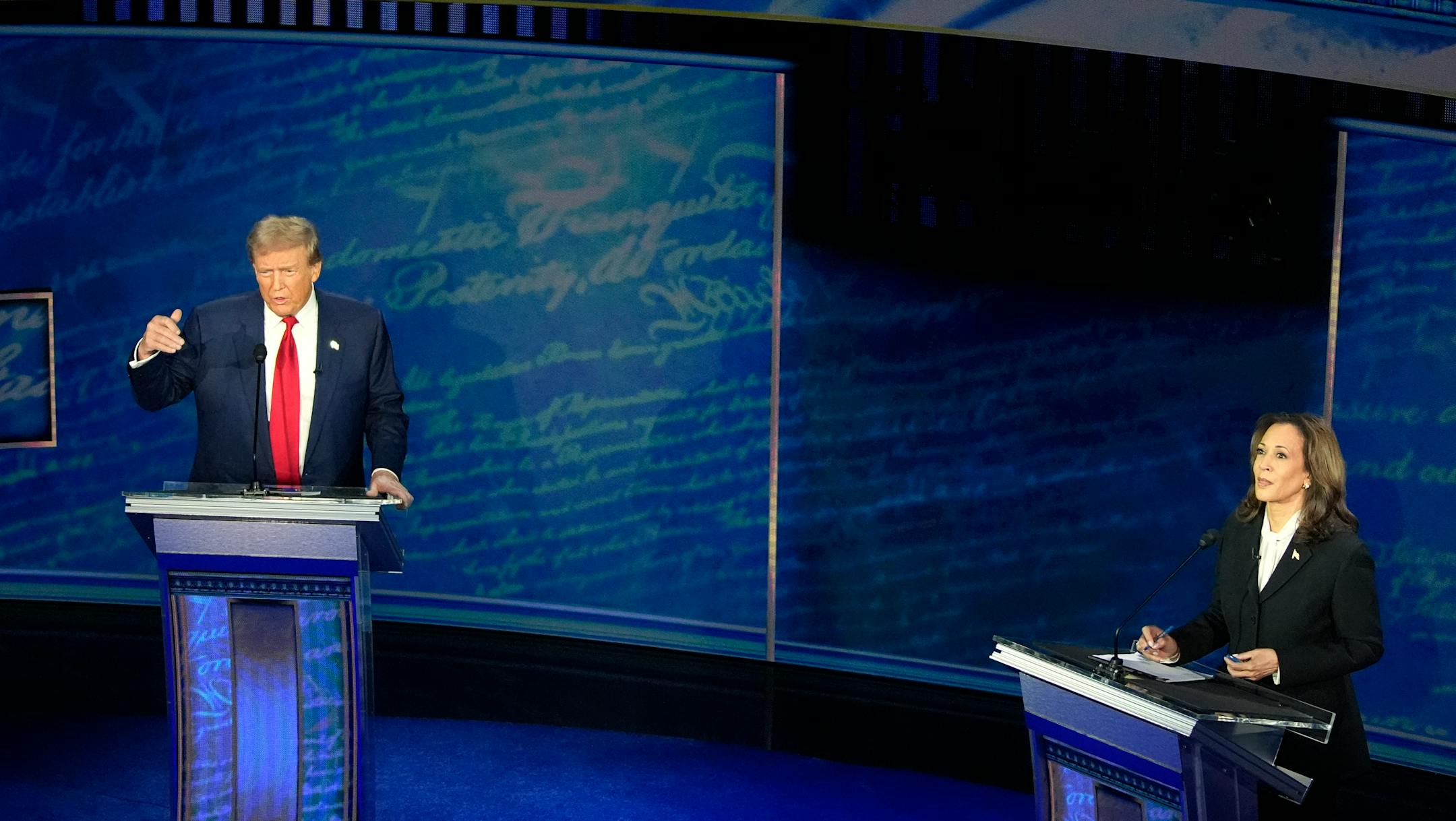
Our political differences aside, we should all be able to agree that the sole Trump-Harris “debate” of 2024 was not exactly modeled on any of the unmoderated Lincoln-Douglas debates of 1858. Today’s presidential “debates” are more akin to mini news conferences. But Abe Lincoln, the challenger, and Stephen Douglas, the sitting senator, went one-on-one, while asking and answering their own questions. What a novel concept.
But there certainly are some important similarities between candidate debates during the middle of the 19th century and candidate “debates” today. We were a very divided nation then, and we may well be even more divided today. More than that, each era has had to deal with a great, if troubling, issue: slavery then and abortion today. Then the great issue of slavery was deeply enmeshed in politics. Today the great issue of abortion has been returned to the voter.
Slavery and abortion. Are they equally great issues? On that question there surely is little, if any, agreement today. But similarities do exist, similarities that ought to be thought-provoking now, troubling always, and possibly even compelling at some point in our country’s future.
In the first place, neither issue was — or is — simply a legal or political issue. Each is a moral issue as well. A key legal issue raised in both cases was simply the definition of a person. Just what and who is a “person”? And what rights does this “person” have? The lamentable and, yes, terrible Dred Scott decision of 1857 held that slave owners could take their property wherever they wished, because slaves were in effect non-persons. The lamentable and, yes, terrible Roe v. Wade decision of 1973 found somewhere in the penumbras of the Constitution the right to be rid of an unborn child, because it, too, is a non-person.
Actually, the key issue dividing Lincoln and Douglas was less slavery itself than the possibility of taking slaves into the western territories. In 1854 Sen. Douglas had engineered passage of the Kansas-Nebraska Act, which had opened the possibility of extending slavery into previously free territory north of the Missouri Compromise line on the basis of what was called “popular sovereignty.”
That legislation led almost immediately to the creation of the Republican Party, which called for “free soil” (meaning free of slavery) in any new state. Republicans, including Lincoln, were not abolitionists. To them, slavery where it already existed was constitutional and, therefore, a state matter. But simply containing slavery satisfied neither the abolitionists nor the slaveholders. Nay, it angered both of them.


