

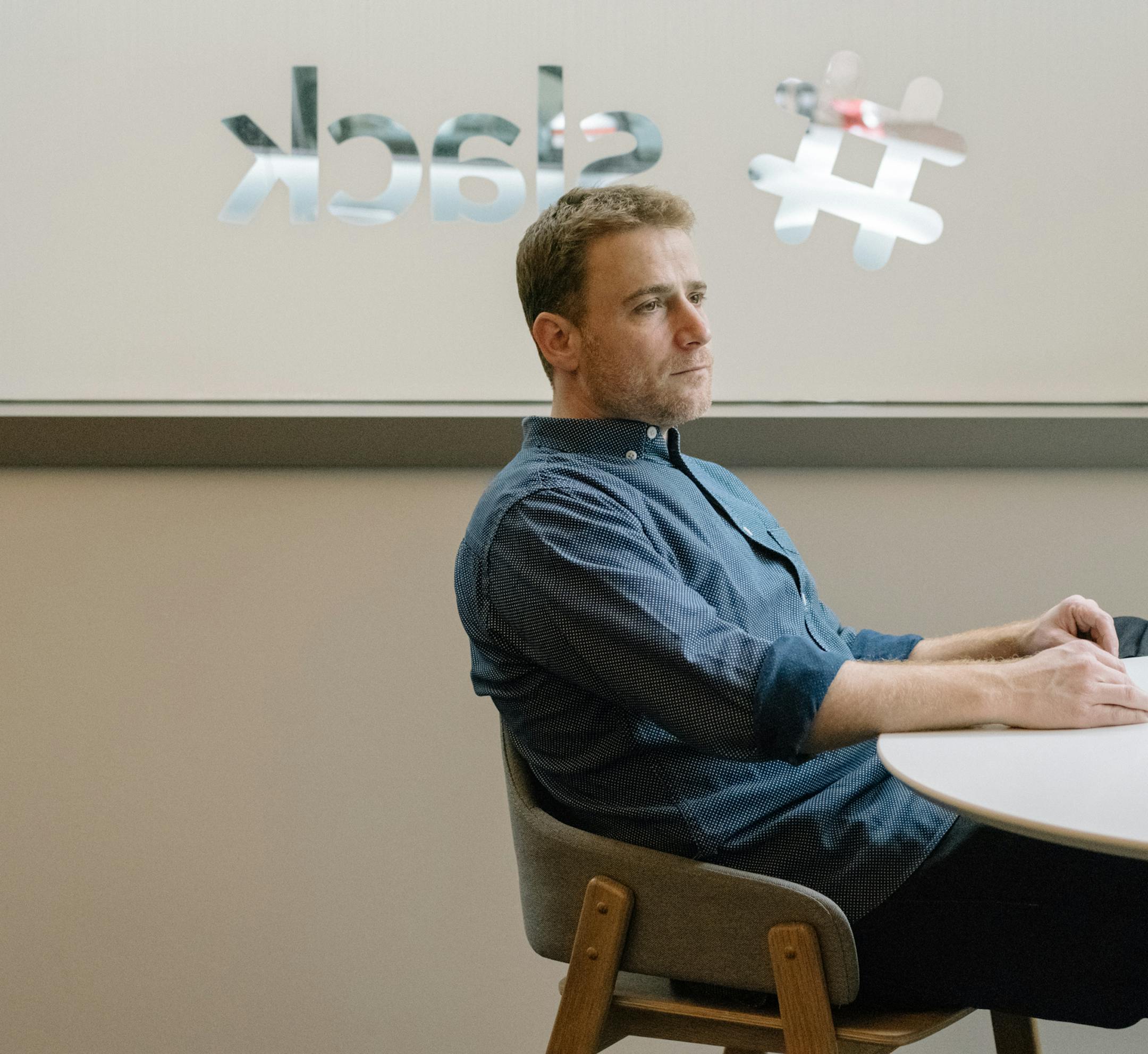
Stewart Butterfield, the boss of Slack, a messaging company, has been wonderfully unlucky in certain ventures.
In 2002, he and a band of colleagues created an online-video game called "Game Neverending." It never took off, but the tools they used to design it turned into Flickr, the Web's first popular photo-sharing website. Yahoo bought it in 2005 for a reported $35 million.
Four years later, Butterfield tried to create another online game, Glitch. It flopped as well. But he and his team developed an internal messaging system to collaborate on it, which became the basis for Slack.
Today, Slack is one of the fastest-rising start-ups around, with $540 million in funding and a valuation of around $3.8 billion. "I guess the lesson should be, pursue your dream and hope it fails, so you can do something else," said Cal Henderson, Slack's chief technology officer.
It is rare for business software to arouse emotion besides annoyance. But some positively gush about how Slack has simplified office communication. Instead of individual e-mails arriving in a central inbox and requiring attention, Slack structures textual conversations within threads (called "channels") where groups within firms can update each other in real time. It is casual and reflects how people actually communicate, eschewing e-mail's outdated formalities, said Chris Becherer of Pandora, an online-music firm that uses Slack.
Its other selling point is efficiency. A survey of users, admittedly conducted by the firm itself, suggests that team productivity increases by around a third when they start using the software, primarily by reducing internal e-mail and meetings.
Today Slack has 2.7 million daily active users, up from 1 million last June. Around 800,000 of them are paying subscribers; their firms pay around $80 or more a year for each employee using the service. The firm has $75 million in annual recurring revenue and is breaking even, Butterfield says.
Slack's rise points to three important changes in the workplace. First, people are completing work across different devices from wherever they are, so they need software that can work seamlessly on mobile devices. Messaging naturally lends itself to this format. Second, communication is becoming more open. Just as offices went from closed, hived-off rooms to open-plan, Slack is the virtual equivalent, fostering a collaborative work environment, said Venkatesh Rao of Ribbonfarm, a consultancy.



