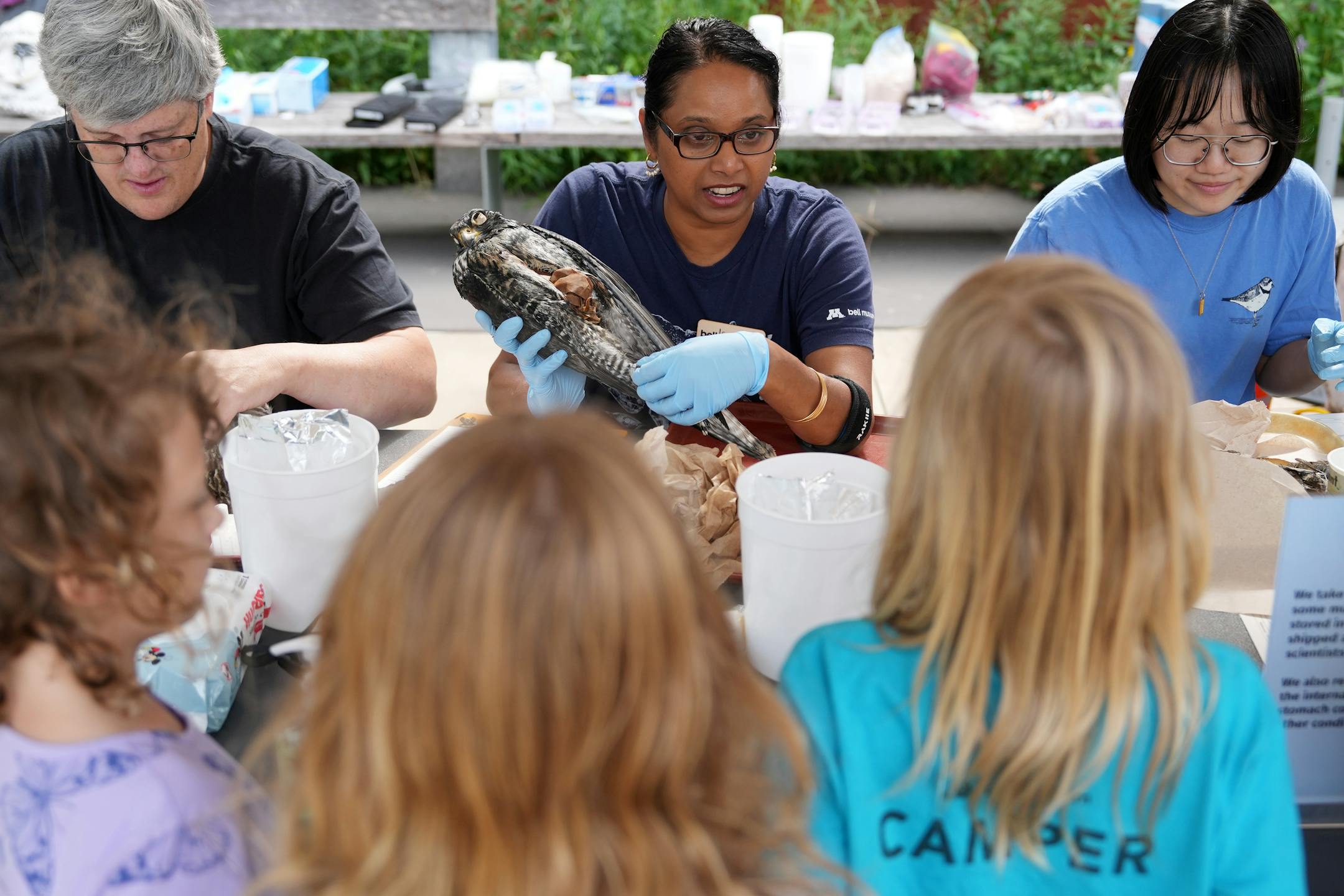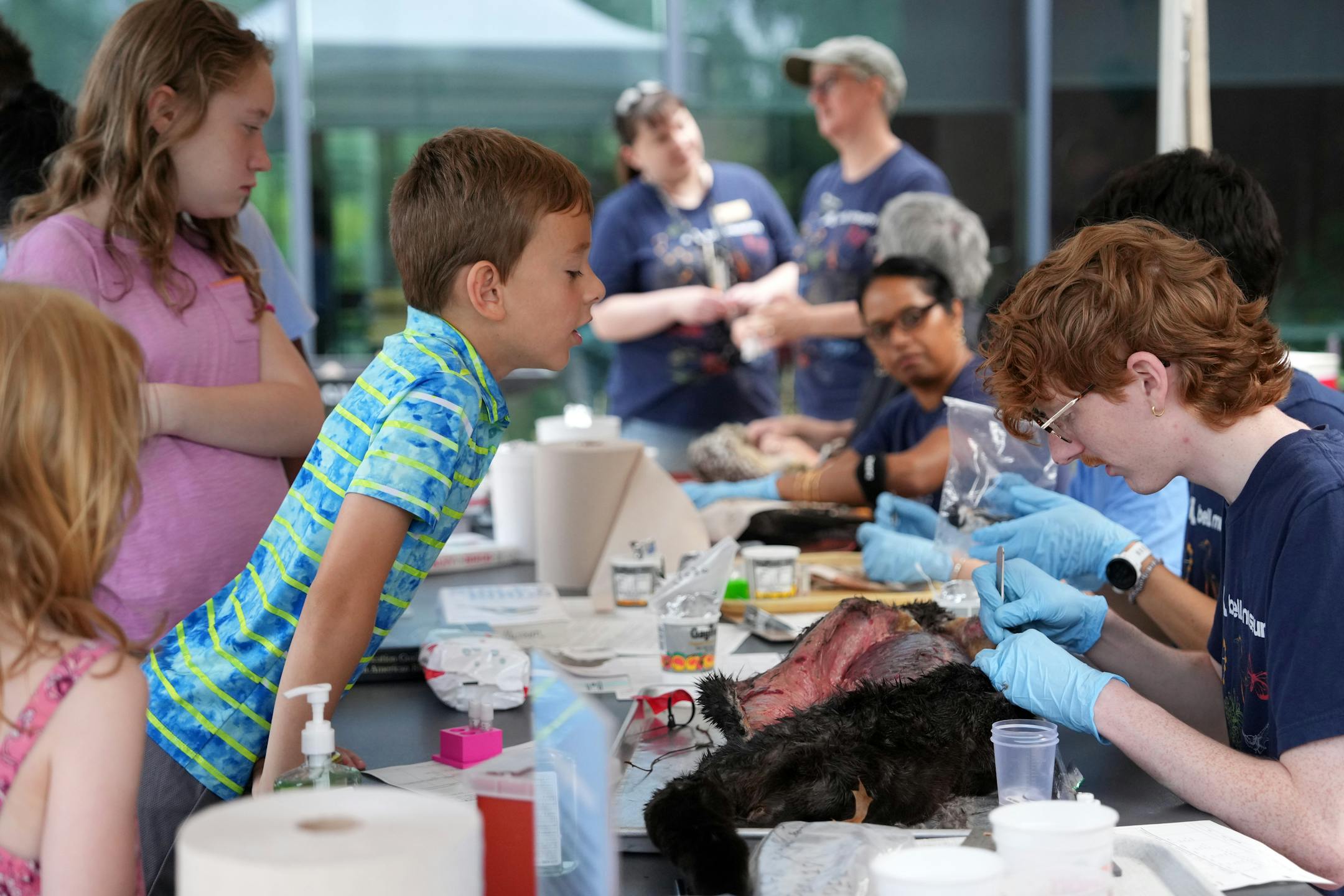
Have you ever wanted to watch a biology student slice open a deceased otter and yank its tailbone out from a knot of yellow fat?
Or a curator swirl the defrosted remains of a Mexican mouse in water, then skin it and remove its rotting organs?
Or a researcher demonstrate how two peregrine falcons with sunken eyes came to their end?
This week, the Bell Museum in St. Paul is hosting its annual series where curators, students, and lab specialists invite the public to see how they preserve plants and animals for museum collections and research.
It’s a graphic mashup of animal biology, taxidermy and forensic science. If animal entrails make you queasy, you can learn about plant specimens — and even prepare your own flower specimen on pH-neutral paper — in the indoor foyer area of the museum.
On Tuesday, the expedition opened with dissection of an otter, sending wafts of fishy odors onto the August breeze. More specimens on the table under the big tent this week include a swan, a groundhog and a porcupine. From Thursday to Saturday, the plant presentation will be replaced with a fish exhibition.

Many specimens used in the public demonstrations are donated through the Salvage Wildlife project that recovers samples of deceased birds and mammals across Minnesota, said Keith Barker, curator of genetic resources at the Bell Museum.
Specimen ages range from recently collected to the late 20th century, but all are stored in freezers to keep them as fresh as possible.