
Should students gamble on an income share agreement?

An income share agreement might be the wrong move even if you are graduating soon.

NerdWallet
September 12, 2020 at 1:40PM
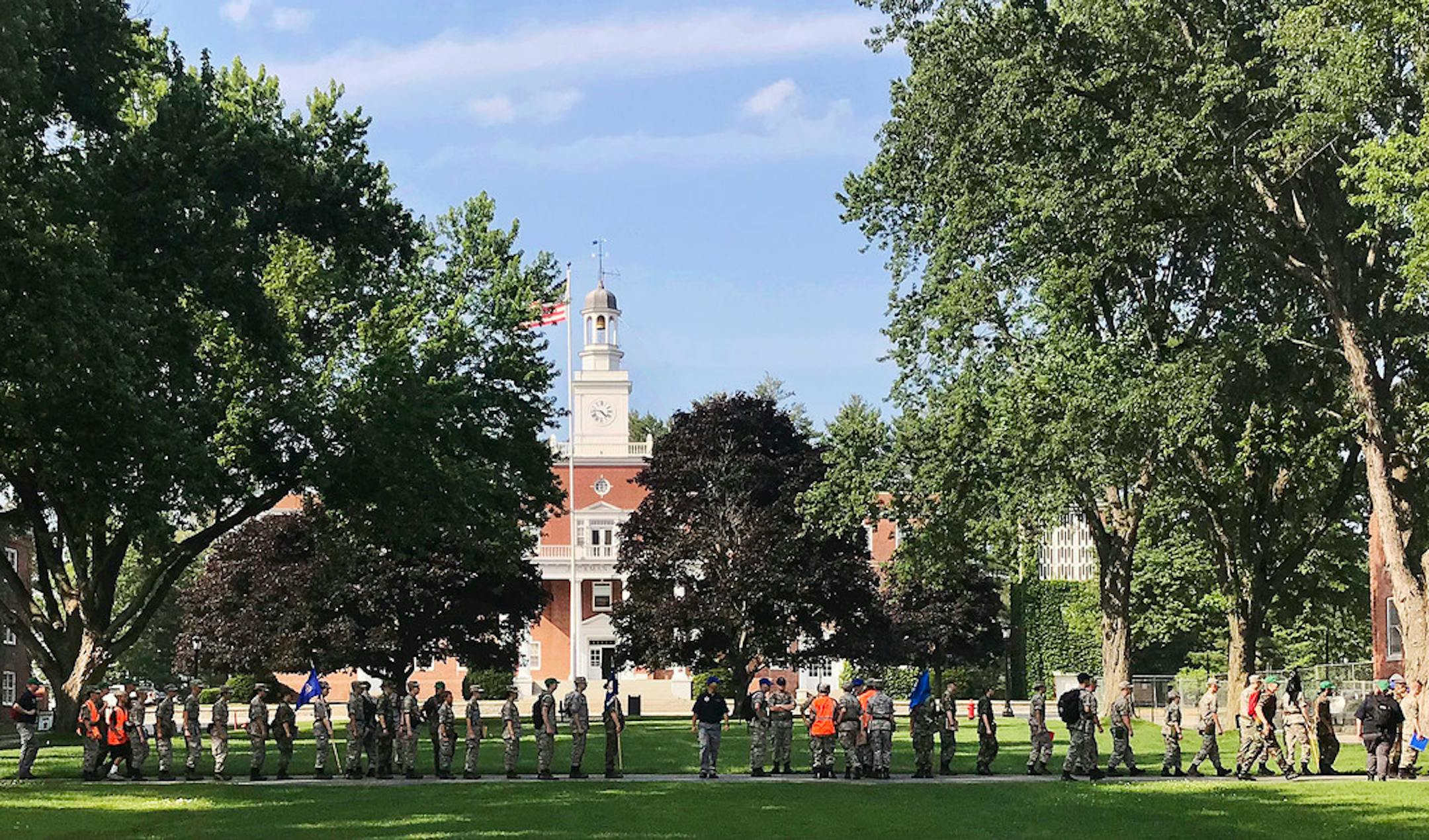
Norwich University in Northfield, Vt., is among schools offering income share agreements, where colleges receive a percentage of the student's future salary, in place of some student loans.
Norwich University in Northfield, Vt., is among schools offering income share agreements, where colleges receive a percentage of the student's future salary, in place of some student loans. (Marci Schmitt — AP file/The Minnesota Star Tribune)

Students watching the COVID-19 pandemic play out have reason to be wary of taking on additional loans for college. A slow economic recovery could make signing up for an additional bill a bad idea.

Enter income share agreements, or ISAs. With these agreements, students borrow money from their school or a third-party provider and repay a fixed percentage of their future income for a predetermined amount of time after leaving school.

Depending on the agreement and the student's post-graduation salary, the total repaid could be much more or far less than the amount borrowed. It's a gamble. Here's why.

No co-signer. Income share agreements are co-signer-free. Instead of credit history, students typically get an ISA based on their year in school and major. The best terms are often reserved for students in high-earning majors near graduation, such as seniors studying STEM fields. But high earners also risk having to repay a larger amount.

If an ISA isn't the right fit for you and you need funding without a co-signer, consider a private student loan designed for independent students.

Unemployment safety net. With an income share agreement, if you are unemployed — or if your salary falls below a certain threshold, which can be as low as $20,000 or as high as $40,000 — you don't make payments. No interest accrues, and the term doesn't change.

That makes these agreements a good option for times of economic uncertainty.

If you are a junior, senior or graduate student poised to enter the workforce soon, that could make an income share agreement more attractive. But freshmen and sophomores have more time to wait out the economic fallout. If you are further from starting your career, weigh the recession-related benefits of an income share agreement against the risk of giving up a percentage of your future income.

Not for all. An income share agreement might be the wrong move even if you are graduating soon. If your income is higher than the $51,000 starting average after graduation, you might pay much more than you received.

And income share agreements have fewer protections for borrowers than student loans. Tariq Habash of the Student Borrower Protection Center said that while consumer protection laws apply to these agreements, "ISA providers will say there isn't really legal clarity because they're new and different." He said that he saw the same thing with payday loans and fears ISAs will take advantage of the most vulnerable students.

E-mail: cclark@nerdwallet.com.swsw

about the writer

about the writer

Cecilia Clark

More from Business

See More
card image
Carlos Gonzalez/The Minnesota Star Tribune

The member of President Donald Trump’s Cabinet also touted the administration’s economic policy, saying “Minnesota could lead the way” on economic renewal.

MMR virus vaccine (measles, mumps, rubella) at Logan Square Health Center in Chicago, Ill. on Thursday, May 9, 2019.
FILE - This 2011 electron microscope image provided by the Centers for Disease Control and Prevention shows H3N2 influenza virions. In January 2019, the flu season was shaping up to be one of the shortest and mildest in recent U.S. history. But a surprising second viral wave has just made it the longest, according to the flu statistics released on Friday, April 19, 2019. (Dr. Michael Shaw, Doug Jordan/Centers for Disease Control and Prevention via AP)