

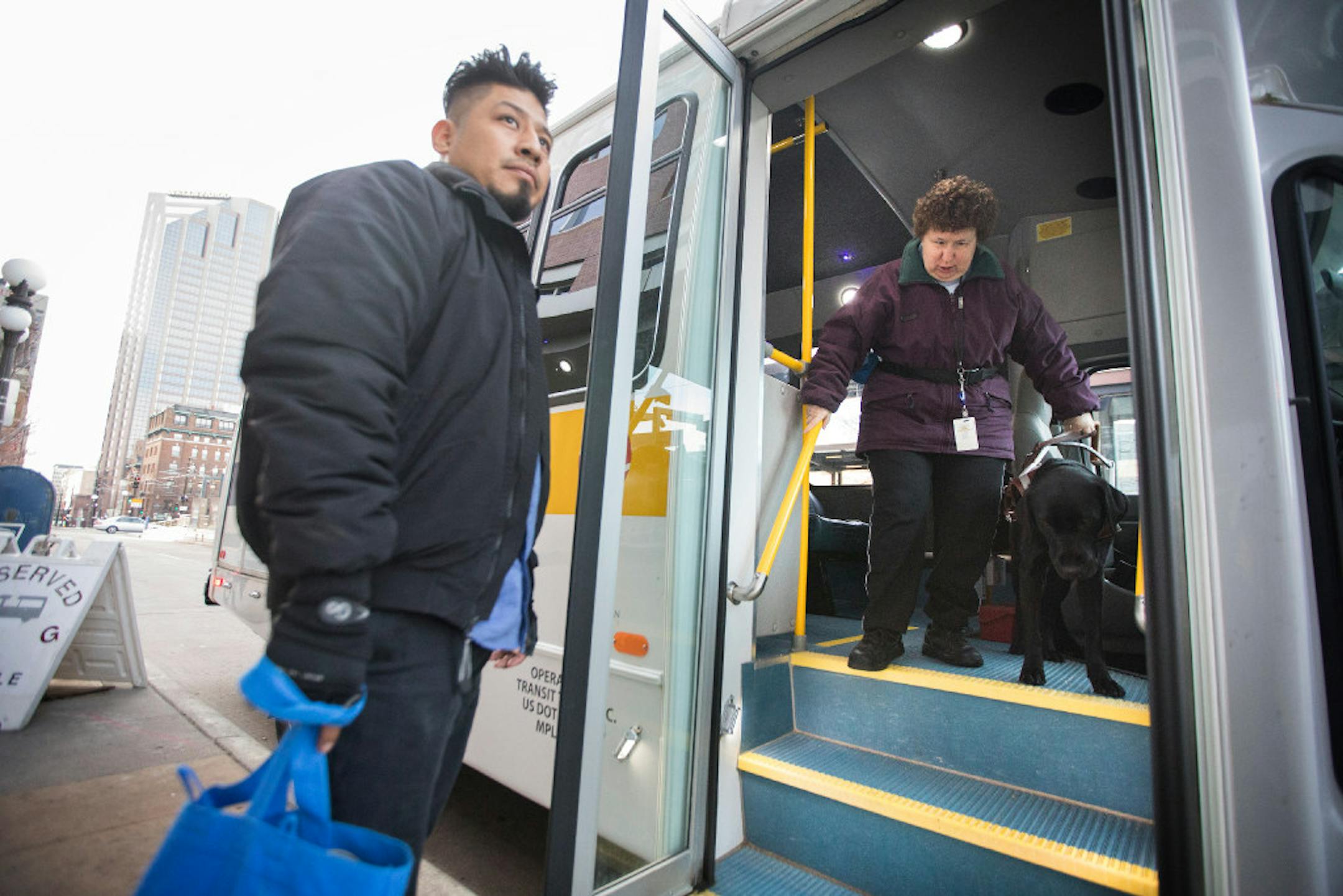
Opinion editor’s note: Star Tribune Opinion publishes a mix of national and local commentaries online and in print each day. To contribute, click here.
•••
In his March 12 commentary “If Uber and Lyft leave, Metro Mobility can’t fill the gap,” Michael L. Sack, a member of the Minneapolis Advisory Committee on People with Disabilities, raised highly constructive criticisms regarding the comparative shortfalls of Metro Mobility in bridging any transportation gap left from the anticipated departures of Uber and Lyft from the Twin Cities.
As a senior Metro Mobility paratransit bus operator of eight years, I can attest with full confidence that as a public transportation agency, we have consistently faced challenges with staffing and ridership coverage when tasked with managing the growing and often underserved transit needs of Americans with disabilities.
Is it therefore unsurprising to observe how paratransit is generally not given first priority to traditional fixed-route transit? What is supplemental is often seen as secondary. Should it be that way? Has Metro Mobility evolved into something more than what is otherwise squarely supplemental? Why cannot supplemental public transportation resources like Metro Mobility be treated as a first priority in the Twin Cities, considering how widely used the service is by those most reliant on it?
We can spend hundreds of millions of dollars on expanding light rail to the western suburbs without realizing how impactful a modest fraction of that same taxpayer investment would be for services like Metro Mobility.
That potential fractional investment could be used for four things:
• Increasing Metro Mobility operator pay, currently ranging from $23 to $23.60 an hour, to a higher rate comparable to Metro Transit operators ($27.59 to $29.52).


