

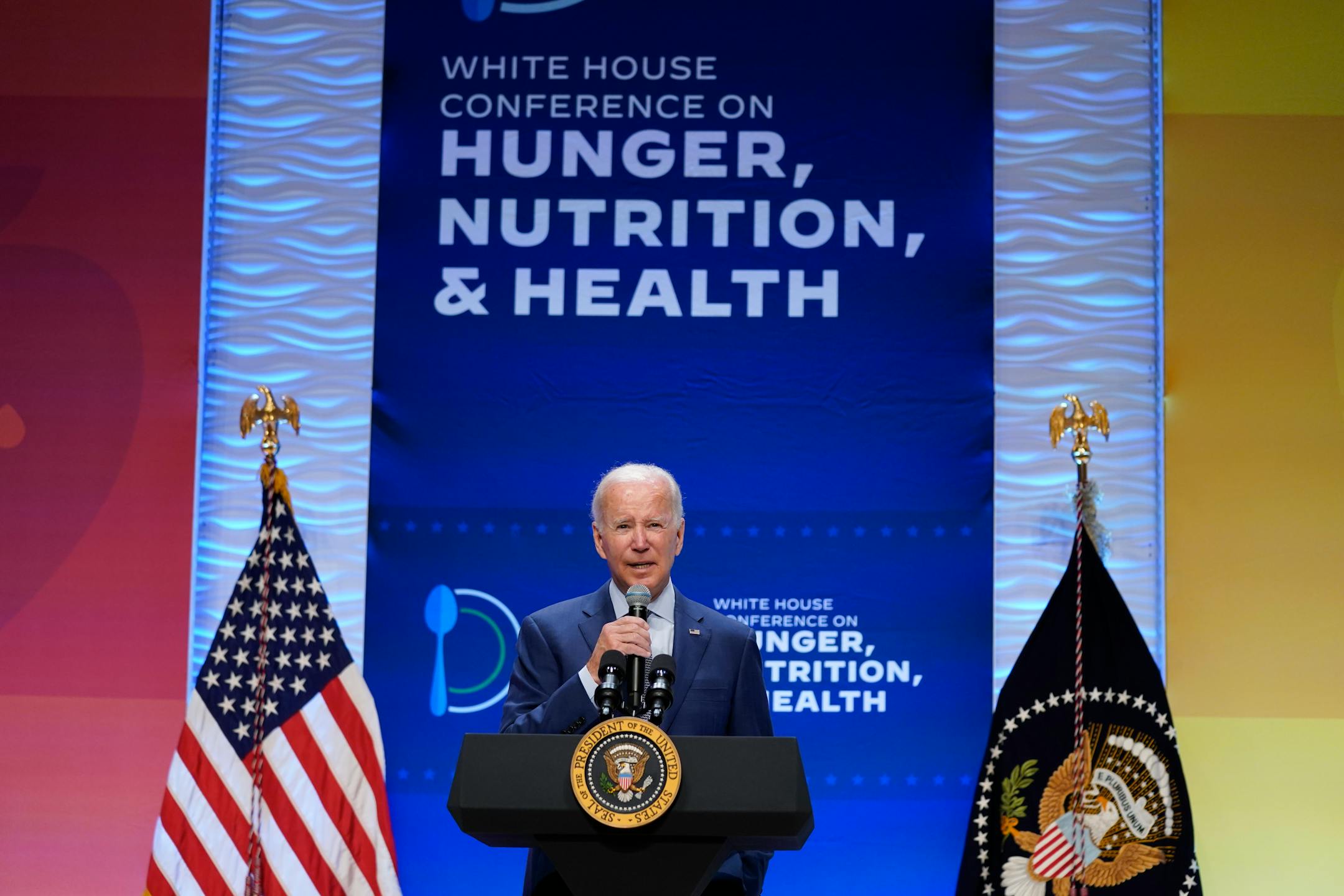
President Joe Biden said Wednesday his administration's goal of ending hunger in the U.S. by the end of the decade was ambitious but doable, if only the nation would work together toward achieving it.
"I know we can do this," Biden told an auditorium full of Americans who have experienced hunger as well as public health and private company officials. They were gathered for the first White House conference on hunger, nutrition and health since 1969.
It was the president at his most optimistic, sketching out a future where no child in the U.S. would go hungry, and diet-related diseases would diminish because of better, healthier food alternatives and access to vast outdoor spaces.
"That's why we're here today, to harness our greatest resource: our fellow Americans," Biden said. "Everyone, everyone has an important role to play."
He's counting on a variety of private-sector partnerships — including Target-owned Shipt, Hy-Vee supermarkets, Anytime Fitness and chef Andrew Zimmern — to help fund and implement his ambitious goal of ending hunger in America by 2030.
"When families can't afford healthy food options, it's harder for children to succeed in school, and it can lead to mental and physical health challenges for the whole family," Biden said in a statement accompanying the White House plan.
The 1969 hunger conference, hosted President Richard Nixon, was a pivotal moment that influenced the U.S. food policy agenda for 50 years. It led to a major expansion of the Supplemental Nutrition Assistance Program, commonly known as food stamps, and gave rise to the Women, Infants and Children program, which serves half the babies born in the U.S. by providing their mothers with parenting advice, breastfeeding support and food assistance.
And yet, 10% of U.S. households in 2021 suffered food insecurity, meaning they were uncertain they could get enough food to feed themselves or their families because they lacked money or resources for food, according to the Food and Drug Administration.


