

Shifting media eras in three media movies

Individual, institutional art in 'Anchorman 2,' 'Saving Mr. Banks,' 'Inside Llewyn Davis.'

December 20, 2013 at 11:39PM
This film image released by CBS FIlms shows Oscar Isaac in a scene from "Inside Llewyn Davis." (AP Photo/CBS FIlms, Alison Rosa) ORG XMIT: MIN2013121818081203
Oscar Isaac in a scene from “Inside Llewyn Davis.” (The Minnesota Star Tribune)

Three media-themed movies that opened this week offer insights into how artistic expression can be both individual and institutional, as well as how dramatically different today's media era is from the relatively recent past.

"Saving Mr. Banks" chronicles the process (and problems) of adapting "Mary Poppins" to the big screen. Tom Hanks plays an avuncular Walt Disney, the marketing, if not creative genius. Emma Thompson plays "Poppins" author P.L. Travers, who is a spoonful of vinegar as she fights against her heroine getting the Disney treatment. The creative tension between artistic purity and commercial accessibility is at the crux of the film, just as it is in much of modern-day pop culture.

While "Saving Mr. Banks" portrays popular, successful artists in two dominant genres, "Inside Llewyn Davis" (directed by Minnesota natives Joel and Ethan Coen), focuses on a struggling artist at the margins of an emerging genre, folk music.

Llewyn Davis (Oscar Isaac) is a troubadour — and trouble. If everything Walt Disney touched turned to gold, Llewyn is "King Midas' idiot brother," in the words of fellow folk singer Jean (Carey Mulligan). He's on the cusp of the success Bob Dylan and others soon enjoyed, but his struggles reflect the consequential artistic sorting process every medium experiences.

The two films begin in 1961, and each represents a cultural strain as distinctly different as the sunny Disneyland and gritty Greenwich Village that serve as their locales.

By 1961 the Disney brand was well-established as a mass-market media product that reflected wholesome families (and acted as an antithesis to the troubled childhoods of Disney and Travers). Meanwhile, folk music's anthems, antithesis to the cultural conformity of Disney's America, were coming of age nearly undetected by the broader news media and entertainment industries.

Emergent genres have always taken place in art, within and between media forms. Up until relatively recently, however, they often did it without an early glare.

In today's media environment, however, little goes unreported or underanalyzed. And artists themselves seem savvier about courting publicity. "Selling out" no longer seems a pejorative, but an aspiration. And if artists and artistic movements aren't found by the press, the full-court press of marketing leads the media to them.
Disney was a media synergy pioneer. Examples span Davy Crockett coonskin caps, Peter Pan lunchboxes, "Toy Story" video games, Happy Meals tie-ins and a whole lot in-between. That includes "Saving Mr. Banks," a movie about Walt Disney produced by Disney. Girls are even said to now go through a "princess phase," culminating in a visit to Disney World. It's magic. And it's a kingdom.

But it seems a small world, after all, at least compared to the marketing juggernaut of "Anchorman 2." The sequel to the successful sendup of local news, "Anchorman 2: The Legend Continues" has had a marketing push that might make Ron Burgundy blush. Obtuse newsman Will Ferrell's character stars in marketing deals with Dodge, Jockey, Ben and Jerry's and others. And Burgundy's ubiquity on ostensibly straight newscasts and late-night talk shows makes it impossible to not see "Anchorman 2," even if one avoids the Cineplex.

What's changed the most is the mainstream media's embrace of the conceit. Sure, Disney was marketing "Mary Poppins," but it's hard to imagine her showing up in character on a local newscast, as Ron Burgundy did in Bismarck, N.D.

This shift in news media culture is satirized in "Anchorman 2," with nearly every touchstone torched: empty suits, full-screens of screaming pundits, dizzying graphics packages, patronizing patriotism, car chases, celebrity obsession and other media memes spawned by cable news. The comedic treatment of these memes may lack the laughs of "Anchorman 2's" sillier scenes, but they are actually the funniest part of the movie, because they ring true.

The movie and the marketing of "Anchorman 2" are in good fun, of course. By design, both are over-the-top. And maybe that's what's now necessary to cut through the cultural clutter created by today's cacophonous cable lineup and infinite Internet options. But the satire's saturation marketing might make one wonder how the next genuine genres, like folk music or other original art forms, may spring up.

Folk music — and Bob Dylan — may have benefited from early obscurity. The Coen brothers didn't hail from Hollywood, but St. Louis Park. Far from Mary Poppins' London, Australian P.L. Travers came out of the outback. And even Walt Disney was a poor newspaper delivery boy in Kansas City.

Culture, and by extension, all of us, will be enriched if modern-day versions of these timeless artists emerge in an authentic artistic environment, too.

John Rash is a Star Tribune editorial writer and columnist. The Rash Report can be heard at 8:20 a.m. Fridays on WCCO Radio, 830-AM. On Twitter: @rashreport.


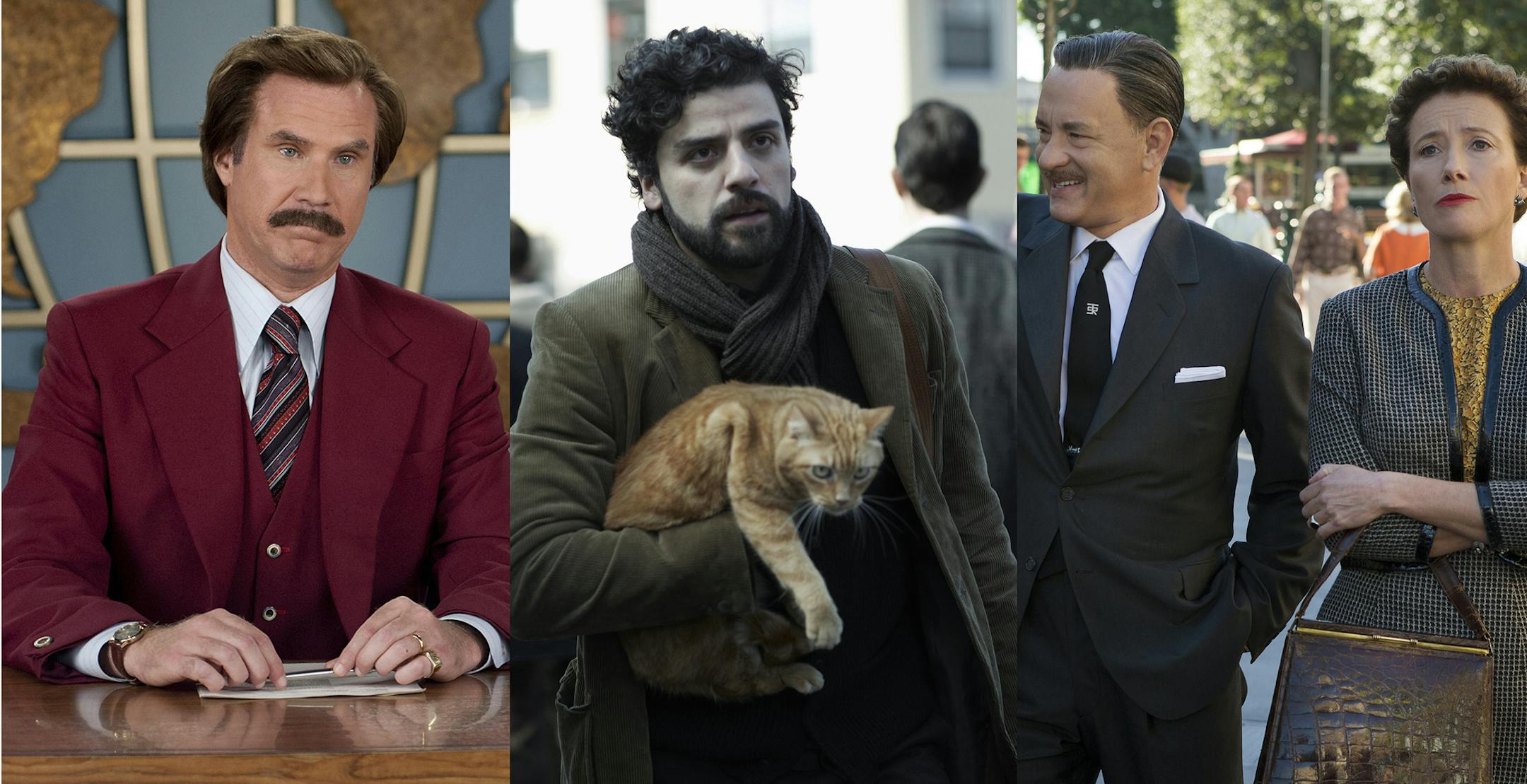
Star Tribune file photos Will Ferrell as Ron Burgundy, Anchorman 2: The Legend Continues, Oscar Isaac in a scene from Inside Llewyn Davis and Tom Hanks as Walt Disney, left, and Emma Thompson as author P.L. Travers in a scene from "Saving Mr. Banks." ORG XMIT: MIN2013121818081203
Will Ferrell as Ron Burgundy in “Anchorman 2: The Legend Continues,” Oscar Isaac in a scene from “Inside Llewyn Davis,” and Tom Hanks as Walt Disney and Emma Thompson as author P.L. Travers in a scene from “Saving Mr. Banks.” (The Minnesota Star Tribune)
about the writer

about the writer

John Rash

Editorial Writer

John Rash is an editorial writer and columnist. His Rash Report column analyzes media and politics, and his focus on foreign policy has taken him on international reporting trips to China, Japan, Rwanda, Kazakhstan, Turkey, Lithuania, Kuwait and Canada.

See Moreicon

More from Commentaries

See More
card image
Jerry Holt/The Minnesota Star Tribune

It is about showing up — repeatedly — grounded in history, guided by conscience and unwilling to outsource responsibility to symbols, slogans or someone else’s courage.

card image
card image