

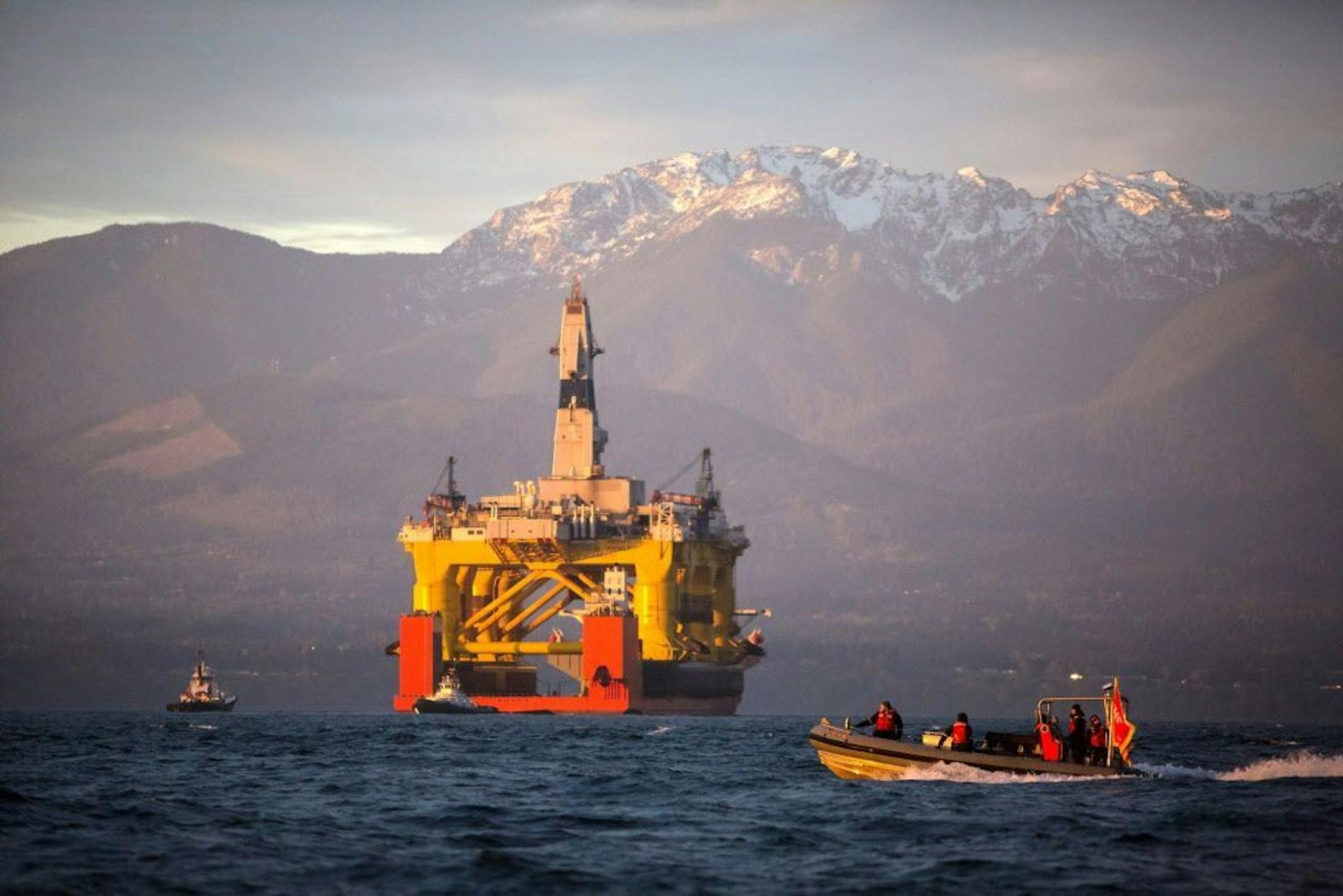
ANCHORAGE, Alaska — Royal Dutch Shell has abandoned its long quest to become the first company to produce oil in Alaska's Arctic waters, darkening the nation's long-term oil prospects and delighting environmental groups that tried to block the project.
After years of effort, Shell is leaving the region "for the foreseeable future" because it failed to find enough oil to make further drilling worthwhile.
The company has spent more than $7 billion on the effort, slogged through a regulatory gauntlet and fought environmental groups that feared a spill in the harsh climate would be difficult to clean up and devastating to polar bears, walruses, seals and other wildlife.
Shell persisted in hopes of finding a big new source of oil revenue and establishing expertise and a presence in the Arctic, which geologists estimate holds a quarter of the world's undiscovered conventional oil and gas.
The drilling project also held the hopes of Alaska, which has seen oil production and revenues decline sharply in recent years, and the U.S. oil industry, which looked to Alaska's offshore Arctic as the next source of oil big enough to keep the country among the top three oil producers in the world along with Saudi Arabia and Russia.
But Shell drilled to 6,800 feet about 80 miles offshore in the Chukchi Sea off Alaska's northwest coast and just didn't find much.
"Shell continues to see important exploration potential in the basin, and the area is likely to ultimately be of strategic importance to Alaska and the U.S.," Marvin Odum, director of Shell's operations in the Americas, said in a statement issued late Sunday. "However, this is a clearly disappointing exploration outcome for this part of the basin."
Known in the industry as turning up a "dry hole," it's common for exploratory drilling to find little to no oil, especially in formations that have not been explored much in the past.


