

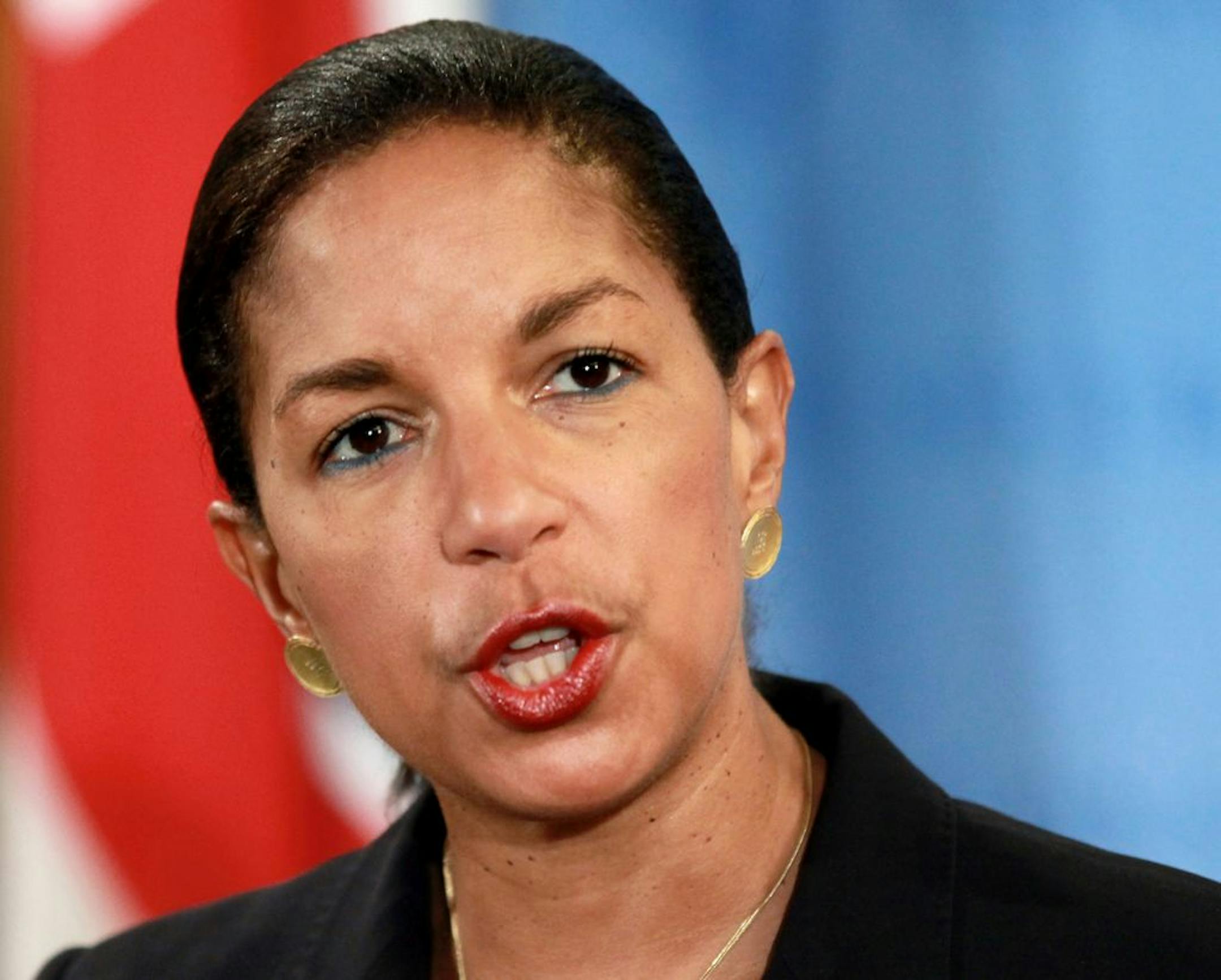
Does gender -- or does the supercharged combination of gender and race -- play a role in the preemptive strikes on not-yet-Secretary of State nominee Susan Rice?
For perspective on this complex question, it helps to return to 1974 and the nomination of another woman, Alice Rivlin, to head the Congressional Budget Office.
As Rivlin tells the story, the office had just been created, she was selected by a search committee -- and the House Budget Committee chairman made clear his adamant, gender-based opposition.
"Over his dead body was a woman going to run this organization," Rivlin recalled at an Atlantic magazine "Women of Washington" lecture last year.
No one would say that today. No one, I'd venture, would even think it. A woman, after all, has been secretary of state for all but four of the last 16 years. During the male interregnum, the job was held by a black man. House Republicans are getting well-deserved grief right now because of the absence of women among committee chairs.
But to note the progress women have made is not to say that the problem of sexism has been erased. It persists in the shadows of consciousness. Its manifestations are more subtle than the over-my-dead-bodyism of Rivlin's experience.
The public dialogue has moved from denying any gender differences to celebrating them, to the advantage of women. Consider the self-congratulatory discussion over the record 20 women set to serve as senators next year. "Women tend to be problem-solvers; we work together," Minnesota Democrat Amy Klobuchar told CBS. "They didn't get there by swaggering around, they got there by getting things done."
A lapsed political consultant, male, told me that the one candidate who might lure him back into the field would be a woman presidential nominee -- because, he said, it will take a female president to solve the country's problems.


