

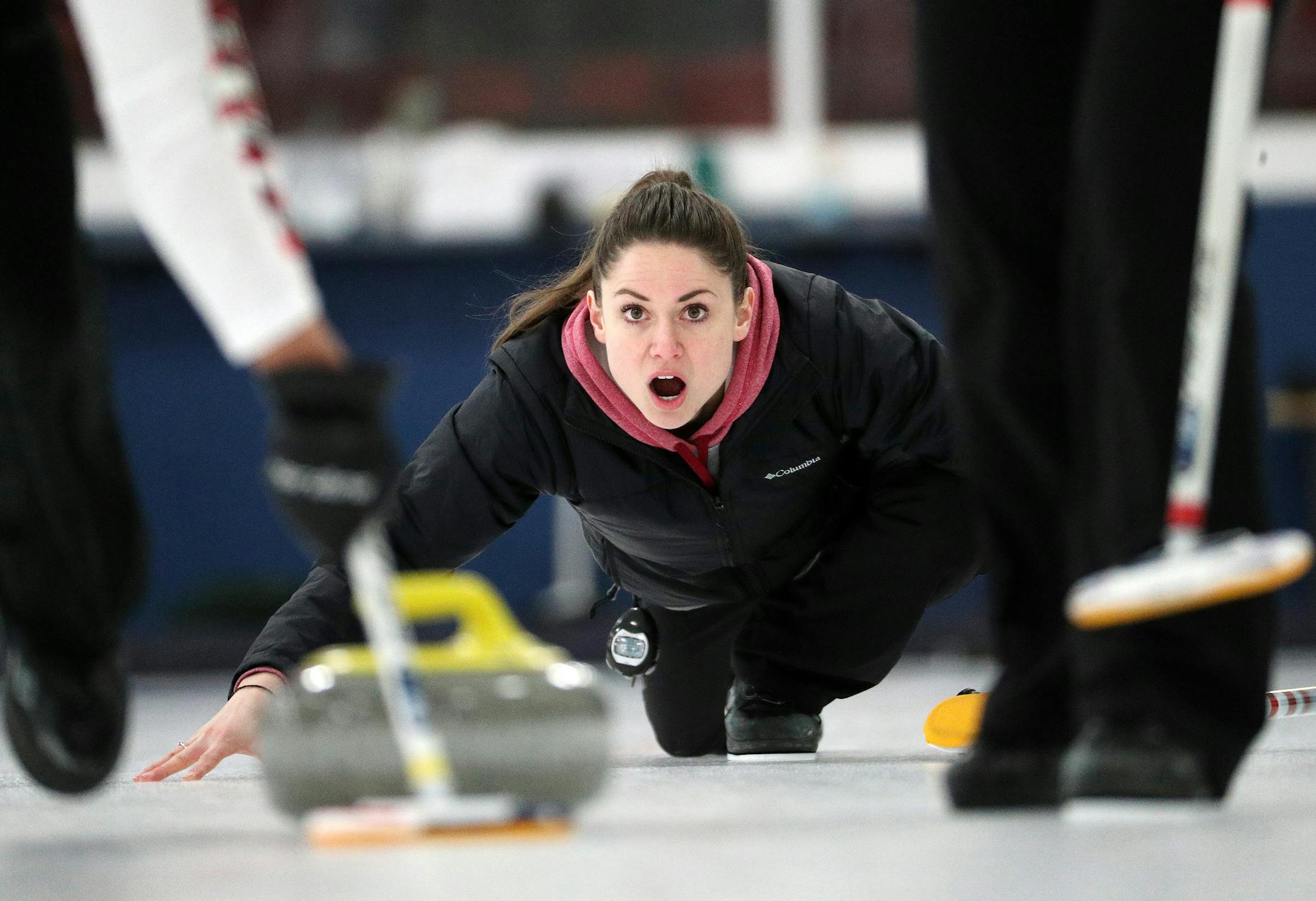
After watching the dismal performances of American curlers at the past two Olympics, Tabitha Peterson agreed that her sport needed to rethink the way it did things. Still, she said, it felt like a radical shift in 2014 when USA Curling instituted a new method of funding and training its elite athletes.
"It used to be, you could do your own thing," said Peterson, of Eagan. "You didn't have to have a lot of coaching if you didn't want it. You could pick your own schedule. You could go out and drink the night before [a competition] if you wanted. Now, it's a lot more serious."
She isn't complaining, given the results. With one year to go before the 2018 Winter Olympics in Pyeongchang, South Korea, USA Curling's high performance program (HPP) has helped Americans muscle back into contention on the world stage.
In the past, elite American curlers formed their own self-directed teams. That approach yielded only one Olympic medal, leading the U.S. Olympic Committee to warn it could cut the sport's financial support if it did not make changes. USA Curling responded by creating the HPP, in which it chooses a pool of athletes each spring, assembles them into teams and oversees their training and competition.
The program provides funding; support from a national coaching staff, trainer and sports psychologist; and access to facilities such as the Four Seasons Curling Club in Blaine, an official USOC training center. Last season, HPP teams won two silver medals and two bronze at world championship events. This week, as the U.S. championships begin in Everett, Wash., all six adult teams sit in the top 37 of the World Curling Tour rankings.
"It's a slow process, getting these changes implemented," said Derek Brown, USA Curling's director of high performance. "But the results have started to show.
"Our athletes have become more professional as teams, more focused. It's not a job yet, but it's starting to be treated more like a job, with more accountability. That's what we have to have, because we're competing against countries that have professional teams with full-time salaries."
The HPP ignited controversy in the curling community when it was launched, and it still has opponents. Some mourn the loss of the old system, in which any self-formed team could win the right to represent the U.S. at the Olympics or world championships. Those teams now must compete for national titles and big-event berths against the 44 athletes in the HPP, which gets the bulk of the $850,000 that USA Curling spends to support elite athletes.


