Analysis: Timberwolves’ Tim Connelly keeps focus on the biggest prize of all with moves

The addition of Ayo Dosunmu and the pursuit of Giannis Antetokounmpo are all about putting together a championship-caliber roster.

Columnist Icon
The Minnesota Star Tribune
February 8, 2026 at 5:00PM
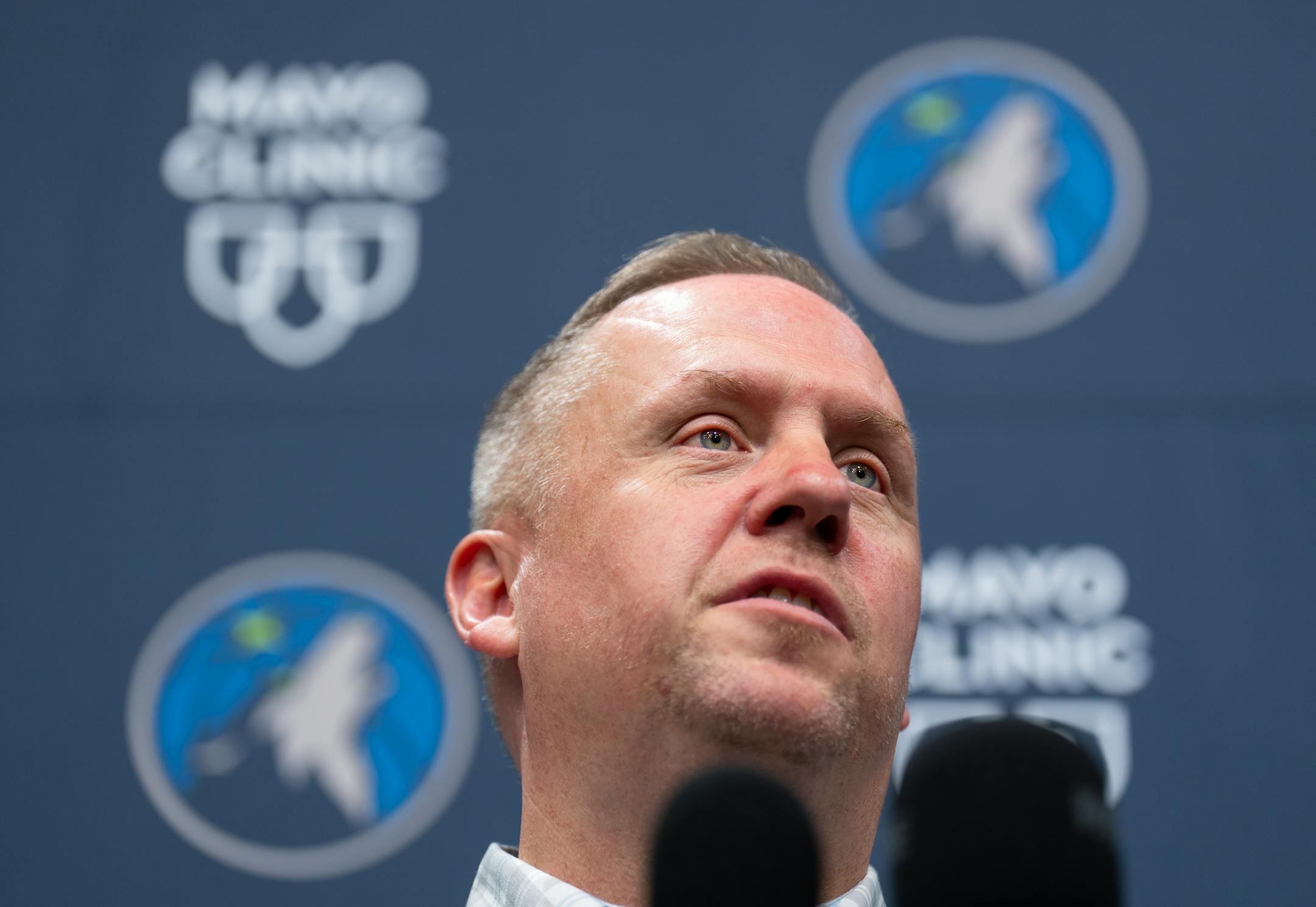
Timberwolves President of Basketball Operations Tim Connelly. (Jeff Wheeler/The Minnesota Star Tribune)

About 90 minutes before the Timberwolves tipped off against the New Orleans Pelicans on Friday night, Feb. 6, President Tim Connelly arrived at the podium and said the team made the move to acquire Ayo Dosunmu and Julian Phillips from the Chicago Bulls because he felt the team had a “puncher’s chance” of winning a championship this season.

Then the Wolves went out and blew an 18-point lead to the second-worst team in the Western Conference.

The first inclination might be to ask: How much heat exactly are the Wolves packing behind that punch?

But it’s the front office’s job to take the long view of the team and not get caught up in the swing of a season, even swings as high and low as the Wolves can vacillate between at times. The Wolves are coming off two Western Conference finals appearances and have shown the ability at times this season to play elite basketball, for as maddening as they can be in their consistency doing so.

Here are some takeaways from Connelly’s public comments about the trade and his views on chasing an elite star like Milwaukee’s Giannis Antetokounmpo.

Is Dosunmu a rental for this season or a piece of the future?

The latter, at least in the Wolves’ eyes. As a free agent after this season, Dosunmu would of course have to agree to come back to Minnesota, but the Wolves view him as a long-term member of the team.

“You trade for a guy that’s about everything we like — worker, really bright guy, great teammate, well thought of throughout the organization of Chicago,“ Connelly said. ”A position of need, so we’re certainly hopeful it’s a long-term match. He wasn’t just identified for the next 30-plus games, he was identified because he was a guy who could be a huge part of our core.”

Connelly acknowledged the obvious comparison Wolves fans have made, that Dosunmu replaces what Nickeil Alexander-Walker brought in past seasons — high energy and effort on defense and someone who can handle the ball a bit while still playing alongside a ball-dominant starter like Anthony Edwards.

ADVERTISEMENT

What about the chase for Giannis?

Connelly couldn’t speak about specific players not on the Wolves, but he reiterated what anybody who has observed the team over his tenure has seen both in trades executed attempted: The Wolves are always going to be in the mix to acquire elite talent.

“Our job always is to get better,” Connelly said. “We don’t ever want to be static. The last two years have been very successful, but it’s ended with 4-1 losses in the Western Conference finals. So how do we continue to mature as a team, keep pushing the envelope?

“That locker room thinks they can win a championship, so any time there’s an elite player, without mentioning names, we’re going to do our due diligence.”

The cost and gymnastics of doing business

The Wolves pulled off some nifty sorcery around the various aprons of the NBA’s collective bargaining agreement to both save money and add to the roster. In dealing Mike Conley to the Bulls two days before the deadline, they ducked under the first apron of the luxury tax, which then allowed them to take on more money in the future trade with Chicago, which was trying to dip under the luxury tax.

Then after the Bulls shipped Conley to Charlotte, which waived him, it paved the way for Conley to return to the Wolves in the buyout market since he was traded twice. So the Wolves retained Conley, added to their roster and shed Conley’s original salary, which will save them about $20 million in luxury tax.

“I don’t want to be flippant about money, but it’s really challenging transactionally to get in these first and second aprons. We saw that last year,” Connelly said. “But you have to be fiscally responsible. You have to be aware not just this year, but you have to be aware of repeater tax, avoid the first and second apron, but we saw so many cash deals this year where, they won’t call it a hard cap, but it’s pretty close to a hard cap. Again, we were just fortunate we were able to be aggressive.”

Developing young players vs. winning now

The one thing the Wolves might lament about the Dosunmu trade is that it meant the end of the Rob Dillingham era. The Wolves were aggressive two summers ago in trading into the lottery for him at No. 8. They gave up a 2031 unprotected pick and 2030 pick swap to get him. Now that, plus Leonard Miller and four second-round picks, has turned into Dosunmu and Phillips. The pressure is on for this move to work.

In making the trade, Connelly mentioned that Dosunmu, 26, is more aligned age-wise with where the current timeline of Wolves players is and where the Wolves are as an organization attempting to win. Dillingham, 21, was not. His exit to Chicago speaks to that friction that can exist with teams like the Wolves who are trying to win now while developing young talent that needs playing time.

“It’s hard,” Connelly said. “It’s not an easy task for specifically the coaches. Every game, especially the ones in your conference, every game is so meaningful. … It’s not lost organizationally how hard that is.

“I do think it’s increasingly vital with what we say and how much money moved around, we have to be able to develop these guys, and we have developed a lot. But it gets more challenging when you don’t come to a team where those available minutes are there.”

about the writer

about the writer

Chris Hine

Sports reporter

Chris Hine is the Timberwolves reporter at the Minnesota Star Tribune.

See Moreicon

More from Wolves

See More
card image
Richard Tsong-Taatarii/The Minnesota Star Tribune

The Wolves, for all their faults, have a better record at the All-Star break than they did a season ago.

card image