

D.C. SECURITY
Secret Service may be going too far
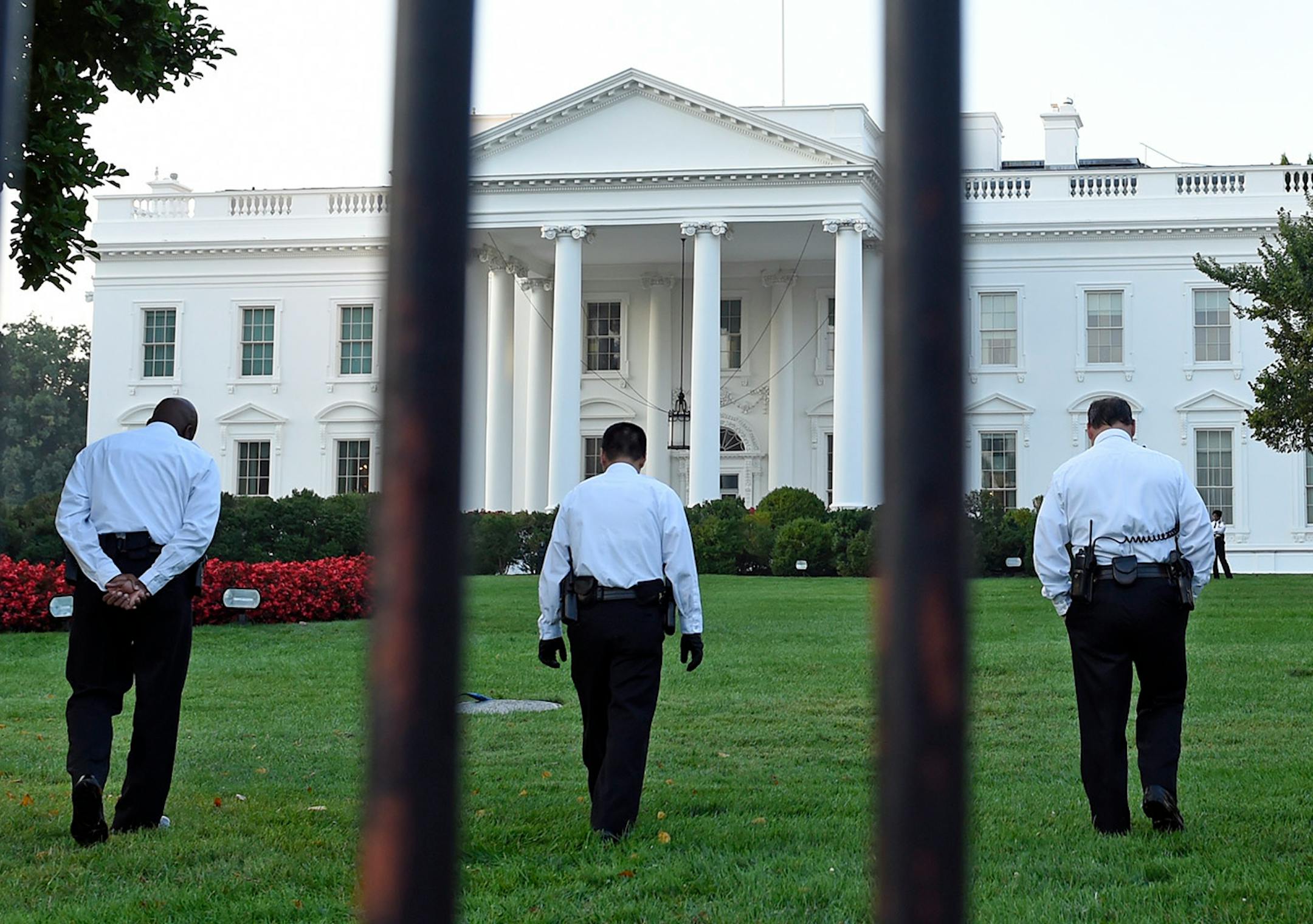
The Secret Service can't say what exactly went wrong last week to allow an intruder to get through the front door of the White House. A review into the unprecedented security breach is underway. The lack of understanding, though, hasn't stopped the Secret Service from floating the notion — let's hope it stays just that — of pushing visitors even further back from the perimeter of the president's home.
Surely there is a way to secure the safety of the first family without closing more streets and fencing off more sidewalks. It is not just the convenience of D.C. residents and visitors that is at stake. It is the character of American government — still meant, the last time we checked, to be of, by and for the people.
In last week's incident, a man armed with a knife vaulted the fence on Pennsylvania Avenue NW and made it through the unlocked doors of the North Portico. This has embarrassed the Secret Service, as it should, and raised some obvious questions. Dogs on site are trained to stop intruders; why weren't they released? Shouldn't the doors have been locked as soon as an alarm signaled a breach of the fence? Were uniformed officers paying attention?
We have a lot of sympathy for the people charged with protecting the nation's leaders. They are expected to be effective but invisible. If they do their stressful job right, they go, for the most part, unthanked. When there is a mishap, everyone is ready with advice. In this latest episode, for example, officers judged the intruder — a veteran said by his family to suffer from post-traumatic stress disorder — to be not armed or carrying explosives, so they did not use lethal force. Had they made a different decision, we and many others today might be faulting their trigger-happiness.
Given these pressures, the Secret Service always will push for the most restrictive security measures. Now officials are raising the possibility of excluding the public even more — keeping people off the sidewalks near the White House, creating additional barriers, establishing new checkpoints further back. Officials must get to the bottom of Friday's breach and assess the need for additional safeguards. Are a sufficient number of officers deployed? Should the fence be higher? What about locking the White House door?
But making more of Washington off-limits should itself be off-limits. People come to 1600 Pennsylvania Av. not only to see a part of history but also to express their First Amendment rights. Washington cannot be allowed to become any more of an armed camp.
FROM AN EDITORIAL IN THE WASHINGTON POST


