

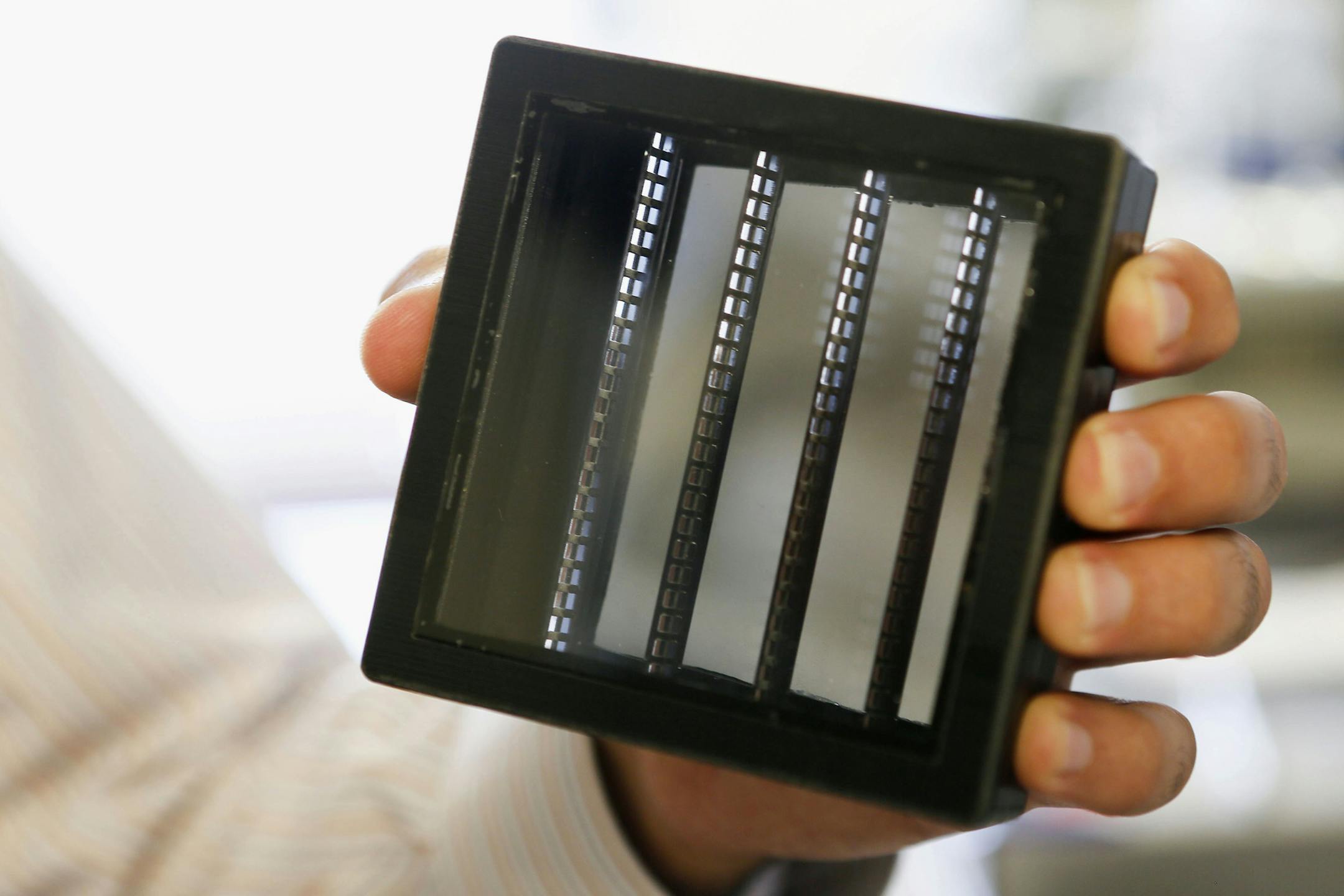
It sounds like magic, far-out fiction, a California dream. Yet earnest scientists are hard at work on a new alchemy: brewing fuel for cars — synthetic gasoline — from little more than water and sunshine.
Mimicking the way plants turn sunlight and carbon dioxide in the air into energy and oxygen, the Joint Center for Artificial Photosynthesis (JCAP) at the California Institute of Technology is in a race to trump nature and slow global warming. Nate Lewis, a Caltech professor and solar energy research star, has a plan to remake fuel as we know it.
"If we couldn't get to that, we wouldn't be doing it," Lewis said.
The effort is backed with $122 million of U.S. Energy Department funds and combines the talents of 120 scientists at Caltech; Stanford; the University of California's Berkeley, Irvine and San Diego campuses; and Lawrence Berkeley National Laboratory.
Not so long ago, all-electric cars seemed fantastic, too. Now Tesla Motors Inc., which makes only battery-powered vehicles, has a higher market value than some old-line automakers.
To revolutionize fuel, Lewis has a two-step plan. Really, it's two leaps.
First, the coalition aims to develop a system to make large amounts of hydrogen fuel using cheap solar-panel-like devices. Liquid or gaseous hydrogen, which can power super-clean fuel-cell cars, is needed for chemical plants and refineries.
Then comes the second leap: applying that same research to a system that can blend the hydrogen fuel with carbon dioxide from the air, much as a plant does, to make liquid fuels that can power cars, heavy trucks, boats or aircraft. JCAP aims to get to that point by the mid-2020s.



