

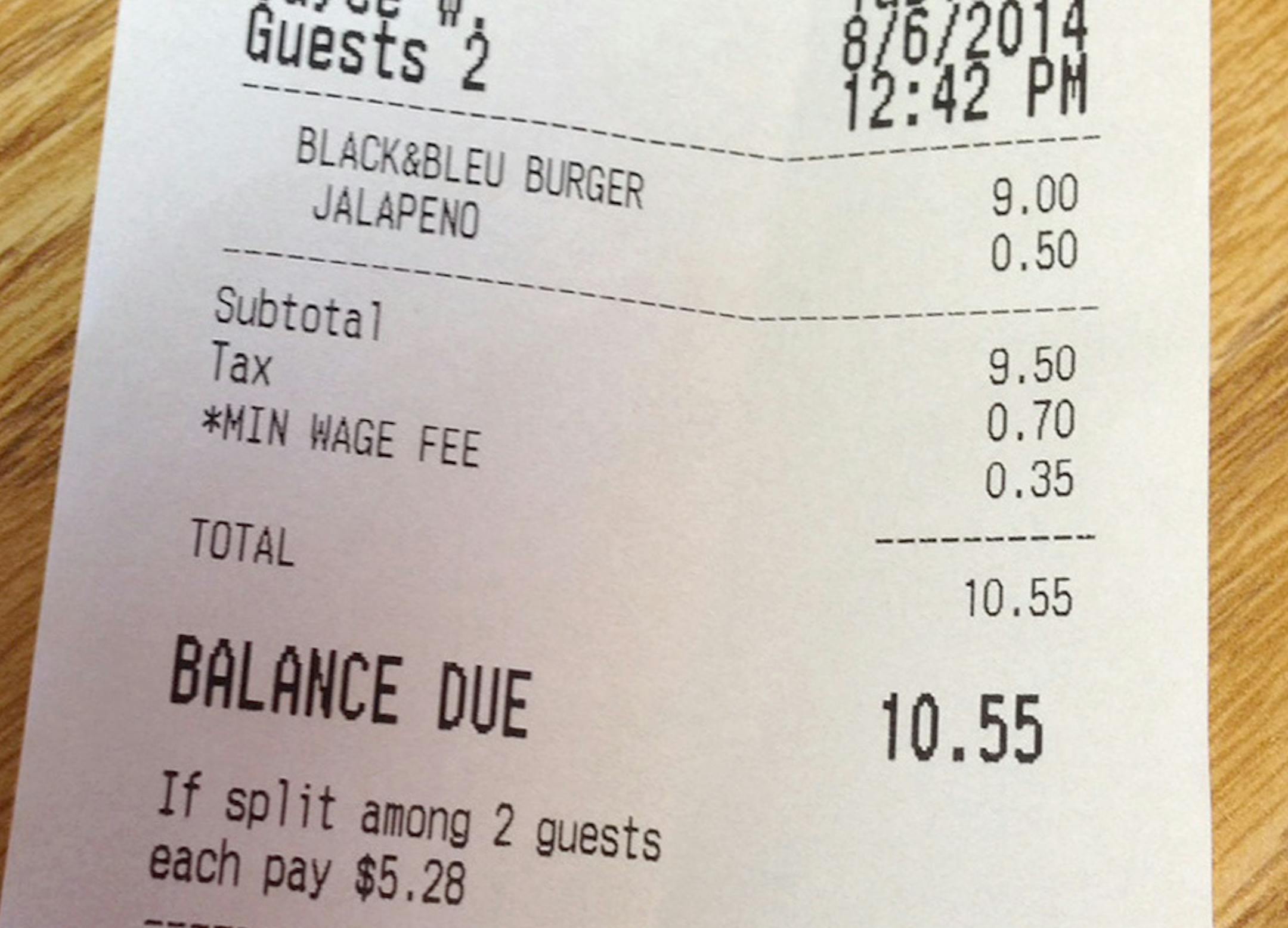
The 35-cent-per-ticket fee that a cafe in Stillwater charges to make up for a minimum-wage increase erupted into a big national story, as many folks seemed to think it was some sort of political protest.
To me, this little fee looks like pure small-business improvisation in the face of a very big challenge.
It might have been the least bad option, rather than imposing price increases that could cost regular customer visits or cutting staff hours — and risking service so poor that customers don't return.
"There is no good strategy," said Al Landgraff, a partner who leads the restaurant practice for accountants Abdo, Eick & Meyers from the firm's office in Mankato.
A lot of people appear to think the minimum-wage increase has only a minimal impact on a restaurant owner, just a 75-cent-per-hour bump for employees.
The reality is a double-digit percentage cut into the owner's compensation — not exactly minimal. It's not a stretch to suspect that for some owners it could even mean the doors get locked and the lights go out.
One example of a real owner's situation comes from John Hamburger, a longtime restaurant industry analyst and president of the trade journal publisher Franchise Times Corp. He shared an income statement summary from an unnamed Twin Cities full-service restaurant.
This restaurant had about $2 million in annual sales. The cost of sales, mostly food and beverage, came to just under $600,000. Occupancy, insurance, utilities and other operating expenses together were a little more than $500,000. But the biggest operating expense category by far was payroll, at over $800,000.



