

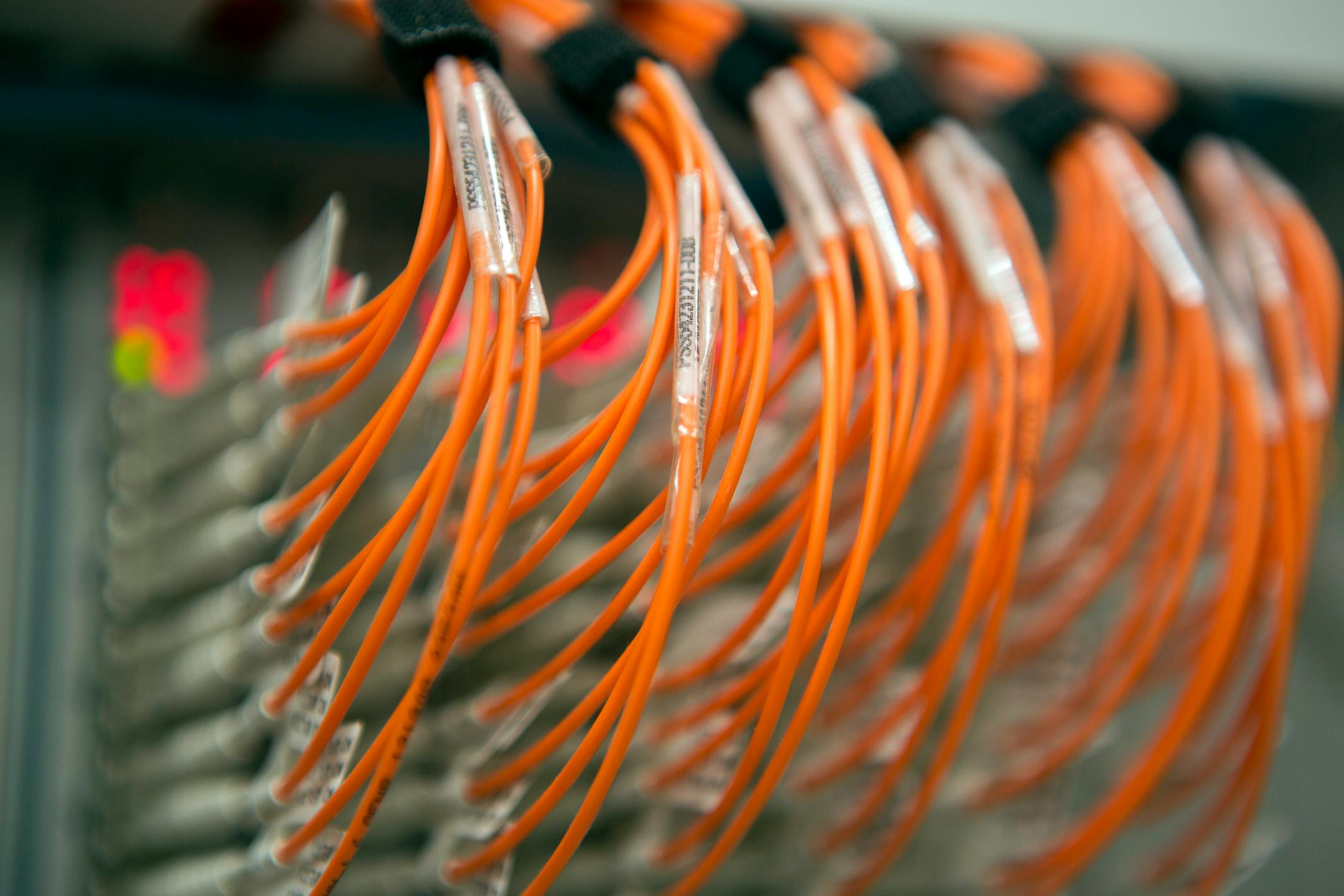
One of Gary Johnson's fears when he announced the 5,000-square-mile "GigaZone" ultrahigh speed Internet service last week in Bemidji was that someone might reach the badly mistaken conclusion that it was easy to build that kind of rural broadband capability.
It was nothing of the sort — which is what makes Johnson's Paul Bunyan Communications an interesting case study in broadband Internet access outside of the Twin Cities.
Subsidized capital wasn't what made the difference. More like patience and a particularly long-term view.
The GigaZone service wasn't exactly what was envisioned years ago when Paul Bunyan started building its fiber-optic network. Its far more modest ambition was to incrementally add territory and services. The company connected its first customer house via fiber-optic cable all the way back in 2004.
The company, based in Bemidji, had about $54 million in 2013 revenue. That makes it an awfully small company to be installing miles and miles of fiber. Johnson said that he was even a bit surprised to learn, after tallying up all the capital investments made in its fiber-optic network, that the total thus far is about $150 million.
"It really wasn't thrown out there like 'Do you want to spend $150 million?' " said Johnson. "We are a cooperative. So it's in our DNA to look through the lens of 'what to our members need?' Not 'Is it going to be super-profitable,' that kind of thing."
The cooperative has borrowed money from a program of the U.S. Department of Agriculture. But those were loans, not grants. Beyond that, he said "it's just been our own investment. It's been pay-as-you-go, for over a decade."
Not only does Johnson explain that there was nothing easy about it, he's nothing but a fan of public financing for broadband like Minnesota's new $20 million broadband grant program. The company would take any help it could get to continue to expand Paul Bunyan's network.



