

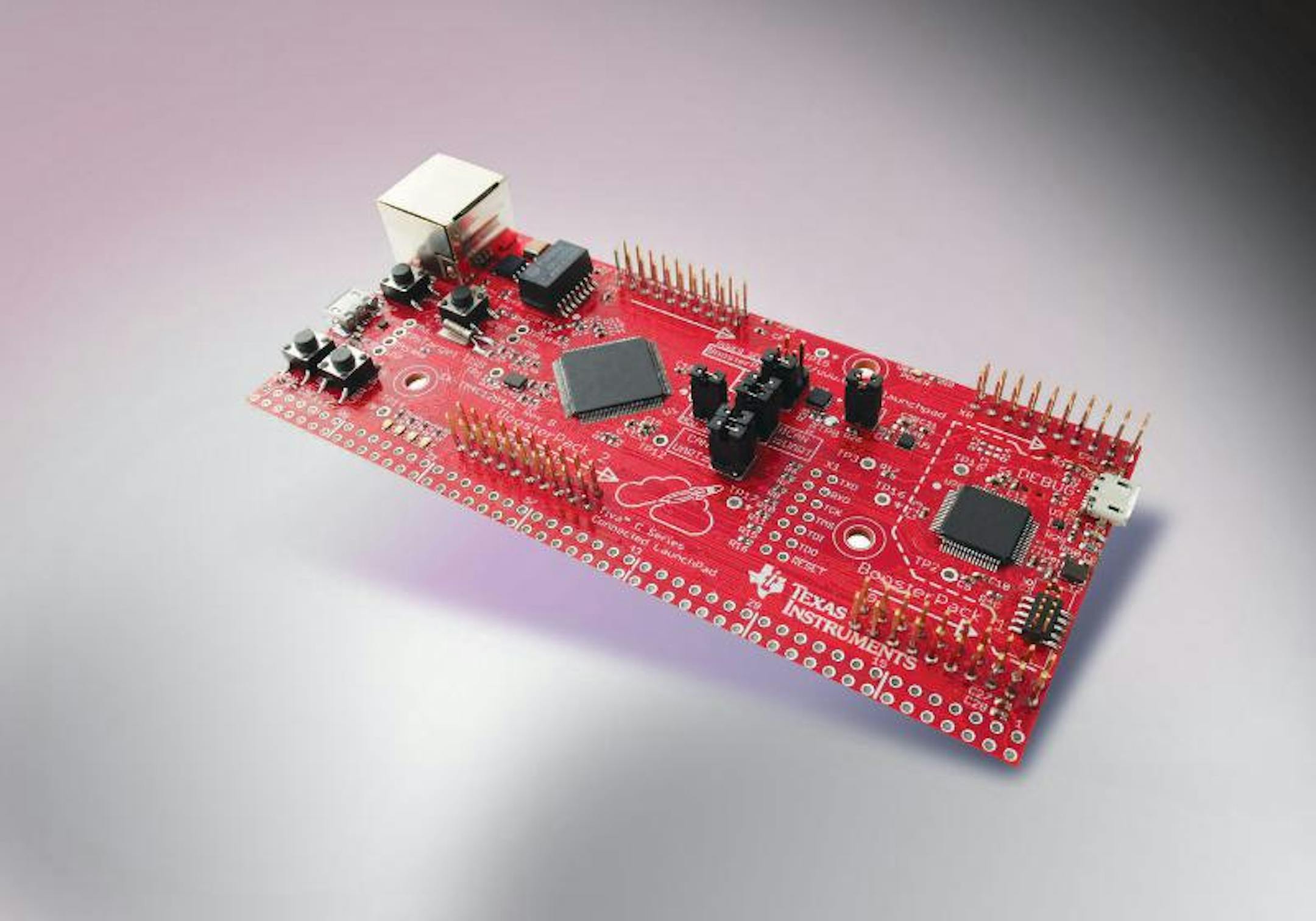
On the Texas Instruments eStore it takes only $19.99 to jump into "the Internet of things" by purchasing a Connected LaunchPad unit to bring an everyday device onto the Internet.
Better be patient, however, because they are sold out.
"They are perpetually sold out," said Hans Rempel, CEO of the Minneapolis start-up Exosite, which will have its data management software on TI's LaunchPads when they eventually do ship.
Texas Instruments' failure to keep up with demand for these evaluation devices is just one sign that the Internet of things, the connection of all sorts of regular machines and devices to the Internet, is beginning to realize its long-discussed promise.
Rempel cares very much about how many evaluation units ship. These little gadgets will go into prototypes that engineers and marketers will evaluate to see if something like a trash compactor can be transformed into a far more valuable Internet-connected, smart trash compactor. Rempel thinks maybe one out of 10 evaluation units could lead in six to 18 months to a machine going into production.
That long lead time, as well as reluctance by customers to replace their unconnected but still-working-fine conventional machines, helps explain why the market is still talked about mostly in terms of its potential.
But, oh my, is that potential ever huge. A conservative estimate by leading consulting firms is something like 26 billion devices connected to the Internet by 2020. Cisco Systems, the network-equipment maker, has predicted nearly twice that many.
Cisco even has a real-time "connections counter" on its website. While no genuine data collection seems to be taking place, as of this week Cisco's number was approaching 12.5 billion devices.



