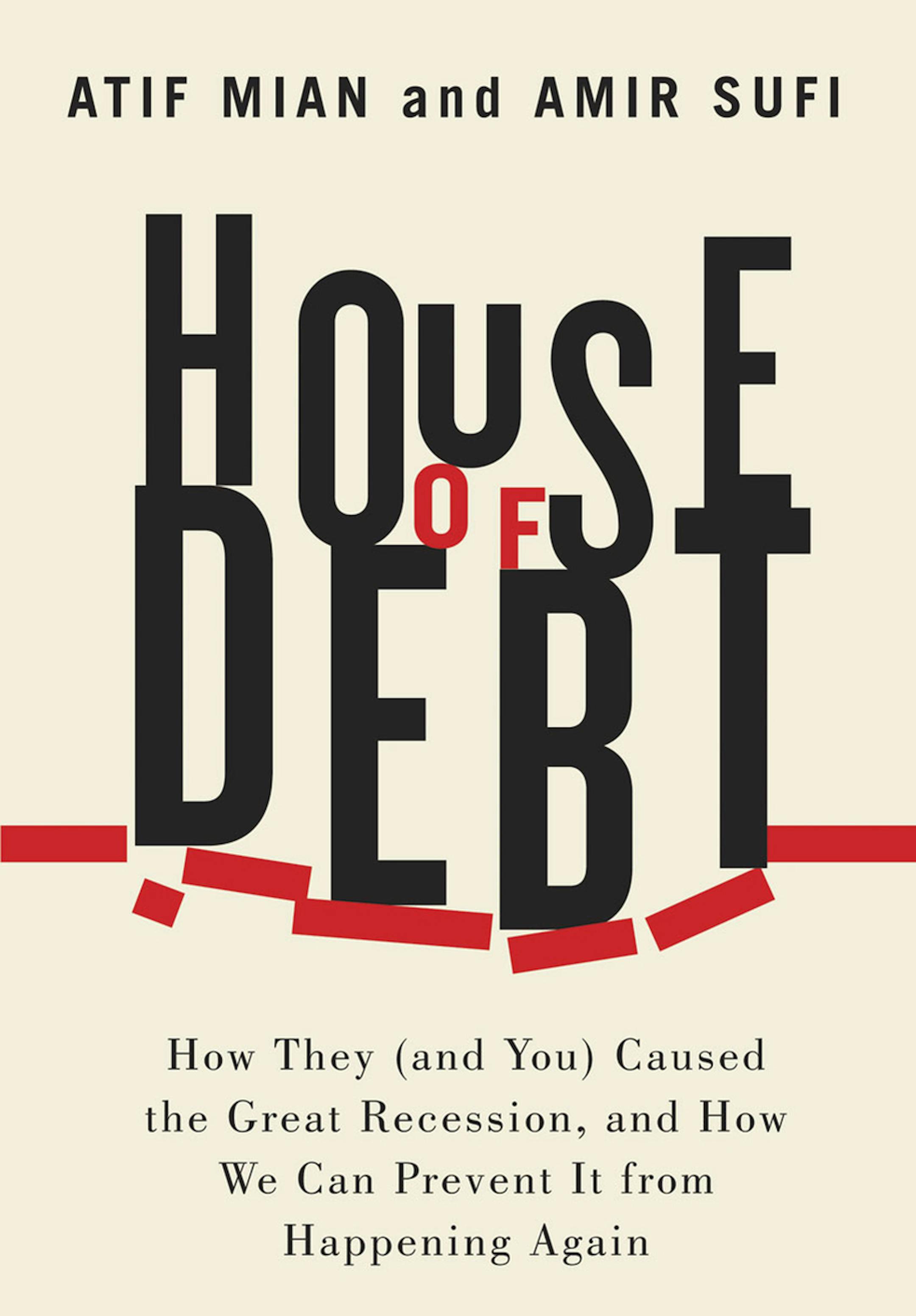
What if all we know about the cause of the Great Recession is plain wrong?
What if it wasn't the financial crisis that followed the September 2008 collapse of the investment bank Lehman Brothers, as the bubble burst in housing and mortgage backed securities?
It's a question that really matters if we want to avoid another Great Recession.
And as two professors argue in a convincing new book called "House of Debt," we really don't get what caused the severe downturn. Of course that also means that thousands of pages of new financial regulations may not have done much to fix what's broken.
For the authors, Atif Mian of Princeton and Amir Sufi of the University of Chicago, the main problem is the structure of the mortgage market and how it causes housing price declines to crush consumer spending.
By the late summer of 2008, the family balance sheets of many lower middle-class homeowners had already badly deteriorated, and consumption spending had slid. Automobile sales for the first eight months of 2008 were off about 10 percent from the year before.
Things certainly got a lot worse after Lehman Brothers tipped over and the financial markets seized up, but by then the Great Recession was already well underway.
Mian and Sufi explain that the poorest one-fifth of U.S. homeowners, folks who in 2007 had total debt as a percentage of total assets of about 80 percent, were already deep in recession. In 2007 their net worth was almost exclusively the equity they had in their houses. They were vulnerable to falling prices, and prices had started to fall.