

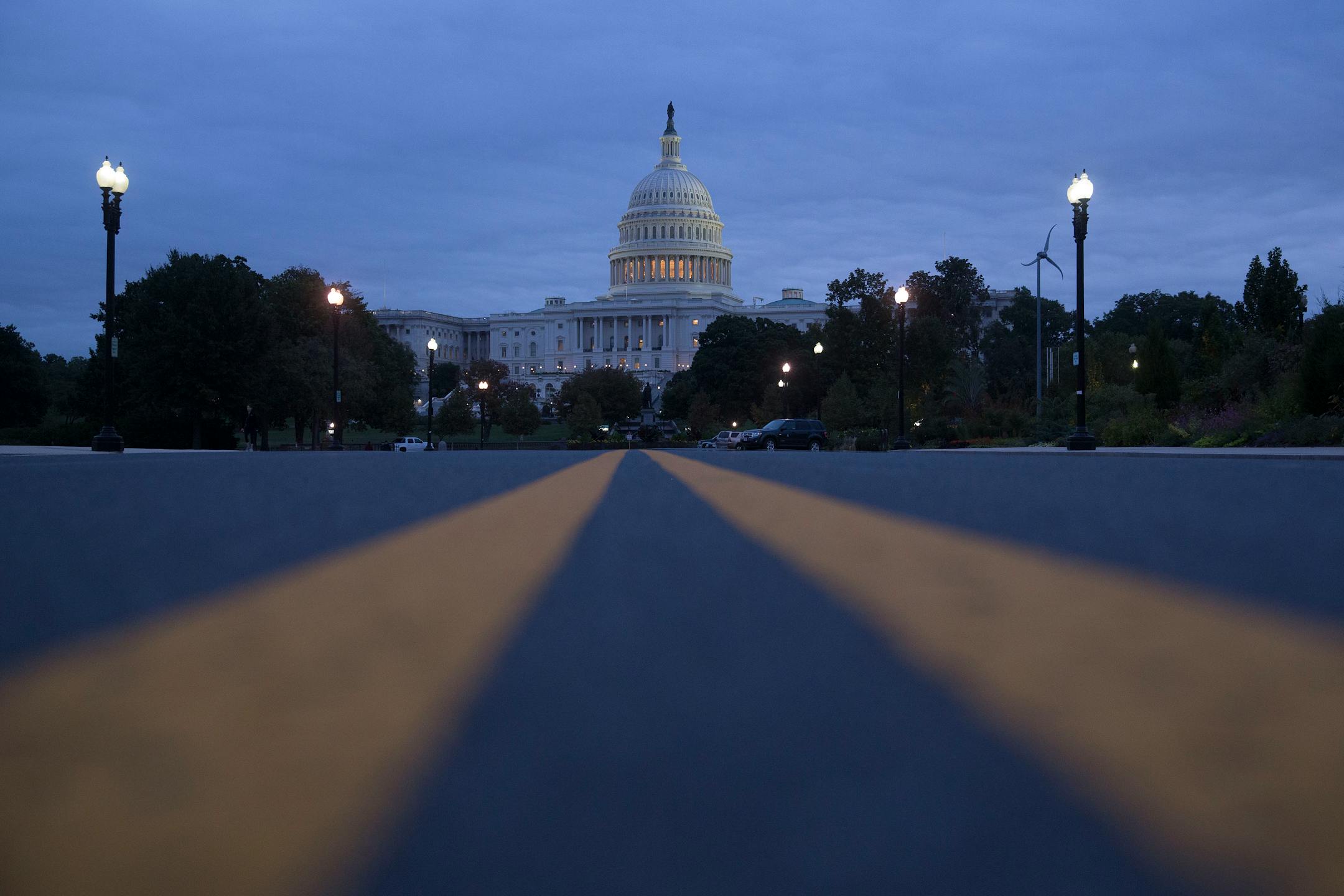
Watching the U.S. government's debt ceiling crisis this week has been a little like standing outside your house as you watch it burn. The only question is whether the fire takes just the roof or burns your house to its foundation.
Congress has settled on legislation that would allow the government to fund itself beyond this week — putting the fire out, but not before significant damage was done.
True, the government should avoid a "default" on its obligations to make payments on its outstanding bills, notes and bonds, but there wasn't much of a genuine risk that an investor would never get paid back after a Treasury note comes due. So maybe some of the most dire apocalyptic warnings in the past few weeks overstated the effects of a default.
What can't be overstated, however, is how Congress may have diminished one of the country's most valuable assets — the world's near-universal belief that the U.S. Treasury's obligations will be paid.
That faith may be gone forever.
A lot of people, here and abroad, have come to depend on that certainty of payment, as the $11.6 trillion U.S. Treasury market is the bedrock of global capital markets. When you read in the financial press that there is a "flight to quality," it means that investors are getting nervous and have started selling — Bulgarian government bonds, Australian mining stocks, whatever they own — and buying U.S. Treasury securities.
Treasury securities are used for collateral on all sorts of loans and trading positions. They are the backbone of short-term lending in the capital markets through trades such as repurchase agreements. The yield curve for Treasury securities, a graph that marks the yield at various maturities, is how interest rates on other bonds are set.
Many of the most basic parts of finance, such as figuring out how to put a value on stock options, depend on the risk-free rate of return as a starting point.



