

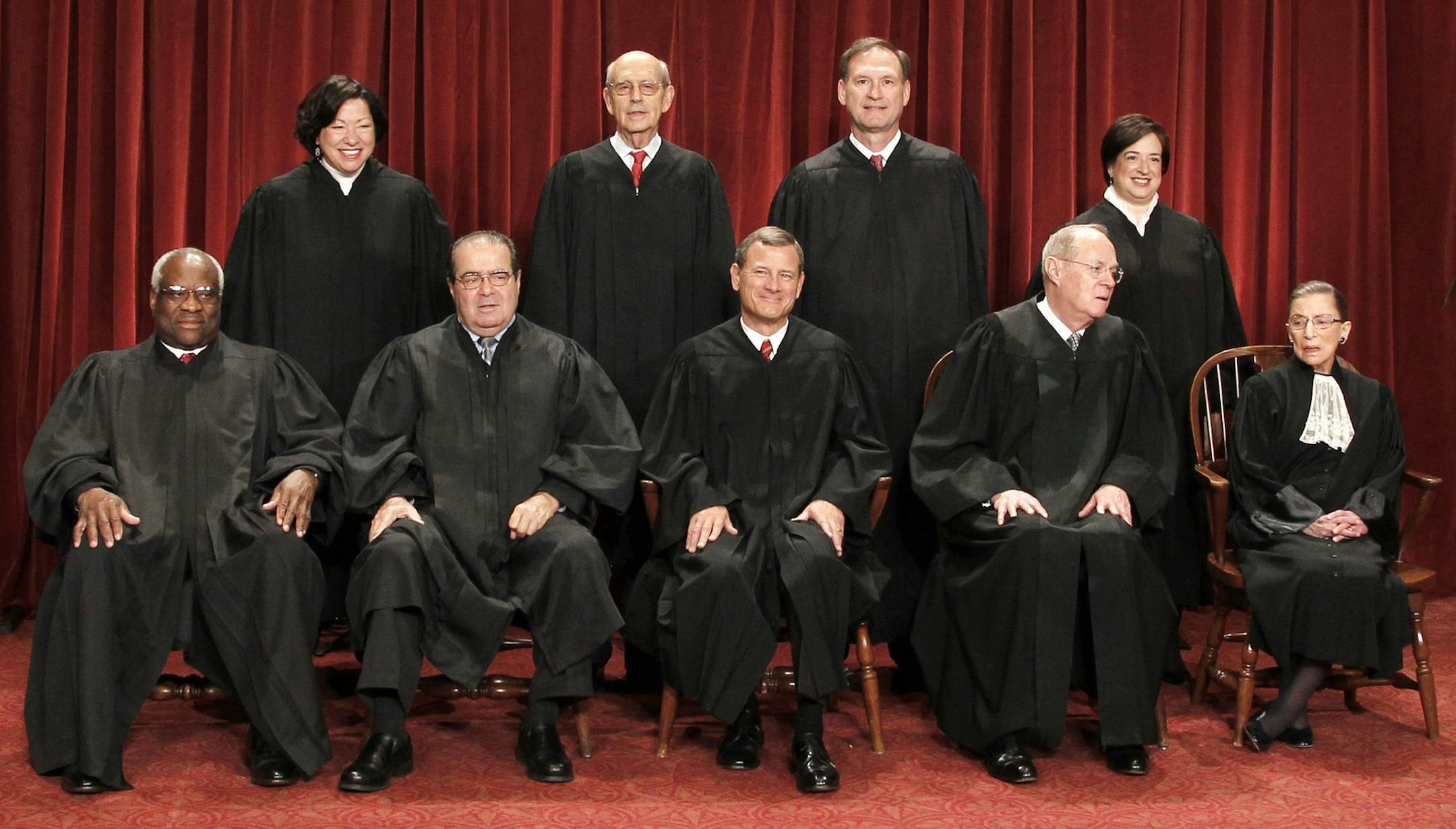
The unexpected death of Supreme Court Justice Antonin Scalia on Saturday raises the curtain on what promises to be a bitter confirmation battle, which in turn will dramatize some important truths about the presidential election campaign.
It's been almost three decades since Ronald Reagan departed the White House. Yet his Supreme Court nominations still detonate explosive controversies.
The sardonic and influential Scalia was in his 30th term on the high court. Yet he wasn't the most consequential of Reagan's choices.
Justice Anthony Kennedy, Reagan's final high-court nominee, has long been a crucial swing vote, determining the outcome of momentous cases concerning abortion, gun control, property rights and much more.
Kennedy was the decisive vote — authoring the majority opinions — in both the 2010 Citizens United campaign-finance case (which progressives believe wrecked American democracy) and last year's Obergefell vs. Hodges legalizing same-sex marriage nationwide (which conservatives believe wrecked civilization).
Beyond Reagan's legacies, consider the tenures of Justices Clarence Thomas (nominated by the first President Bush in 1991) and Justices Ruth Bader Ginsburg and Stephen Breyer (Bill Clinton nominees in 1993 and 1994).
Nothing about presidential candidates may matter more in the long run — especially in the long run — than their attitudes toward judicial nominations. In light of Scalia's passing, it's worth noting that Ginsburg, Kennedy and Breyer are all near or beyond 80 years of age. The next president could reshape the court for a generation.
The good news is that this year's presidential hopefuls aren't shy about explaining how they'd choose judges. The bad news is that the approach many proclaim could undermine the integrity of the court.


