

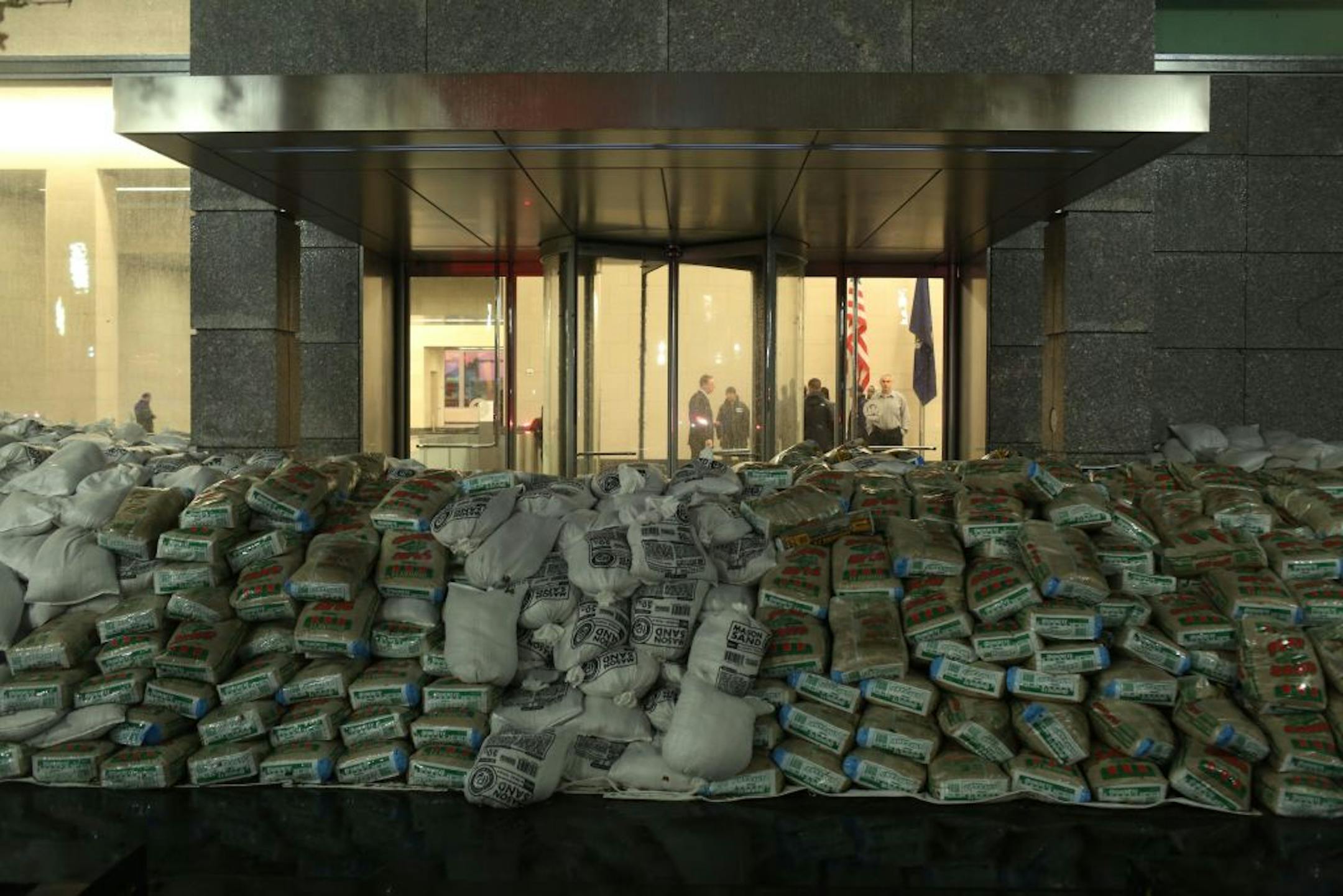
Goldman Sachs' latest shrewd investment was in sandbags and backup electricity generators.
As superstorm Sandy approached New York, the bags were stacked around its headquarters. It was one of the few offices in downtown Manhattan to remain dry and well-illuminated as "Frankenstorm" battered the city.
Meanwhile, a block farther down West Street, the headquarters of Verizon were awash with salty floodwater, soaking cables delivering phone and Internet services to millions of customers. The firm was able to reroute much of the traffic through other parts of its network, but local service was disrupted.
Sandy is the latest catastrophic event to test the readiness of the world's leading firms to cope with disaster. Most firms have improved "business continuity" preparations over the years. The Y2K scare at the turn of the century moved IT risk high up the list of worries. The Sept. 11 attacks warned firms of the danger of putting all their computers (and staff) in the same place.
Last year's Japanese tsunami reminded many companies that moving to "just in time" manufacturing through global supply chains, particularly when they involve outsourcing, can bring new risks. American carmakers found that they could not get essential parts made in Japan. Floods in Thailand the same year surprised many buyers of hard-disk drives, who found a large proportion of global supply comes from a rather small area near Bangkok.
A survey published on Wednesday by DHL, a logistics firm, reported that 23 percent of big companies did not include their entire supply chain in their business-continuity plan. If disaster risk-management stops at the borders of the "enterprise" and does not include, say, suppliers further down the chain, it may provide false comfort.
Each new disaster tends to surprise firms that thought they had good plans in place. Hospitals in New York that had moved their backup generators above ground nonetheless lost power during Sandy because they had not put fuel and pumps where floods could not reach. Running disaster-readiness drills regularly, it turns out, is a common-sense idea practiced all too rarely.
"Firms are increasingly reliant on networks, but often fail to understand the risks that networks bring," says Don Tapscott, a management guru. Global supply chains, just-in-time and shifting to the "cloud" tend to bind once unrelated activities ever closer together, making them more prone to failing at the same time. The current fad for moving data to the "cloud" may appear to reduce risk because there is so much spare capacity in the Web. Yet some firms offering cloud services have more concentrated operations than others.



