

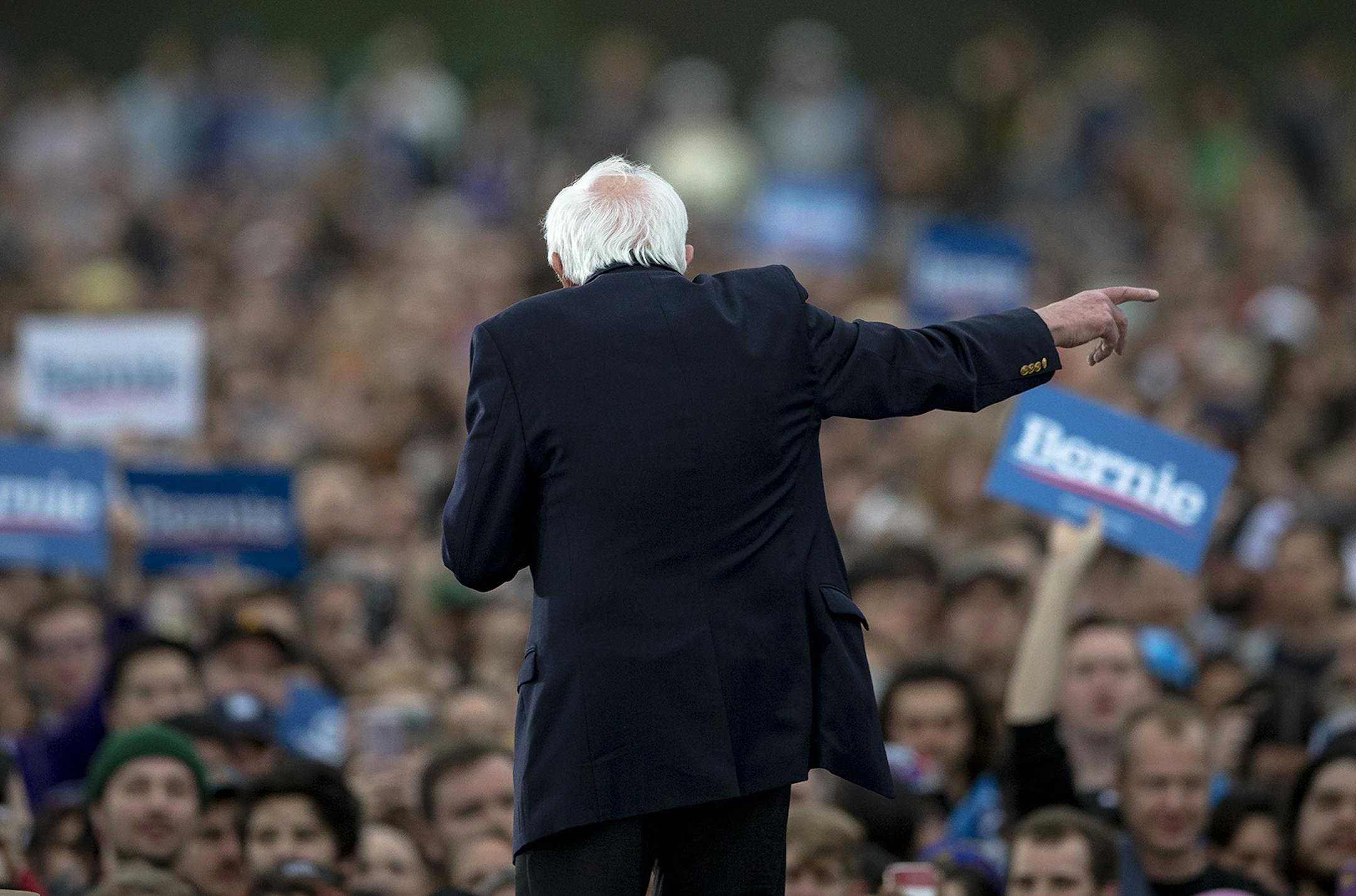
Tuesday is a big day for Minnesota Democrats, of which I, at one time, was. They've traded precinct caucuses for presidential primary. And they earned a spot in the Coachella-for-political-science-majors known as Super Tuesday. That's the good news.
The bad news is, if you believe the pundits and the media, the race is pretty much over. The political juggernaut that is the campaign of democratic socialist Sen. Bernie Sanders of Vermont has rolled over the terrain like an unstoppable glacier creating the fjords of Norway. Iowa, New Hampshire and Nevada have all bowed down to the Bernie's army of nasty tweeters.
Except, of course, he hasn't emerged as the front-runner quite so convincingly as that. Even if one put no credence in the argument that it is ludicrous for two of the whitest states in the union having this much sway over who the nominee will be, the results of these early states have been anything but clear.
Iowa is gonna Iowa, and we probably will never know who actually prevailed in its caucuses. Sanders won New Hampshire, but it was anything but a resounding victory. For perspective, he won that state's primary by 22 percentage points over Hillary Clinton, who was at the time the most famous woman on the planet. In 2020, he edged Pete Buttigieg, mayor of South Bend, Ind., roughly the 300th most populous city in the United States.
There's no question that Sanders won a huge victory in the Nevada caucuses, but that should come with a bit of an asterisk. Caucuses are inherently undemocratic and not favorable to the elderly, working poor and mothers with children.
Let's use a football analogy. The first four contests — let's throw in Saturday's primary in South Carolina — should be the part of the game where Shawn Mendes is butchering the national anthem. Instead, along with Super Tuesday's contests, it's the fourth quarter. In Nebraska, where I live now, our primary is May 12. Using the same football analogy, we're wiping down Pat Mahomes' tea cup at Disneyland's Map Tea Party.
That leaves me with one question: Why the rush? Picking a presidential nominee for a major party, in regular times, is a circumstance in which one might want to act more deliberately. For instance, letting the other tens of millions of Democrats have a say.
And, if you haven't noticed, we are not living in ordinary times.


