

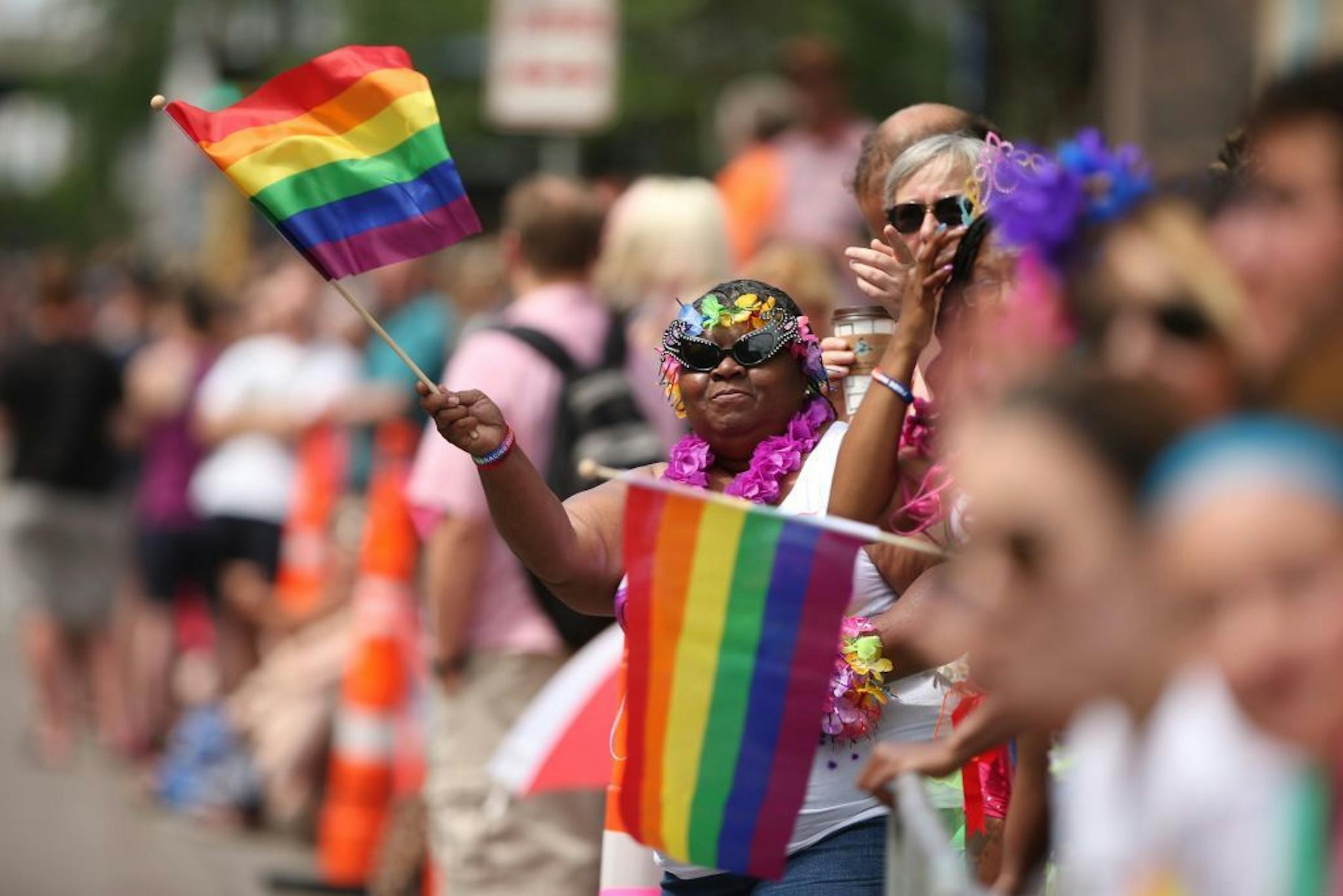
It was still all bubbly, balloons and rainbows last week — specifically Thursday night in New York City, where the leaders and foot soldiers of the LGBT rights movement joined Vice President Joe Biden for a gala celebration of their June 26 marriage victory at the U.S. Supreme Court.
I almost didn't have the heart to call Minnesota's Richard Carlbom as he was preparing to attend and suggest that we talk a little social-movement history. Almost.
Carlbom was the chief tactician for the campaign that convinced Minnesota voters to reject a same-sex marriage ban in 2012 and persuaded the Legislature to legalize such unions six months later. More recently, he's been the director of state-level campaigns for a national organization that just put itself out of business, Freedom to Marry.
For a fellow who's newly unemployed, Carlbom seemed quite upbeat. A landmark 5-4 victory at the Supreme Court evidently can have that effect. His mood didn't darken even when I brought up a pattern discernible in the history of the Minnesota women's movement. It suggests that when a social-justice movement coalesces around a dominant goal and achieves it, it is at risk of dissipation. Victory is no guarantee that more progress is imminent.
Consider: The first-wave women's movement arrived in the 19th century not long after Minnesota statehood. It soon boiled down to votes for women. Those early feminists achieved a small victory in 1875 when Minnesota women were permitted to vote in school board elections and serve on those panels.
But rather than leading to wider suffrage, that victory seemed to stall the movement. Minnesota was not in the vanguard of states pushing Congress to launch a constitutional amendment allowing women to vote. It did not open its polls to women until the 19th Amendment made women's suffrage the law of the land in 1920.
Mamy Minnesota women eagerly trooped to the polls that year. In 1922, the first year in which women could run for the Legislature, eight did, and four won. But then the movement sputtered to a near-standstill. A few suffragists tried to rally support for a broader feminist agenda; their leader, Clara Ueland of Minneapolis, died in 1927 in a weather-related accident on her way home from a day at the State Capitol lobbying for workplace protections for women and children.
Much of that agenda would still be waiting 45 years later, when women again arrived at the Legislature in numbers sufficient to be considered the "second wave." Its many aims soon clustered around more professional opportunity for women. Between 1970 and 1990, that goal was largely achieved — and again, the movement's energy waned.


