
Advertisement

Sam Adams brewer on 'Hamilton,' his own revolution

"I'm going to do it anyway" is a kind of slogan for the Boston Beer Co. founder.

Chicago Tribune
July 17, 2016 at 12:00PM
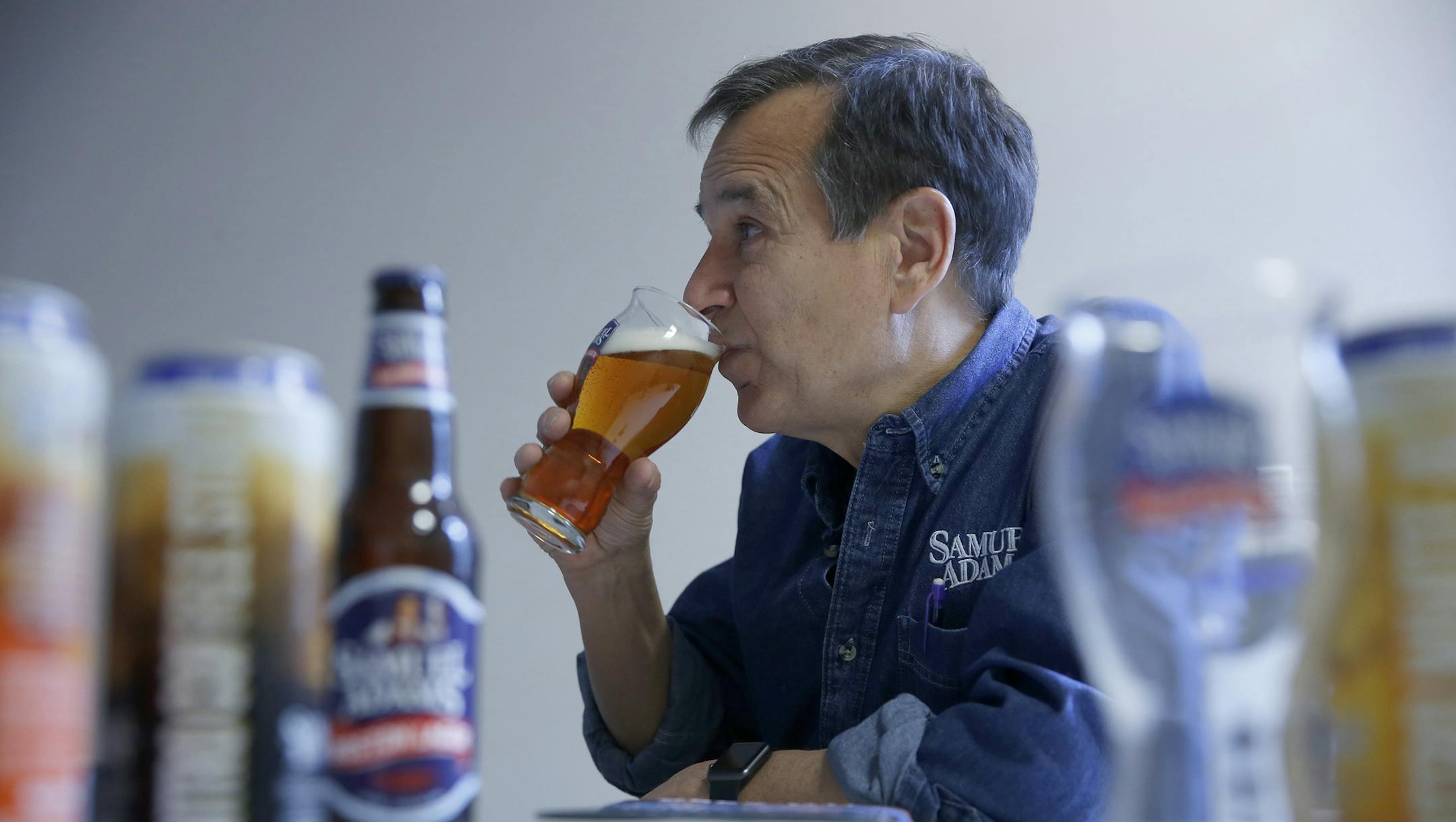
Jim Koch, co-founder and chairman of Boston Beer Co., takes a drink during a visit to Tribune Tower in Chicago on April 20, 2016. Koch has written a book, "Quench Your Own Thirst: Business Lessons Learned Over a Beer or Two." (Michael Tercha/Chicago Tribune/TNS)
Jim Koch, co-founder and chairman of Boston Beer Co., enjoyed a pint during an interview. (The Minnesota Star Tribune)
Advertisement

CHICAGO – Jim Koch, who launched Boston Beer Co. from his kitchen 30-some years ago with a 19th-century family recipe, said he had no idea that his Samuel Adams beer was name-checked in Broadway's megahit "Hamilton."

His eyes lit up when played the playful allusion to the signature brew (named for a patriot) in a pub scene set in 1776: "I'm John Laurens in the place to be! Two pints o' Sam Adams, but I'm workin' on three, uh!"

"Love it! Love it! Love it!" Koch said. "You know, somebody probably said, 'You can't have the founding fathers as black actors doing rap,' and look at what they did. That's kind of the story of Sam Adams. People saying you can't do it. … But I said I'm going to do it anyway."

Koch, 67, has three degrees from Harvard, including an MBA and law degree. He ditched a thriving career advising manufacturers for Boston Consulting Group (where colleagues included Mitt Romney, who later left to join Bain & Co.) to belatedly extend a family tradition in brewing beer to a sixth generation.

Koch answered some questions while promoting his book, "Quench Your Own Thirst: Business Lessons Learned Over a Beer or Two." He brought both Sam Adams and pint glasses and started out with his own question at 10 a.m. "Mind if I have a beer? I'm a trained professional."

The interview has been edited for length and clarity.

Q: It was just you and your former secretary trying to make a go of it in the beginning. She didn't have a background in business and you didn't take a salary to start.

A: I told her we only have to worry about two things. We're going to make great beer every time and we're going to work our butts off to sell it. So we had no office, we didn't even have a telephone. Remember those answering services with old ladies in a basement, where you'd call in? That's how we got our messages. If we had to have a meeting, we did it in a bar, because they were our customers.

Advertisement

Q: But your story is still pretty good.

A: Our success as we grew from my kitchen to helping start this whole craft beer revolution largely came from sticking to the core values of the company. That doesn't mean we didn't have difficult times. There's a whole chapter about when Anheuser-Busch tried to put me out of business.

Q: You're not a big fan of the bigger brewers.

A: They just have a different business model. They are financially driven and motivated. They're private equity companies that happen to make beer. There's nothing wrong with that. That is an important goal of business, to produce returns for the owner, and that is what drives them.

Q: And you?

A: In orientation, when people start working for us, I tell them we have four constituencies. The most important is our customers. The second most important is our people. The third is our investors, and the fourth is our community. I happen to be incorporated in Massachusetts. Corporation laws there are different than Delaware, and they allow a Massachusetts business, within its fiduciary responsibilities, to take into account those other constituencies.

Advertisement
about the writer

about the writer

Phil Rosenthal

More from Business

See More
Todd Geselius, vice president of agriculture at the Southern Minnesota Beet Sugar Co-op, shows what a sugar beet looks like when it is harvested in the field on Sept. 9, 2015 in Renville, Minn. (Jim Gehrz/Minneapolis Star Tribune/TNS) ORG XMIT: 1175088 ORG XMIT: MIN1510142301350530
The Minnesota Star Tribune

Some say the MAHA movement and GLP-1 drugs hurt sugar beet farmers. The White House is blaming former President Joe Biden.

card image
card image
Advertisement