

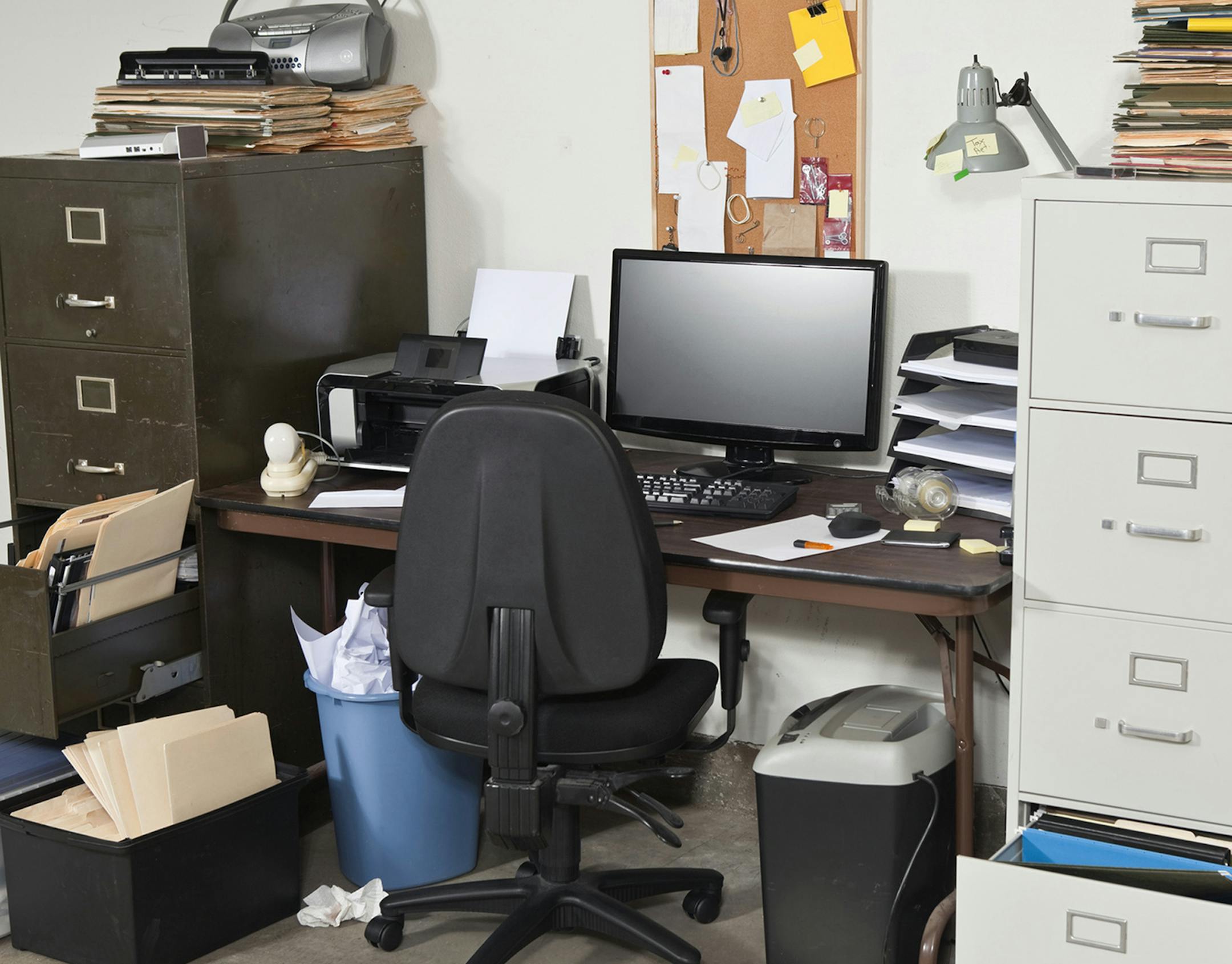
One desk was stashed in a forbidding storage closet. One was crammed into a corner. Another was curiously isolated in a large, spooky warehouse and surrounded by skids stacked with boxes.
When the images of grim work spaces appeared on Twitter in droves in late October, they fed a competition promoted by Wired magazine. The technology and business publication had asked readers to accompany the photos with the hashtag #saddesk, from which it collected the 15 "winners" in a Nov. 7 blog post.
Ergonomics experts say while the #saddesk Twitter craze seemed to summon the most extreme cases, there is a very real undertone — and danger — to a dismal desk.
"It will undermine your feeling of self-worth," said Alan Hedge, a Cornell University professor whose teachings and research focus on the effect of workplace ergonomics on the health, comfort and productivity of workers. "The sad thing about it is that people are putting up with these stupid designs."
Several studies tie physical office space to increased productivity for the two-thirds of the U.S. workforce identified as office workers.
"People want to have an inviting, comfortable, warm environment where they can kind of just forget about comfort and focus on what they're doing," said Blake McGowan, managing consultant for Humantech, an ergonomics firm in Michigan.
Ergonomics experts largely debunk the idea that workplace fixes are prohibitively expensive. The solution for most office setups is pretty straightforward and simple, McGowan said, noting that, paradoxically, even some of Wired's choices of the saddest desks had relatively expensive technological equipment on them.
"It's a pretty clear illustration of what people value when they do work," McGowan said. "It's interesting to see that everyone has a very capable computer that was fairly new, latest technology of phones and things like that. Those are personal choices to leave your workstations look like that."



