

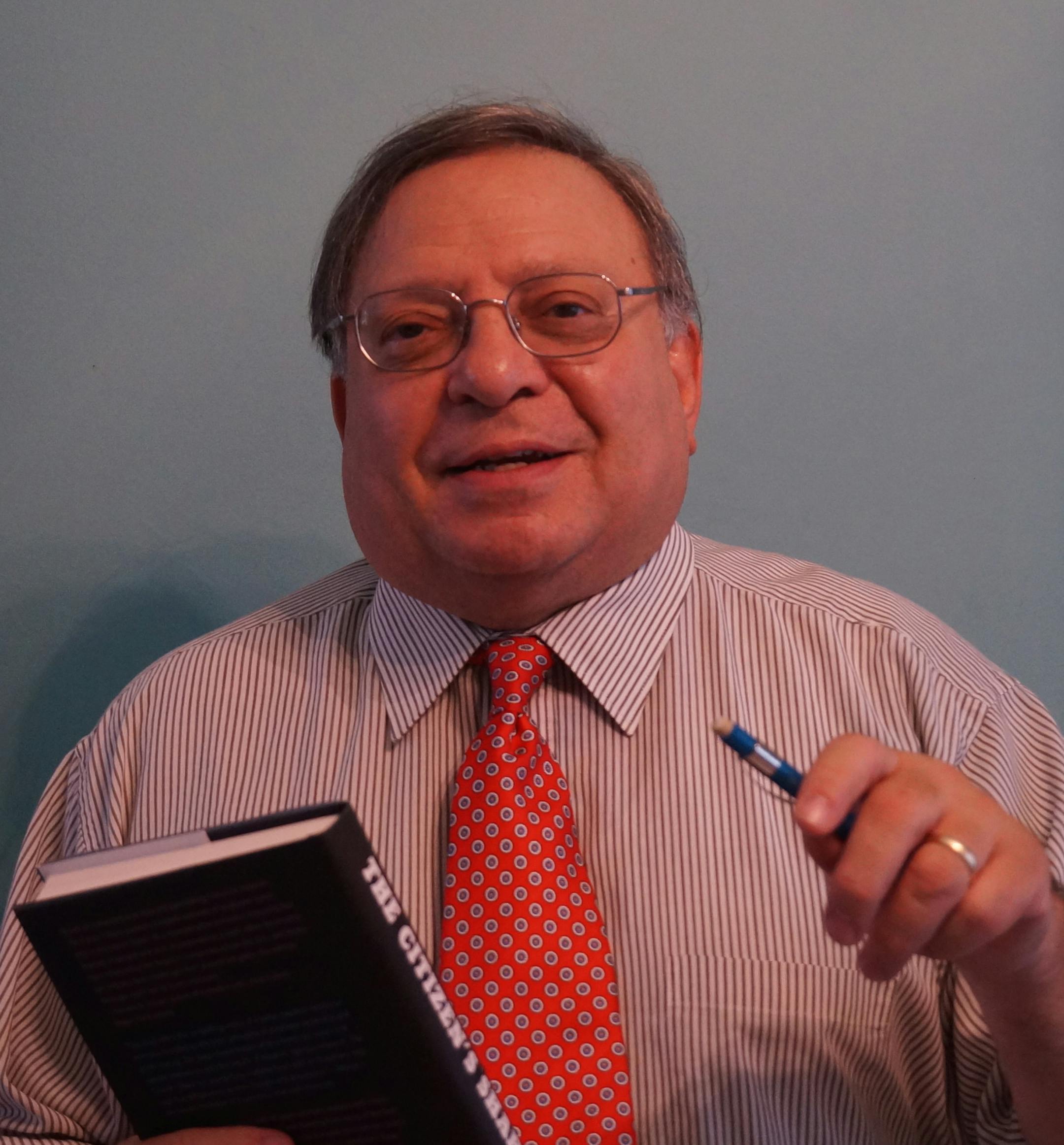
Joseph Blasi, a veteran researcher and professor at Rutgers University in New Jersey, has furthered the national debate on "income equality" with a call for workers to get a piece of the profits in their companies through broad-based stock plans, just as the executives and shareholders do. He has joined with fellow Rutgers Prof. Douglas Kruse and Richard Freeman, a Harvard University economist, to write "The Citizen's Share: Reducing Inequality in the 21st Century." Noted French economist Thomas Piketty, who has written about the growing concentration of wealth, has praised Blasi's book.
Q: What is the issue you address?
A: The deck is stacked against the middle class, the working stiffs and even couples who make up to $200,000 a year who struggle to get their kids through college.
Real wages have been flat for 30 years. Wealth has increased only for people who have capital shares, a share of ownership. The solution is to broaden the pool of people who have access to shares of profits and their company stock. We're not talking about a 401(k) retirement plan where employees use their own wages. Or an Employee Stock Ownership Plan (ESOP) where employees are buying their shares with their wages or through concessions. We're talking about ownership grants on top of fixed wages. The founders of our country believed that broad property shares were the primary solution to economic inequality, and were necessary in order to sustain a republic with full democratic participation of every citizen. The current political debate is polarized between those who are for tax cuts on everything and those who see tax increases as the solution to our problems. There is a fertile middle ground, namely tax cuts for those businesses and individuals who implement broad-based share plans that help reduce economic inequality.
Q: Why does wealth inequality matter? Aren't there winners and losers in capitalism?
A: Income and wealth inequality often reflect differences in abilities and performance and such inequalities are normal in market economies. Today … the large gaps in income and wealth inequality are not mainly based on who works harder or smarter in a workplace. They are based mainly on who owns shares of businesses, stocks, bonds, financial assets and real estate and who enjoys most of the capital gains from these assets and receives shares of profits. If you do not own capital and if you do not have access to capital gains … then your economic prospects are declining. Business profits and productivity have been rising. The problem is that regular citizens are not getting a share of the profits and wealth that they are creating. When the top 10 percent own 90 percent of all corporate stock, 80 percent of financial assets and 75 percent of all wealth … and growing, this is not sustainable in a democratic country without threatening the disappearance of the middle class and the substantial weakening of our democratic political system.
Q: How do you convince boards of directors, mostly composed of the economic elite, that they should spread the wealth to working stiffs?
A: Two ways. First, the profit-sharing and grants of stocks and stock options … and all "performance-based compensation" is tax deductible for the business. The taxpayers subsidize these $20 million pay packages for Target executives and other corporations. The condition for any business receiving any tax deduction … is a broad-based stock ownership plan [for all employees].


