

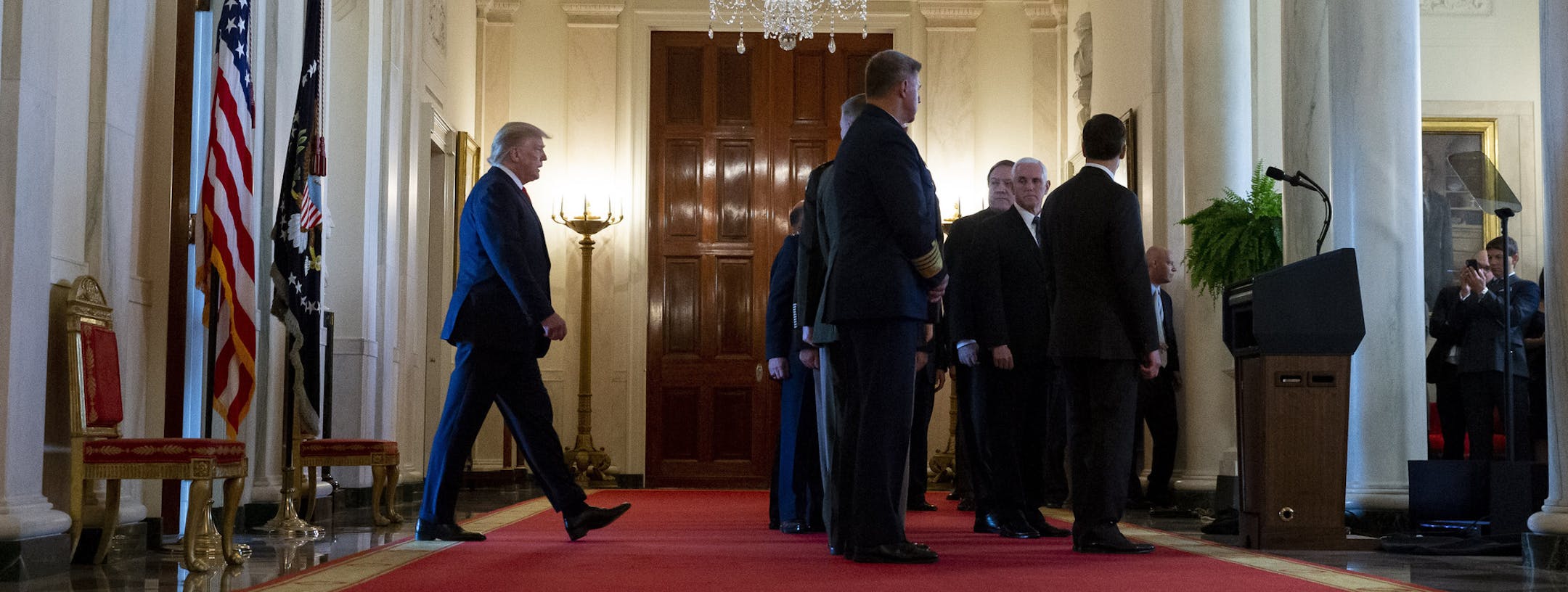
It appears that Iran may be giving President Donald Trump a politically palatable off-ramp from further clashes. And it's an off-ramp that Trump, according to his initial comments, appears inclined to take.
Trump announced Wednesday morning that there were no American casualties and only "minimal" damage to the bases, and Iraq's government says it didn't suffer any either. Iran also followed up its attacks by giving conflicting signals about whether this could be the end of its military response to Maj. Gen. Qassem Soleimani's death at American hands.
If this is the end of the retaliation — and that's very much an open question — it would mean Iran's response to the killing of its most powerful military figure will have been to inflict damage on Iraqi military bases. If you were given that trade at the start of the week, before Trump made the decision to take Soleimani out, it's very difficult to say you wouldn't take it in a heartbeat.
It's important to emphasize how much Trump views international affairs in terms of wins and losses. Not only could Trump say that he took out a man who is said to have killed hundreds of Americans without a more serious response from the Iranians, but the president could also say that dire Democratic and pundit predictions of impending war with Iran — or even World War III — were overcooked.
The situation is, of course, fluid. Trump will continue to have to deal with Iran for the remainder of his presidency, whether one year or five years. For now, though, we can perhaps be optimistic that this situation hasn't escalated further. Trump seems to be.
Aaron Blake, Washington Post
• • •
After losing its top strategist, military commander and arch-terrorist, Suleimani, the Iranian theocracy is weighing responses.
One, Iran can quiet down and cease military provocations. But if unchecked, American economic pressure could eventually lead to a popular rebellion that would topple the theocracy. A return to the status quo is unlikely.


